Genesis chapter 2 informs us that God created man and put him in a « garden » called Eden of several thousand hectares, if not more. Adam was in ideal conditions. In this paradise setting, he enjoyed great freedom (John 8:32). However, God set a limit on this immense freedom: a tree: « Jehovah God took the man and settled him in the garden of Eʹden to cultivate it and to take care of it. Jehovah God also gave this command to the man: “From every tree of the garden you may eat to satisfaction. But as for the tree of the knowledge of good and bad, you must not eat from it, for in the day you eat from it you will certainly die » (Genesis 2:15-17). « The tree of knowledge of good and bad » was simply the concrete representation of the abstract concept of good and bad. Henceforth this real tree, represented for Adam, the concrete limit, a « (concrete) knowledge of the good and the bad », fixed by God, between the « good », to keep obeying Him and not to eat of it and the « bad », the disobedience.
It is clearly evident that this commandment of God was not « burdensome » (compare with Matthew 11:28-30 « For my yoke is kindly, and my load is light » and 1 John 5:3 « His commandments are not burdensome » (those of God)). By the way, some have said that the « forbidden fruit » stands for carnal relationships: this is wrong, because when God gave this commandment, Eve did not exist. God was not going to forbid something that Adam could not know (Compare the chronology of events Genesis 2:15-17 (the command of God) with 2:18-25 (the creation of Eve)).
« Now the serpent was the most cautious of all the wild animals of the field that Jehovah God had made. So it said to the woman: “Did God really say that you must not eat from every tree of the garden?” At this the woman said to the serpent: “We may eat of the fruit of the trees of the garden. But God has said about the fruit of the tree that is in the middle of the garden: ‘You must not eat from it, no, you must not touch it; otherwise you will die.’” At this the serpent said to the woman: “You certainly will not die. For God knows that in the very day you eat from it, your eyes will be opened and you will be like God, knowing good and bad.” Consequently, the woman saw that the tree was good for food and that it was something desirable to the eyes, yes, the tree was pleasing to look at. So she began taking of its fruit and eating it. Afterward, she also gave some to her husband when he was with her, and he began eating it » (Genesis 3:1-6).
The sovereignty of God has been openly attacked by the devil. Satan implied that God was withholding information for the purpose of harming his creatures: « For God knows » (implying that Adam and Eve did not know and that it was harming them). Nevertheless, God always remained in control of the situation.
Why did Satan speak to Eve rather than Adam? To use the inspired expression of the apostle Paul, to « deceive » her: « Also, Adam was not deceived, but the woman was thoroughly deceived and became a transgressor » (1 Timothy 2:14 ). In what way was Eve deceived? Because of her young age, because she had very few years of experience, while Adam was at least over forty. In fact, Eve was little surprised, at her young age, that a snake spoke to her. She normally continued this unusual conversation. Therefore, Satan took advantage of Eve’s inexperience to cause her to sin. However, Adam knew what he was doing, he made the decision to sin in a deliberate way. This first accusation of the devil was linked to God’s evident right to rule over his creatures, both invisible and visible (Revelation 4:11).
Shortly before the end of that day, before sunset, God judged the three culprits (Genesis 3:8-19). Before determining the guilt of Adam and Eve, Jehovah God asked them a question about their gesture. So they replied: « “The woman whom you gave to be with me, she gave me fruit from the tree, so I ate.” (…) “The serpent deceived me, so I ate.” » (Genesis 3:12,13). Far from admitting they were guilty, both Adam and Eve tried to justify themselves. Adam even indirectly reproached God for giving him a woman who made him sin: « The woman whom you gave to be with me ». In Genesis 3:14-19, we can read the judgment of God with a promise of the fulfillment of his purpose: « And I will put enmity between you and the woman and between your offspring and her offspring. He will crush your head, and you will strike him in the heel » (Genesis 3:15). By this promise, Jehovah God was particularly signifying that his purpose would inevitably come true, by informing Satan the devil that he would be destroyed. From that moment on, sin entered into the world, as well as its main consequence, death: « That is why, just as through one man sin entered into the world and death through sin, and so death spread to all men because they had all sinned » (Romans 5:12).
The devil hinted that there was a flaw in human nature. This is evident in the devil’s challenge regarding the integrity of faithful servant Job:
« Then Jehovah said to Satan: “Where have you come from?” Satan answered Jehovah: “From roving about on the earth and from walking about in it.” And Jehovah said to Satan: “Have you taken note of my servant Job? There is no one like him on the earth. He is an upright man of integrity, fearing God and shunning what is bad.” At that Satan answered Jehovah: “Is it for nothing that Job has feared God? Have you not put up a protective hedge around him and his house and everything he has? You have blessed the work of his hands, and his livestock has spread out in the land. But, for a change, stretch out your hand and strike everything he has, and he will surely curse you to your very face.” Then Jehovah said to Satan: “Look! Everything that he has is in your hand. Only do not lay your hand on the man himself!” So Satan went out from the presence of Jehovah. (…) Then Jehovah said to Satan: “Where have you come from?” Satan answered Jehovah: “From roving about on the earth and from walking about in it.” And Jehovah said to Satan: “Have you taken note of my servant Job? There is no one like him on the earth. He is an upright man of integrity, fearing God and shunning what is bad. He is still holding firmly to his integrity, even though you try to incite me against him to destroy him for no reason.” But Satan answered Jehovah: “Skin for skin. A man will give everything that he has for his life. But, for a change, stretch out your hand and strike his bone and flesh, and he will surely curse you to your very face.” Then Jehovah said to Satan: “Look! He is in your hand! Only do not take his life!” » (Job 1:7-12 ; 2:2-6).
The fault of human beings, according to Satan the devil, is that they serve God, not out of love for their Creator, but out of self-interest and opportunism. Under pressure, by the loss of his possessions and by fear of death, still according to Satan the devil, man could only depart from his loyalty to God. But Job demonstrated that Satan the devil is a liar: Job lost all his possessions, and he lost his 10 children and he came close to death with a « painful boil » (Job 1 and 2). Three false comforters took it upon themselves to psychologically torture Job, implying that all his misfortunes came from hidden sins on his part, and that therefore God was chastising him for his guilt and wickedness. Nevertheless, Job did not depart from his integrity and replied: « It is unthinkable for me to declare you men righteous! Until I die, I will not renounce my integrity! » (Job 27:5).
However, the most important defeat of the devil regarding the integrity of man until death, was connected with Jesus Christ, who has been obedient to his Father, until death:“More than that, when he came as a man, he humbled himself and became obedient to the point of death, yes, death on a torture stake » (Philippians 2:8). Jesus Christ, by his integrity even to death, offered his Father a very precious spiritual victory, that is why he has been rewarded: « For this very reason, God exalted him to a superior position and kindly gave him the name that is above every other name, so that in the name of Jesus every knee should bend—of those in heaven and those on earth and those under the ground— and every tongue should openly acknowledge that Jesus Christ is Lord to the glory of God the Father » (Philippians 2:9-11).
It is important to know the biblical information about the devil to fully understand the reasons for God’s permission of evil and the current sad condition of humanity.
Jesus Christ described the devil very concisely: “That one was a murderer when he began, and he did not stand fast in the truth, because truth is not in him. When he speaks the lie, he speaks according to his own disposition, because he is a liar and the father of the lie » (John 8:44). Satan the devil is not the abstraction of evil, but a real spiritual person (Matthew 4:1-11). Likewise, the demons are also angels who have become rebels who have followed the example of the devil (Genesis 6:1-3, to compare with the letter of Jude verse 6: « And the angels who did not keep their original position but forsook their own proper dwelling place, he has reserved with eternal bonds in dense darkness for the judgment of the great day »).
When it is written, « he did not stand fast in the truth », it shows that God created this angel without sin and without any trace of wickedness in his heart. This angel, at the beginning of his life had a « beautiful name » (Ecclesiastes 7:1a). However, « he did not stand fast » in his integrity, he cultivated pride in his heart, and over time he became « devil », which means slanderer, and Satan, opponent; his old beautiful name, his good reputation, has been replaced by one of the everlasting disgraces. In the prophecy of Ezekiel (chapter 28), against the proud king of Tyre, it is clearly alluded to the pride of the angel who became « devil » and « Satan »: « This is what the Sovereign Lord Jehovah says: “You were the model of perfection, Full of wisdom and perfect in beauty. You were in Eʹden, the garden of God. You were adorned with every precious stone —Ruby, topaz, and jasper; chrysʹo·lite, onyx, and jade; sapphire, turquoise, and emerald; And their settings and mountings were made of gold. They were prepared on the day you were created. I assigned you as the anointed covering cherub. You were on the holy mountain of God, and you walked about among fiery stones. You were faultless in your ways from the day you were created Until unrighteousness was found in you » (Ezekiel 28:12-15). Through his act of unrighteousness in Eden, he became a « liar » who caused the death of all of Adam’s offspring (Genesis 3; Romans 5:12). Currently, it is Satan the devil who rules the world: « Now there is a judging of this world; now the ruler of this world will be cast out » (John 12:31; Ephesians 2:2; 1 John 5:19) .
This meditation will be based on Job’s dialogue with his three accusers or his false friends, on Elihu’s speech and finally the intervention of Jehovah God, the Heavenly Father, in order to discipline Job on his words.
What is the message of this prophetic enigma? Jehovah God informs that his purpose to populate the earth with a righteous humanity will surely be fulfilled (Genesis 1:26-28). God will redeem the humanity through the « offspring of the woman » (Genesis 3:15).
This covenant has a spiritual meaning, which is spelled out in the farewell speech of Moses in the book of Deuteronomy: « You must now cleanse your hearts and stop being so stubborn » (Deuteronomy 10:16).
The purpose of the Law given to Israel was to prepare the people for the coming of the Messiah. The Law has taught the need for liberation from the sinful condition of humanity (represented by the people of Israel)…
« There are also, in fact, many other things that Jesus did, which if ever they were written in full detail, I suppose the world itself could not contain the scrolls written »
(John 21:25)
Jesus Christ and the first miracle written in the Gospel of John, he turns water into wine: « And on the third day a marriage feast took place in Caʹna of Galʹi·lee, and the mother of Jesus was there. Jesus and his disciples were also invited to the marriage feast. When the wine ran short, the mother of Jesus said to him: “They have no wine.” But Jesus said to her: “Woman, why is that of concern to me and to you? My hour has not yet come.” His mother said to those serving: “Do whatever he tells you.” Now there were six stone water jars sitting there as required by the purification rules of the Jews, each able to hold two or three liquid measures. Jesus said to them: “Fill the jars with water.” So they filled them to the brim. Then he said to them: “Now draw some out and take it to the director of the feast.” So they took it. When the director of the feast tasted the water that had now been turned into wine, not knowing where it came from (although the servants who had drawn out the water knew), the director of the feast called the bridegroom and said to him: “Everyone else puts out the fine wine first, and when people are intoxicated, the inferior. You have saved the fine wine until now.” Jesus did this in Caʹna of Galʹi·lee as the beginning of his signs, and he made his glory manifest, and his disciples put their faith in him » (John 2:1-11).
Jesus Christ heals the son of a royal official: « Then he came again to Caʹna of Galʹi·lee, where he had turned the water into wine. Now there was a royal official whose son was sick in Ca·perʹna·um. When this man heard that Jesus had come out of Ju·deʹa into Galʹi·lee, he went to him and asked him to come down and heal his son, for he was at the point of dying. But Jesus said to him: “Unless you people see signs and wonders, you will never believe.” The royal official said to him: “Lord, come down before my young child dies.” Jesus said to him: “Go your way; your son lives.” The man believed the word that Jesus spoke to him, and he left. 51 But while he was on his way down, his slaves met him to say that his boy was alive. So he asked them at what hour he got better. They replied to him: “The fever left him yesterday at the seventh hour.” The father then knew that it was in the very hour that Jesus had said to him: “Your son lives.” So he and his whole household believed. This was the second sign Jesus performed when he came from Ju·deʹa into Galʹi·lee » (John 4:46-54).
Jesus Christ heals a man possessed by a demon in Capernaum: « He then went down to Capernaum, a city of Galilee. And he was teaching them on the Sabbath, and they were astounded at his way of teaching, because he spoke with authority. Now in the synagogue there was a man with a spirit, an unclean demon, and he shouted with a loud voice: “Ah! What have we to do with you, Jesus the Naz·a·reneʹ?Did you come to destroy us? I know exactly who you are, the Holy One of God.” But Jesus rebuked it, saying: “Be silent, and come out of him.” So after throwing the man down in their midst, the demon came out of him without hurting him. At this they were all astonished and began to say to one another: “What kind of speech is this? For with authority and power he orders the unclean spirits, and out they come!” So the news about him kept spreading into every corner of the surrounding country » (Luke 4:31-37).
Jesus Christ casts out demons among the Gadarenes (present-day Jordania, eastern part of the Jordan river, near the Lake Tiberias): « When he came to the other side into the region of the Gad·a·renesʹ, two demon-possessed men coming out from among the tombs met him. They were unusually fierce, so nobody had the courage to pass by on that road. And look! they screamed, saying: “What have we to do with you, Son of God? Did you come here to torment us before the appointed time?” A long way off from them, a herd of many swine was feeding. So the demons began to plead with him, saying: “If you expel us, send us into the herd of swine.” And he said to them: “Go!” With that they came out and went off into the swine, and look! the entire herd rushed over the precipice into the sea and died in the waters. But the herders fled, and going into the city, they reported everything, including the account of the demon-possessed men. And look! all the city turned out to meet Jesus, and when they saw him, they urged him to depart from their region » (Matthew 8:28-34).
Jesus Christ heals the mother-in-law of the Apostle Peter: « And Jesus, on coming into Peter’s house, saw his mother-in-law lying down and sick with fever. So he touched her hand, and the fever left her, and she got up and began ministering to him » (Matthew 8:14,15).
Jesus Christ heals a man with paralyzed right hand: « On another sabbath he entered the synagogue and began teaching. And a man was there whose right hand was withered. The scribes and the Pharisees were now watching Jesus closely to see whether he would cure on the Sabbath, in order to find some way to accuse him. He, however, knew their reasoning, so he said to the man with the withered hand: “Get up and stand in the center.” And he rose and stood there. Then Jesus said to them: “I ask you men, Is it lawful on the Sabbath to do good or to do harm, to save a life or to destroy it?” After looking around at them all, he said to the man: “Stretch out your hand.” He did so, and his hand was restored. But they flew into a senseless rage, and they began to talk over with one another what they might do to Jesus » (Luke 6:6-11).
Jesus Christ heals a man with dropsy (edema, an excess buildup of fluid in the body): « On another occasion he went to eat a meal in the house of one of the leaders of the Pharisees on the Sabbath, and they were closely watching him. And look! a man who had dropsy was in front of him. So in response Jesus asked those versed in the Law and the Pharisees: “Is it lawful to cure on the Sabbath or not?” But they kept silent. With that he took hold of the man, healed him, and sent him away. Then he said to them: “Who of you, if his son or bull falls into a well, will not immediately pull him out on the Sabbath day?” And they were not able to reply to this » (Luke 14:1-6).
Jesus Christ heals a blind man: « Now as Jesus was getting near to Jerʹi·cho, a blind man was sitting beside the road begging. Because he heard a crowd passing by, he began to inquire what was going on. They reported to him: “Jesus the Naz·a·reneʹ is passing by!” At that he cried out: “Jesus, Son of David, have mercy on me!” And those who were in front began rebuking him, telling him to keep quiet, but all the more he kept shouting: “Son of David, have mercy on me!” Then Jesus stopped and commanded that the man be brought to him. After he came near, Jesus asked him: “What do you want me to do for you?” He said: “Lord, let me recover my sight.” So Jesus said to him: “Recover your sight; your faith has made you well.” And instantly he recovered his sight, and he began to follow him, glorifying God. Also, at seeing it, all the people gave praise to God » (Luke 18:35-43).
Jesus Christ heals two blind people: « As Jesus moved on from there, two blind men followed him, shouting out: “Have mercy on us, Son of David.” After he had gone into the house, the blind men came to him, and Jesus asked them: “Do you have faith that I can do this?” They answered him: “Yes, Lord.” Then he touched their eyes, saying: “According to your faith let it happen to you.” And their eyes received sight. Moreover, Jesus sternly warned them, saying: “See that nobody gets to know it.” But after going outside, they made it public about him in all that region » (Matthew 9:27-31).
Jesus Christ heals a leper: « There also came to him a leper, pleading with him even on bended knee, saying to him: “If you just want to, you can make me clean.” At that he was moved with pity, and he stretched out his hand and touched him, and said to him: “I want to! Be made clean.” Immediately the leprosy vanished from him, and he became clean » (Mark 1:40-42).
The healing of the ten lepers: « While he was going to Jerusalem, he was passing between Sa·maria and Galilee. And as he was entering a village, ten men with leprosy met him, but they stood at a distance. And they raised their voices and said: “Jesus, Instructor, have mercy on us!” When he saw them, he said to them: “Go and show yourselves to the priests.” Then as they were going off, they were cleansed. One of them, when he saw that he was healed, turned back, glorifying God with a loud voice. And he fell facedown at Jesus’ feet, thanking him. Furthermore, he was a Samaritan. In reply Jesus said: “All ten were cleansed, were they not? Where, then, are the other nine? Did no one else turn back to give glory to God except this man of another nation?” Then he said to him: “Get up and be on your way; your faith has made you well” » (Luke 17:11-19).
Jesus Christ heals a deaf mute: « When Jesus returned from the region of Tyre, he went through Siʹdon to the Sea of Galʹi·lee, through the region of De·capʹo·lis. Here they brought him a deaf man with a speech impediment, and they pleaded with him to lay his hand on him. And he took him aside privately, away from the crowd. Then he put his fingers into the man’s ears, and after spitting, he touched his tongue. And looking up into heaven, he sighed deeply and said to him: “Ephʹpha·tha,” that is, “Be opened.” At this his ears were opened, and his speech impediment was removed, and he began speaking normally. With that he ordered them not to tell anyone, but the more he would order them, the more they would proclaim it. Indeed, they were astounded beyond measure, and they said: “He has done all things well. He even makes the deaf hear and the speechless speak” » (Mark 7:31-37).
Jesus Christ heals a paralytic: « After this there was a festival of the Jews, and Jesus went up to Jerusalem. Now in Jerusalem at the Sheep Gate is a pool called in Hebrew Beth·zaʹtha, with five colonnades. Within these a multitude of the sick, blind, lame, and those with withered limbs were lying down. But one man was there who had been sick for 38 years. Seeing this man lying there and being aware that he had already been sick for a long time, Jesus said to him: “Do you want to get well?” The sick man answered him: “Sir, I do not have anyone to put me into the pool when the water is stirred up, but while I am on my way, another steps down ahead of me.” Jesus said to him: “Get up! Pick up your mat and walk.” And the man immediately got well, and he picked up his mat and began to walk » (John 5:1-9).
Jesus Christ heals an epileptic: « When they came toward the crowd, a man approached him, knelt down to him, and said: “Lord, have mercy on my son, because he is an epileptic and is ill. He falls often into the fire and often into the water. I brought him to your disciples, but they could not cure him.” In reply Jesus said: “O faithless and twisted generation, how long must I continue with you? How long must I put up with you? Bring him here to me.” Then Jesus rebuked the demon, and it came out of him, and the boy was cured from that hour. Then the disciples came to Jesus privately and said: “Why could we not expel it?” He said to them: “Because of your little faith. For truly I say to you, if you have faith the size of a mustard grain, you will say to this mountain, ‘Move from here to there,’ and it will move, and nothing will be impossible for you.” » (Matthew 17:14-20).
A miracle without knowing it: « As Jesus was going, the crowds pressed in on him. Now there was a woman who had a flow of blood for 12 years, and she had not been able to get a cure from anyone. She approached from behind and touched the fringe of his outer garment, and immediately her flow of blood stopped. So Jesus said: “Who touched me?” When they were all denying it, Peter said: “Instructor, the crowds are hemming you in and pressing against you.” But Jesus said: “Someone touched me, for I know that power went out of me.” Seeing that she had not escaped notice, the woman came trembling and fell down before him and declared before all the people why she touched him and how she was healed immediately. But he said to her: “Daughter, your faith has made you well. Go in peace” » (Luke 8:42-48).
Jesus Christ Heals from a Distance: « When he had completed what he had to say to the people, he entered Ca·perʹna·um. Now an army officer’s slave, who was dear to him, was seriously ill and about to pass away. When he heard about Jesus, he sent some elders of the Jews to him to ask him to come and make his slave well. They came up to Jesus and began to plead with him earnestly, saying: “He is worthy of your granting him this, for he loves our nation and he himself built our synagogue.” So Jesus went with them. But when he was not far from the house, the army officer had already sent friends to say to him: “Sir, do not bother, for I am not worthy to have you come under my roof. That is why I did not consider myself worthy to come to you. But say the word, and let my servant be healed. For I too am a man placed under authority, having soldiers under me, and I say to this one, ‘Go!’ and he goes, and to another, ‘Come!’ and he comes, and to my slave, ‘Do this!’ and he does it.” When Jesus heard these things, he was amazed at him, and he turned to the crowd following him and said: “I tell you, not even in Israel have I found so great a faith.” And when those who had been sent returned to the house, they found the slave in good health » (Luke 7:1-10).
Jesus Christ heals a bent woman for 18 years: « Now he was teaching in one of the synagogues on the Sabbath. And look! a woman was there who had had a spirit of weakness for 18 years; and she was bent double and was unable to straighten up at all. When he saw her, Jesus addressed her and said: “Woman, you are released from your weakness.” And he laid his hands on her, and instantly she straightened up and began to glorify God. But in response the presiding officer of the synagogue, indignant because Jesus did the cure on the Sabbath, said to the crowd: “There are six days on which work ought to be done; so come and be cured on those days, and not on the Sabbath day.” However, the Lord answered him: “Hypocrites, does not each one of you on the Sabbath untie his bull or his donkey from the stall and lead it away to give it something to drink? Should not this woman, who is a daughter of Abraham and whom Satan held bound for 18 years, be released from this bondage on the Sabbath day?” Well, when he said these things, all his opposers began to feel shame, but the entire crowd began to rejoice at all the glorious things he did » (Luke 13:10-17).
Jesus Christ heals the daughter of a Phoenician woman: « Leaving there, Jesus now went into the region of Tyre and Siʹdon. And look! a Phoe·niʹcian woman from that region came and cried out: “Have mercy on me, Lord, Son of David. My daughter is cruelly demon possessed.” But he did not say a word in answer to her. So his disciples came and began to urge him: “Send her away, because she keeps crying out after us.” He answered: “I was not sent to anyone except to the lost sheep of the house of Israel.” But the woman came and did obeisance to him, saying: “Lord, help me!” In answer he said: “It is not right to take the bread of the children and throw it to the little dogs.” She said: “Yes, Lord, but really the little dogs do eat of the crumbs falling from the table of their masters.” Then Jesus replied to her: “O woman, great is your faith; let it happen to you as you wish.” And her daughter was healed from that hour on » (Matthew 15:21-28).
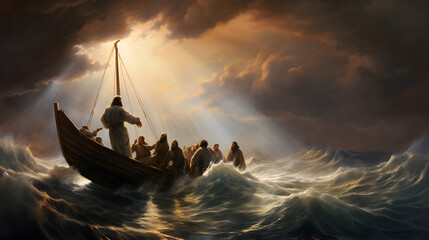
Jesus Christ calms down a storm: « And when he went aboard a boat, his disciples followed him. Now look! a great storm arose on the sea, so that the boat was being covered by the waves; but he was sleeping. And they came and woke him up, saying: “Lord, save us, we are about to perish!” But he said to them: “Why are you so afraid, you with little faith?” Then he got up and rebuked the winds and the sea, and a great calm set in. So the men were amazed and said: “What sort of person is this? Even the winds and the sea obey him.” » (Matthew 8:23-27). This miracle shows that in the earthly paradise there will be no more storms or floods that will cause disasters.
Jesus Christ walking on the sea: « After sending the crowds away, he went up on the mountain by himself to pray. When evening came, he was there alone. By now the boat was many hundreds of yards away from land, struggling against the waves because the wind was against them. But in the fourth watch of the night he came to them, walking on the sea. When they caught sight of him walking on the sea, the disciples were troubled, saying: “It is an apparition!” And they cried out in their fear. But at once Jesus spoke to them, saying: “Take courage! It is I; do not be afraid.” Peter answered him: “Lord, if it is you, command me to come to you over the waters.” He said: “Come!” So Peter got out of the boat and walked over the waters and went toward Jesus. But looking at the windstorm, he became afraid. And when he started to sink, he cried out: “Lord, save me!” Immediately stretching out his hand, Jesus caught hold of him and said to him: “You with little faith, why did you give way to doubt?” After they got up into the boat, the windstorm abated. Then those in the boat did obeisance to him, saying: “You really are God’s Son” » (Matthew 14:23-33).
The Miraculous Catch: « On one occasion when the crowd was pressing in on him and listening to the word of God, he was standing by the lake of Gen·nesʹa·ret. And he saw two boats docked at the lakeside, but the fishermen had got out of them and were washing off their nets. Going aboard one of the boats, which was Simon’s, he asked him to pull away a bit from land. Then he sat down, and he began teaching the crowds from the boat. When he stopped speaking, he said to Simon: “Pull out to where it is deep, and let down your nets for a catch.” But in reply Simon said: “Instructor, we toiled all night and caught nothing, but at your word I will lower the nets.” Well, when they did this, they caught a great number of fish. In fact, their nets began ripping apart. So they motioned to their partners in the other boat to come and assist them, and they came and filled both boats, so that these began to sink. Seeing this, Simon Peter fell down at the knees of Jesus, saying: “Depart from me, Lord, because I am a sinful man.” For both he and those with him were overwhelmed with astonishment at the catch of fish they had taken, and the same was true of both James and John, Zebʹe·dee’s sons, who were partners with Simon. But Jesus said to Simon: “Stop being afraid. From now on you will be catching men alive.” So they brought the boats back to land and abandoned everything and followed him » (Luke 5:1-11).
Jesus Christ multiplies the loaves: « After this Jesus set out across the Sea of Galʹi·lee, or Ti·beʹri·as. And a large crowd kept following him, because they were observing the miraculous signs he was performing in healing the sick. So Jesus went up on a mountain and sat down there with his disciples. Now the Passover, the festival of the Jews, was near. When Jesus raised his eyes and saw that a large crowd was coming to him, he said to Philip: “Where will we buy bread for these people to eat?” However, he was saying this to test him, for he knew what he was about to do. Philip answered him: “Two hundred de·narʹi·i worth of bread is not enough for each of them to get even a little.” One of his disciples, Andrew, Simon Peter’s brother, said to him: “Here is a little boy who has five barley loaves and two small fish. But what are these among so many?” Jesus said: “Have the people sit down.” As there was a lot of grass in that place, the men sat down there, about 5,000 in number. Jesus took the bread, and after giving thanks, he distributed it to those who were sitting there; he did likewise with the small fish, and they had as much as they wanted. But when they had eaten their fill, he said to his disciples: “Gather together the fragments left over, so that nothing is wasted.” So they gathered them together and filled 12 baskets with fragments left over by those who had eaten from the five barley loaves. When the people saw the sign he performed, they began to say: “This really is the Prophet who was to come into the world.” Then Jesus, knowing that they were about to come and seize him to make him king, withdrew again to the mountain all alone » (John 6:1-15). There will be plenty of food all over the earth (Psalms 72:16; Isaiah 30:23).
Jesus Christ resurrects the son of a widow: « Soon afterward he traveled to a city called Naʹin, and his disciples and a large crowd were traveling with him. As he got near the gate of the city, why look! there was a dead man being carried out, the only son of his mother. Besides, she was a widow. A considerable crowd from the city was also with her. When the Lord caught sight of her, he was moved with pity for her, and he said to her: “Stop weeping.” With that he approached and touched the bier, and the bearers stood still. Then he said: “Young man, I say to you, get up!” And the dead man sat up and started to speak, and Jesus gave him to his mother. Now fear seized them all, and they began to glorify God, saying: “A great prophet has been raised up among us,” and, “God has turned his attention to his people.” And this news concerning him spread out into all Ju·deʹa and all the surrounding country » (Luke 7:11-17).
Jesus Christ resurrects Jairus’ daughter: « While he was yet speaking, a representative of the presiding officer of the synagogue came, saying: “Your daughter has died; do not bother the Teacher any longer.” On hearing this, Jesus answered him: “Have no fear, only have faith, and she will be saved.” When he reached the house, he did not let anyone go in with him except Peter, John, James, and the girl’s father and mother. But people were all weeping and beating themselves in grief for her. So he said: “Stop weeping, for she did not die but is sleeping.” At this they began to laugh at him scornfully, because they knew she had died. But he took her by the hand and called to her: “Child, get up!” And her spirit returned, and she rose immediately, and he ordered that something be given her to eat. Well, her parents were beside themselves, but he instructed them to tell no one what had happened » (Luke 8:49-56).
Jesus Christ resurrects his friend Lazarus, who has been dead for four days: « Jesus had not yet come into the village, but he was still in the place where Martha had met him. When the Jews who were with Mary in the house consoling her saw her get up quickly and go out, they followed her, supposing that she was going to the tomb to weep there. When Mary arrived where Jesus was and caught sight of him, she fell at his feet and said to him: “Lord, if you had been here, my brother would not have died.” When Jesus saw her weeping and the Jews who had come with her weeping, he groaned within himself and became troubled. He said: “Where have you laid him?” They said to him: “Lord, come and see.” Jesus gave way to tears. At that the Jews began to say: “See, what affection he had for him!” But some of them said: “Could not this man who opened the eyes of the blind man prevent this one from dying?” Then Jesus, after groaning again within himself, came to the tomb. It was, in fact, a cave, and a stone was lying against it. Jesus said: “Take the stone away.” Martha, the sister of the deceased, said to him: “Lord, by now he must smell, for it has been four days.” Jesus said to her: “Did I not tell you that if you would believe you would see the glory of God?” So they took the stone away. Then Jesus raised his eyes heavenward and said: “Father, I thank you that you have heard me. True, I knew that you always hear me; but I spoke on account of the crowd standing around, so that they may believe that you sent me.” When he had said these things, he cried out with a loud voice: “Lazʹa·rus, come out!” The man who had been dead came out with his feet and hands bound with wrappings, and his face was wrapped with a cloth. Jesus said to them: “Free him and let him go.” » (John 11:30-44).
The last miraculous catch (shortly after the resurrection of Christ): « However, just as day was breaking, Jesus stood on the beach, but the disciples did not realize that it was Jesus. Then Jesus said to them: “Children, you do not have anything to eat, do you?” They answered: “No!” He said to them: “Cast the net on the right side of the boat and you will find some.” So they cast it, but they were not able to haul it in because of the large number of fish. Then the disciple whom Jesus loved said to Peter: “It is the Lord!” Now Simon Peter, on hearing that it was the Lord, put on his outer garment, for he was naked, and plunged into the sea. But the other disciples came in the small boat, dragging the net full of fish, for they were not a long way from land, only about 300 feet (90 m) away » (John 21:4-8).
Jesus Christ did many other miracles. They allow us to strengthen our faith, encourage us and gain insight into the many blessings that there will be in the earthly paradise. The written words of the Apostle John summarize very well the prodigious number of miracles that Jesus Christ has made, as a guarantee of what will happen in the earthly paradise: « There are also, in fact, many other things that Jesus did, which if ever they were written in full detail, I suppose the world itself could not contain the scrolls written » (John 21:25).
“They will look to the one whom they pierced, and they will wail over him as they would wail over an only son; and they will grieve bitterly over him as they would grieve over a firstborn son”
(Zechariah 12:10)
The apostle John, in his Gospel, testified to the fulfillment of this prophecy regarding Jesus Christ at the time of his death:
« Since it was the day of Preparation, so that the bodies would not remain on the torture stakes on the Sabbath (for that Sabbath day was a great one), the Jews asked Pilate to have the legs broken and the bodies taken away. 32 So the soldiers came and broke the legs of the first man and those of the other man who was on a stake alongside him. 33 But on coming to Jesus, they saw that he was already dead, so they did not break his legs. 34 But one of the soldiers jabbed his side with a spear, and immediately blood and water came out. 35 And the one who has seen it has given this witness, and his witness is true, and he knows that what he says is true, so that you also may believe. 36 In fact, these things took place for the scripture to be fulfilled: “Not a bone of his will be broken.” 37 And again, a different scripture says: “They will look to the one whom they pierced” » (John 19:31-37).
« Well, eight days later his disciples were again indoors, and Thomas was with them. Jesus came, although the doors were locked, and he stood in their midst and said: “May you have peace.” 27 Next he said to Thomas: “Put your finger here, and see my hands, and take your hand and stick it into my side, and stop doubting but believe” » (John 20:26,27).
These two texts show that Christ’s body has been pierced by the spear of a Roman soldier. The Book of Apocalypse also mentions this fulfillment concerning Christ’s body:
« Look! He is coming with the clouds, and every eye will see him, and those who pierced him; and all the tribes of the earth will beat themselves in grief because of him. Yes, Amen » (Apocalypse 1:7).
« He was despised and was avoided by men, A man who was meant for pains and was familiar with sickness. It was as if his face were hidden from us. He was despised, and we held him as of no account. Truly he himself carried our sicknesses, And he bore our pains. But we considered him as plagued, stricken by God and afflicted. But he was pierced for our transgression; He was crushed for our errors. He bore the punishment for our peace, And because of his wounds we were healed. Like sheep we have all wandered about, Each has turned his own way, And Jehovah has caused the error of us all to meet up with him. He was oppressed and he let himself be afflicted, But he would not open his mouth. He was brought like a sheep to the slaughter, Like a ewe that is silent before its shearers, And he would not open his mouth »(Isaiah 53:3-7).
By meditating on this text, we can understand that it is the deposit of the feelings of the Father about the circumstances which preceded and ended in the sacrificial death of Jesus Christ, the Son. What follows is a meditation on the feelings of God, the Heavenly Father, through a series of rhetorical questions or personal reflections, concerning the circumstances leading up to and culminating in the death of his Only Begotten Son.
What were the feelings of the Father when he saw his Son deeply saddened and anguished, shortly before the long hours of suffering until his death, that he was going to undergo?
« On leaving, he went as was his custom to the Mount of Olives, and the disciples also followed him. On arriving at the place, he said to them: “Carry on prayer so that you do not enter into temptation.” And he withdrew from them about a stone’s throw away, and he bent his knees and began to pray, saying: “Father, if you want to, remove this cup from me. Nevertheless, let, not my will, but yours take place.” Then an angel from heaven appeared to him and strengthened him. But he was in such agony that he kept praying more earnestly; and his sweat became as drops of blood falling to the ground. When he rose from prayer and went to the disciples, he found them slumbering, exhausted from grief » (Luke 22:39-45).
Jesus Christ was deeply distressed knowing the sadness that God would feel, seeing what men were going to inflict on him. God sent an angel to comfort his very saddened and distressed Son, before abandoning him to death at the hands of Satan the devil and his human sons, as a sacrifice for the world (John 3:16).
How did the Father feel when he saw his Son treated with disrespect, insulted, slapped, some spitting on him: “What is your opinion?” They answered: “He deserves to die.” Then they spat in his face and hit him with their fists. Others slapped him on the face, saying: “Prophesy to us, you Christ. Who struck you?” » (Matthew 26:66-68).
The expression « Prophesy to us, you Christ. Who struck you? », suggests that they had blindfolded Jesus Christ as they hit and spat on him. This underlines the high degree of wickedness of the men who surrounded him during his trial.
What were the feelings of the Father when he saw that the people had preferred to free a criminal, rather than his Son? How did the Father feel when he saw his Son flogged, and then insulted, and beaten by the soldiers?
« Then he released Barabbas to them, but he had Jesus whipped and handed him over to be executed on the stake. Then the soldiers of the governor took Jesus into the governor’s residence and gathered the whole body of troops together around him. And disrobing him, they draped him with a scarlet cloak, and they braided a crown out of thorns and put it on his head and put a reed in his right hand. And kneeling before him, they mocked him, saying: “Greetings, you King of the Jews!” And they spat on him and took the reed and began hitting him on his head. Finally, after they had mocked him, they stripped him of the cloak and put his outer garments on him and led him off to be nailed to the stake » (Matthew 27:26-31).
The flogging caused blood loss, which likely contributed to a partial anemia. Christ, consequently he no longer had the strength to carry the load of his stake, unlike the two other criminals who accompanied him: « As they were going out, they found a man of Cyrene named Simon. This man they compelled into service to carry his torture stake » (Matthew 27:32).
Having a physically flawless body, Jesus had worked as a carpenter, so he was in excellent physical condition. However, the intense emotional strain he felt, followed later by the physical and verbal abuse he endured during the night of his trial and until daybreak, including scourging and a sleepless night, as he was led to his execution, left him on the verge of exhaustion. In this state of extreme fatigue, he would suffer six hours of agony at the execution site…
How did the Father feel when he saw the Roman soldiers nailing the hands and feet of his Son, to hang his body? It is very likely that Jesus Christ, at that moment, thought about the feelings of his Father, when he said: « Father, forgive them, for they do not know what they are doing » (Luke 23:34). Indeed, how can a father feel when he is in the presence of someone who attacks or try to kill his son?
How did the Father feel during the six hours of suffering and at the time of the death of his Only Begotten Son? « And Jesus called out with a loud voice and said: “Father, into your hands I entrust my spirit.” After he said this, he expired » (Luke 23:46).
God, the Heavenly Father, prophetically pictured the emotional suffering of Mary, the mother of Jesus, at the time of the death of her Son: « Also, Simeon blessed them and said to Mary, the child’s mother: “Look! This child is appointed for the falling and the rising again of many in Israel and for a sign to be spoken against (yes, a long sword will be run through you), in order that the reasonings of many hearts may be revealed” (Luke 2:34,35). Indeed, what can a father (and a mother) feel when faced with someone who assaults their son to the point of causing his death?
This image of a « sword running through » Mary, to describe the violence of the emotional pain that she would have, following the death of her Son on earth, gives us an idea of the deep feeling of sadness that the Father felt. In this circumstance, in response to the most abject act of humans, God responded with the highest act of Love, giving his Son to save mankind: « For God loved the world so much that he gave his only-begotten Son, so that everyone exercising faith in him might not be destroyed but have everlasting life » (John 3:16).
This meditation on the feelings of the Heavenly Father allows us to cultivate a deep gratitude towards Him and His Son. Furthermore, it compels us to respond to their love by gladly doing their will, the will of the Heavenly Father and His Son, regardless of the sacrifices we may have to make temporarily, in view of the hope of everlasting life through the sacrifice the Father offered of His Son (John 3:36).
« This is what Jehovah of armies says, ‘In those days ten men out of all the languages of the nations will take hold, yes, they will take firm hold of the robe of a Jew, saying: “We want to go with you, for we have heard that God is with you people”’ »
(Zechariah 8:23)
The context of this prophetic statement shows that God will be with his people to protect them:
“This is what Jehovah says, ‘I will return to Zion and reside in Jerusalem; and Jerusalem will be called the city of truth, and the mountain of Jehovah of armies, the holy mountain. (…) This is what Jehovah of armies says, ‘Although it may seem too difficult to the remaining ones of this people in those days, should it seem too difficult also to me?’ declares Jehovah of armies. (…) And I will bring them in, and they will reside in Jerusalem; and they will become my people, and I will become their God in truth and in righteousness.’”
9 “This is what Jehovah of armies says, ‘Let your hands be strong, you who now hear these words from the mouth of the prophets, the same words that were spoken on the day the foundation of the house of Jehovah of armies was laid for the temple to be built. 10 For before that time, there were no wages being paid either for man or for beast; and it was not safe to come and go because of the adversary, for I turned all men one against another.’
11 “‘But now I will not deal with the remaining ones of this people as in the former days,’ declares Jehovah of armies. 12 ‘For the seed of peace will be sown; the vine will produce its fruit and the earth its yield, and the heavens will give their dew; and I will cause the remaining ones of this people to inherit all these things. 13 And just as you became an object of cursing among the nations, O house of Judah and house of Israel, so I will save you, and you will become a blessing. Do not be afraid! Let your hands be strong.’
14 “For this is what Jehovah of armies says, ‘“Just as I had determined to bring calamity on you because your forefathers made me indignant,” says Jehovah of armies, “and I felt no regret, 15 so at this time I have determined to do good to Jerusalem and to the house of Judah. Do not be afraid!”’
16 “‘These are the things you should do: Speak the truth with one another, and the judgments in your gates must promote truth and peace. 17 Do not scheme calamity against one another in your hearts, and do not love any false oath; for these are all things that I hate,’ declares *Jehovah (YHWH)” (Zechariah 8:3,6,8-17).
* YHWH is the tetragrammaton, or four-letter for the Divine Name. In the New World Translation of the Bible, it appears with the vocalization commonly used for centuries as « Jehovah ». This vocalization is doubly inaccurate because it inserts the pronunciation J instead of I (i) or Y, and the V corresponding to W, which is pronounced « U » or « ou » (not V). The correct vocalization of the Tetragrammaton is YeHou(W)aH, Yehouah. The inaccurate vocalization « Jehovah » is retained in the Bible translation used, just as the inaccurate vocalization of « Jesus, » pronounced Yeshua or Yeshoua, because they are the most known to readers (click on the link to examine the study on the Divine Name in more detail: The Divine Name YHWH is pronounced as it is written).
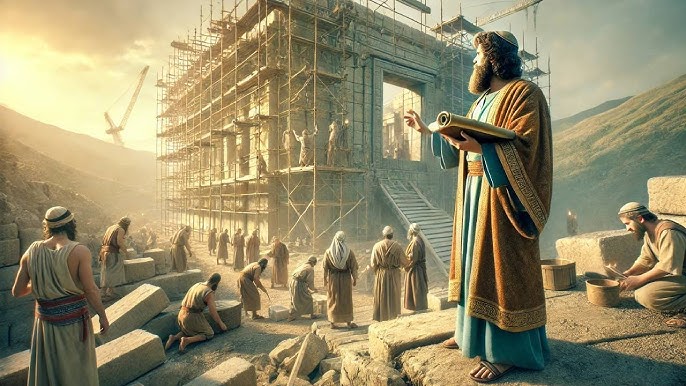
These words of encouragement were addressed to the Jews who had returned from Babylon to Jerusalem, a city in complete ruins and a temple in need of complete rebuilding. Through prophets such as Zechariah and Haggai, God reassured them, promising his protection. Furthermore, Zerubbabel, Yeshua, Ezra, and Nehemiah played a pivotal role in the reconstruction of the city, the temple, and the government administration of Israel, the tribe of Judah, and Jerusalem. The passage in Zechariah 8:23 is situated within this historical context:
“This is what Jehovah of armies says, ‘In those days ten men out of all the languages of the nations will take hold, yes, they will take firm hold of the robe of a Jew, saying: “We want to go with you, for we have heard that God is with you people”’”(Zechariah 8:23).
Jesus Christ explained how this prophecy would be fulfilled on a worldwide scale, especially when preaching to a Samaritan woman:
« You worship what you do not know; we worship what we know, because salvation begins with the Jews » (John 4:22). Jesus Christ explained to the Samaritan woman that his Father has used his special relationship with Israel to plan the everlasting salvation of all mankind. Abraham, Isaac, and Jacob are the founders of this nation (Matthew 8:11).
The man Jesus Christ, a Jew, is the Main Offspring of Abraham, through him the nations will be blessed (Galatians 3:16). Even though, this special relationship has ceased with Israel, God continues to love the Jewish people, like all the nations, which He created because He is not partial: “At this Peter began to speak, and he said: “Now I truly understand that God is not partial, but in every nation the man who fears him and does what is right is acceptable to him » (Acts 10:34,35; 17:26).
Nevertheless, Zechariah’s prophecy shows that Jehovah will make an everlasting mention of Zion, Jerusalem, Judah and Israel, among all nations: « “Shout for joy, O daughter of Zion; for I am coming, and I will reside in your midst,” declares Jehovah. “Many nations will join themselves to Jehovah in that day, and they will become my people; and I will reside in your midst.” And you will have to know that Jehovah of armies has sent me to you. Jehovah will take possession of Judah as his portion on the holy ground, and he will again choose Jerusalem. 13 Be silent, all flesh, before Jehovah, for he is taking action from his holy dwelling » (Zechariah 2:10-13; chapter 8; Ezekiel 40-48).
However, his nation is now spiritual, it is « the Israel of God »: « Peace and mercy be upon them, yes, upon the Israel of God » (Galatians 6:16). The Kingdom of God, the bride of Christ, the « New Jerusalem », will rule the earth: « I also saw the holy city, New Jerusalem, coming down out of heaven from God and prepared as a bride adorned for her husband. With that I heard a loud voice from the throne say: “Look! The tent of God is with mankind, and he will reside with them, and they will be his people. And God himself will be with them. And he will wipe out every tear from their eyes, and death will be no more, neither will mourning nor outcry nor pain be anymore. The former things have passed away” » (Revelation 21:2-4).
According to the prophecy of Zechariah , the present-day Jerusalem will be destroyed by an earthquake during the great tribulation (Zechariah 14:3-5). Jesus Christ repeated this important information, in Matthew 24:2: « In response he said to them: “Do you not see all these things? Truly I say to you, by no means will a stone be left here upon a stone and not be thrown down””.
The Kingdom of God on earth will rule the « twelve tribes of Israel », that is to say, the great crowd which will come out of the great tribulation and the earthly resurrected ones: « Jesus said to them: “Truly I say to you, in the re-creation, when the Son of man sits down on his glorious throne, you who have followed me will sit on 12 thrones, judging the 12 tribes of Israel » (Matthew 19:28; John 5:28,29; Revelation 7:9-17).
***
« And I have other sheep, which are not of this fold; those also I must bring, and they will listen to my voice, and they will become one flock, one shepherd »
(John 10:16)
As we carefully read John 10: 1-16, we notice that the central theme is the identification of the Messiah as a true shepherd for his disciples, the sheep.
In John 10: 1 and John 10: 16, it is written: « Most truly I say to you, He that does not enter into the sheepfold through the door but climbs up some other place, that one is a thief and a plunderer. (…) And I have other sheep, which are not of this fold; those also I must bring, and they will listen to my voice, and they will become one flock, one shepherd ». This « sheepfold » represents the territory where Jesus Christ preached, the Nation of Israel, in the context of the Mosaic law: « These twelve Jesus sent forth, giving them these orders: “Do not go off into the road of the nations, and do not enter into a Sa·marʹi·tan city; but, instead, go continually to the lost sheep of the house of Israel » (Matthew 10:5,6). « In answer he said: “I was not sent forth to any but to the lost sheep of the house of Israel” » (Matthew 15:24). This sheepfold is also the « house of Israel ».
In John (10:1-6), it is written that Jesus Christ presented himself at the gate of the sheepfold: « “Most truly I say to you, the one who does not enter into the sheepfold through the door but climbs in by another way, that one is a thief and a plunderer. 2 But the one who enters through the door is the shepherd of the sheep. 3 The doorkeeper opens to this one, and the sheep listen to his voice. He calls his own sheep by name and leads them out. 4 When he has brought all his own out, he goes ahead of them, and the sheep follow him, because they know his voice. 5 They will by no means follow a stranger but will flee from him, because they do not know the voice of strangers.” 6 Jesus spoke this comparison to them, but they did not understand what he was saying to them » (John 10:1-6).
In John 10:1-6, Jesus Christ presented himself before the gate of the sheepfold. This happened at the time of his baptism. The « doorkeeper » was John the Baptist (Matthew 3:13). By baptizing him, he became the Christ. John the Baptist opened the door for him and testified that Jesus is the Christ and the Lamb of God: « See, the Lamb of God that takes away the sin of the world! » (John 1:29-36).
In John 10:7-15, while remaining on the same Messianic theme, Jesus Christ uses another illustration by designating himself as the « door »: « So Jesus said again: “Most truly I say to you, I am the door for the sheep. 8 All those who have come in place of me are thieves and plunderers; but the sheep have not listened to them. 9 I am the door; whoever enters through me will be saved, and that one will go in and out and find pasturage. 10 The thief does not come unless it is to steal and slay and destroy. I have come that they may have life and have it in abundance. 11 I am the fine shepherd; the fine shepherd surrenders his life in behalf of the sheep. 12 The hired man, who is not a shepherd and to whom the sheep do not belong, sees the wolf coming and abandons the sheep and flees—and the wolf snatches them and scatters them— 13 because he is a hired man and does not care for the sheep. 14 I am the fine shepherd. I know my sheep and my sheep know me, 15 just as the Father knows me and I know the Father; and I surrender my life in behalf of the sheep » (John 10:7-15).
Jesus Christ uses a different metaphor by referring to himself as the door and later as the only way to everlasting life: “Jesus said to him: “I am the way and the truth and the life. No one comes to the Father except through me’” (John 14:6).
From verse 9 onward, in the same passage (the illustration changes once again), he refers to himself as the shepherd who tends his sheep, leading them « in and out » to find for them pasturage. The teaching is centered both on him and on how he cares for his sheep. Jesus Christ is the excellent shepherd who will lay down his life for his disciples and who loves his sheep (unlike the hired man (who is not a shepherd), who will not risk his life for sheep that do not belong to him).
Once again, the central point of Christ’s teaching is Himself as the shepherd who will sacrifice Himself for His sheep. He prophetically announces, at the time of his declaration, that He will lay down his life for his sheep, because his Father has given them to Him. He sacrificed his life for them so that they might obtain everlasting life: “Just as the Son of man came, not to be ministered to, but to minister and to give his life as a ransom in exchange for many” (Matthew 20:28; John 3:16, 36; 17:3). The main theme remains Jesus Christ as Messiah, as shepherd (John 10:1-6), and as the gate and the shepherd who actively cares for his sheep (John 10:7-15).
In John (10:16-18), he announces that his flock of sheep, at the time of his pronouncements, will increase considerably: « And I have other sheep, which are not of this fold; those too I must bring in, and they will listen to my voice, and they will become one flock, one shepherd. 17 This is why the Father loves me, because I surrender my life, so that I may receive it again. 18 No man takes it away from me, but I surrender it of my own initiative. I have authority to surrender it, and I have authority to receive it again. This commandment I received from my Father » (John 10:16-18).
Reading these verses, according to the context, Jesus Christ announces a revolutionary idea at that time: he would sacrifice his life not only for his Jewish disciples (in the sheepfold), but also in favor of other disciples who would not be part of this sheepfold of Israel. The proof is, the last command which he gave to his disciples, regarding the preaching, is this: « You will be witnesses of me both in Jerusalem and in all Judea and Samaria and to the most distant part of the earth » (Acts 1:8). It is precisely during the baptism of Cornelius that the words of Christ in John 10:16 began to be realized (See the narrative of Acts chapter 10).
Thus, the « other sheep » of John 10:16 apply to non-Jewish Christians in the flesh. In John 10:16-18 it is described the unity in the obedience of the sheep to the Shepherd Jesus Christ. He also spoke of all of his disciples in his day as a « little flock »: « Have no fear, little flock, because your Father has approved of giving you the kingdom » (Luke 12:32). Some use this biblical quote of Luke (12:32), to contrast the group of 144,000 of the Book of Apocalypse, as being the little flock, with the great crowd mentioned in the same book, this time referring to them as the other sheep of John (10:16) (Apocalypse chapter 7). Does such an interpretation respect the historical context of Christ’s statements? It does not.
By Pentecost in 33 C.E., the disciples of Christ, numbered only 120 (Acts 1:15). In the remainder of the Acts narrative, we read that their number was a few thousand (Acts 2:41 (3,000 souls); Acts 4:4 (5,000)). Be that as it may, the new Christians, whether in the time of Christ, as in that of the apostles, represented a « little flock », comparing with the whole population of the nation of Israel and then to the other nations of that time.
« Of all nations and tribes and peoples and tongues«
(Apocalypse 7:9)
The above quote, concerning the great crowd, does not mean that it represents alone, the other sheep (John 10:16). As a reminder, the other sheep in the time of Christ and the apostles represent Christ’s disciples, not Israelites by birth, from other nations. Therefore, among the other sheep, there will be disciples who are part of the 144,000, members of the great crowd, and those resurrected (Revelation 7; 14:1-5 and chapter 20).
The text above draws attention to three expressions that illustrate unity or harmony within the diversity of nations, tribes, peoples, and tongues. The Heavenly Father and His Son, through His Kingdom, will unite the different peoples, taking into account their cultural (nations with different tongues), tribal (tribes), and racial (peoples) differences. There will be a harmony which purpose will be to unify in diversity, particularly through the worship of God: « For then I will change the language of the peoples to a pure language, So that all of them may call on the name of Jehovah, To serve him shoulder to shoulder » (Zephaniah 3: 9)). There will be nations without nationalism and patriotism, tribes without tribalism and races diversities without racism and a worlwide unity in cultural diversities, without standardized globalism. Thus, the evils of patriotism and globalism, which are currently causing wars, famines and diseases, will disappear forever. There will be lovely unity in lovely diversities, willed and created by God (Acts 17:26).
We must be united as Jesus Christ asked his Father
« I make request, not concerning these only, but also concerning those putting faith in me through their word, so that they may all be one, just as you, Father, are in union with me and I am in union with you, that they also may be in union with us, so that the world may believe that you sent me » (John 17:20,21).
Sin against the holy spirit which has no forgiveness
« On this account I say to you, Every sort of sin and blasphemy will be forgiven men, but the blasphemy against the spirit will not be forgiven. For example, whoever speaks a word against the Son of man, it will be forgiven him; but whoever speaks against the holy spirit, it will not be forgiven him, no, not in this system of things nor in that to come »
(Matthew 12:31,32)
The sin against the holy spirit is a stubborn attitude against the active force of God, and more generally against his purpose. Whoever sins against the holy spirit, practices sin stubbornly. Jesus Christ, when on earth, pointed out that some of the the Pharisees had sinned against the holy spirit: « Woe to you, scribes and Pharisees, hypocrites! because you traverse sea and dry land to make one proselyte, and when he becomes one you make him a subject for Ge·henʹna twice as much so as yourselves. (…) Serpents, offspring of vipers, how are you to flee from the judgment of Gehenna? » (Matthew 23: 15,33). The Gehenna was the dumping ground, at the south of Jerusalem, outside the walls, which symbolized everlasting destruction and in the words of Christ, the death without resurrection.
How did some of these men come to sin against the holy spirit? The disciple Stephen summed up the spiritual process very well: « Obstinate men and uncircumcised in hearts and ears, you are always resisting the holy spirit; as your forefathers did, so you do. Which one of the prophets did your forefathers not persecute? Yes, they killed those who made announcement in advance concerning the coming of the righteous One, whose betrayers and murderers YOU have now become, you who received the Law as transmitted by angels but have not kept it » (Acts 7:51-53).
These religious leaders have seen the miraculous manifestations of the Holy Spirit through the many healings and resurrections performed by Jesus Christ. As an example, after the resurrection of Lazarus, it is written in the Gospel of John that the Pharisees sought to kill not only Jesus Christ, but also Lazarus (John 11:45-53 (the decision to kill Jesus); John 12:10 (The decision to kill Lazarus)). In the context of the declaration of Christ about the sin against the holy spirit, the Pharisees said that Jesus performed miracles with the spirit of the devil. It represented blasphemy against the active force of God, the holy spirit (Matthew 12:22-30). Those who sin against the Holy Spirit are completely wicked people.
How to avoid this extreme? The apostle Paul gives the answer: « Wherefore, now that you have put away falsehood, speak truth each one of you with his neighbor, because we are members belonging to one another. Be wrathful, and yet do not sin; let the sun not set with you in a provoked state, neither allow place for the Devil. Let the stealer steal no more, but rather let him do hard work, doing with his hands what is good work, that he may have something to distribute to someone in need. Let a rotten saying not proceed out of your mouth, but whatever saying is good for building up as the need may be, that it may impart what is favorable to the hearers. Also, do not be grieving God’s holy spirit, with which you have been sealed for a day of releasing by ransom » (Ephesians 4:25-30).
Therefore, one should not grieve the holy spirit, that is, not engage in conduct contrary to the biblical commandments. Those who use to be engaged in this misconduct, the next step can be to « resist » the holy spirit, as the Pharisees did. Some might ask, with quite legitimate fear, whether they have sinned against the holy spirit. How to know it? We can be reassured while remaining vigilant regarding this question.
It is God who judges through his Son Jesus Christ, to know who has sinned against the holy spirit. It is interesting to re-read and think about the narrative of the prodigal son (Luke 16:11-23). Jesus Christ portrays the mercy of God in the guise of a father who patiently allows his son to follow his path, which ranges from a fundamentally evil attitude to one that leads to repentance. This illustration shows how Jehovah God is ready to detect the slightest hint of repentance in order to forgive (1 Kings 18:13 (Jehovah saw something good in the heart of the son of king Jeroboam (an evil king))). Some humans have their conscience charged by serious sins they have committed, some of them serious. The fact that the conscience reacts and condemns us for our evil deeds, causing great sadness, is an important clue that the irreversible has not been reached from the point of view of God.
Indeed, there is a sadness which leads to repentance: « Hence even if I saddened you by my letter, I do not regret it. Even if I did at first regret it, (I see that that letter saddened you, though but for a little while,) now I rejoice, not because you were just saddened, but because you were saddened into repenting; for you were saddened in a godly way, that you might suffer no damage in anything due to us. For sadness in a godly way makes for repentance to salvation that is not to be regretted; but the sadness of the world produces death. For, look! this very thing, your being saddened in a godly way, what a great earnestness it produced in you, yes, clearing of yourselves, yes, indignation, yes, fear, yes, longing, yes, zeal, yes, righting of the wrong! In every respect you demonstrated yourselves to be chaste in this matter » (2 Corinthians 7:8-11; Isaiah 1:18 « Come, now, you people, and let us set matters straight between us,” says Jehovah. “Though the sins of you people should prove to be as scarlet, they will be made white just like snow; though they should be red like crimson cloth, they will become even like wool »).
However, let us remain constantly vigilant as to the use of our language because it is with it, that this irreversible sin can be committed, according to Jesus Christ: « For by your words you will be declared righteous, and by your words you will be condemned » (Matthew 12:33-37; compare with Matthew 5:22 « Whereas whoever says, ‘You despicable fool!’ will be liable to the fiery Gehenna »). The whole of Chapter 3 of the Disciple James Letter is describing the correct and misuse of the tongue. In this chapter, James also shows that it is with the tongue that this unforgivable sin can be done: « Well, the tongue is a fire. The tongue is constituted a world of unrighteousness among our members, for it spots up all the body and sets the wheel of natural life aflame and it is set aflame by Gehenna » (James 3:6). Let us manifest wisdom from above to protect ourselves spiritually from committing the irreparable from the point of view of God and of his Son Jesus Christ, to whom he has entrusted judgment: “But the wisdom from above is first of all chaste, then peaceable, reasonable, ready to obey, full of mercy and good fruits, not making partial distinctions, not hypocritical. Moreover, the fruit of righteousness has its seed sown under peaceful conditions for those who are making peace » (James 3:17,18).
To commit a sin
or to practice sin
Whoever practices sin, comes from the devil: « Everyone who practices sin is also practicing lawlessness, and sin is lawlessness. 5 You know, too, that he was made manifest to take away our sins, and there is no sin in him. 6 Everyone remaining in union with him does not practice sin; no one who practices sin has either seen him or come to know him. 7 Little children, let no one mislead you; the one who practices righteousness is righteous, just as that one is righteous. 8 The one who practices sin originates with the Devil, because the Devil has been sinning from the beginning. For this purpose the Son of God was made manifest, to break up the works of the Devil. 9 Everyone who has been born from God does not practice sin, for His seed remains in such one, and he cannot practice sin, for he has been born from God. 10 The children of God and the children of the Devil are evident by this fact: Whoever does not practice righteousness does not originate with God, nor does the one who does not love his brother. 11 For this is the message that you have heard from the beginning, that we should love one another; 12 not like Cain, who originated with the wicked one and slaughtered his brother. And for what reason did he slaughter him? Because his own works were wicked, but those of his brother were righteous » (1 John 3:4-12).
The apostle John mentions the practice of sin, that is to say having a continuous and voluntary conduct in sin. In verses 7 and 8, he contrasts the man who practices justice as a way of life with the man who practices sin, as other and different way of life. Thus, the practice of sin is different from the fact of committing a single sin, resulting of a human weakness. The apostle Paul has shown, like the apostle John, that this kind of single sin, made by weakness can be forgiven on the basis of the atonement value of the sacrifice of Christ (Romans 7:21-25).
John gives an example of practice of sin, a continuous feeling of hatred against his neighbor: « Do not be surprised, brothers, that the world hates you. 14 We know that we have passed over from death to life, because we love the brothers. The one who does not love remains in death. 15 Everyone who hates his brother is a murderer, and you know that no murderer has everlasting life remaining in him. 16 By this we have come to know love, because that one surrendered his life for us, and we are under obligation to surrender our lives for our brothers. 17 But whoever has the material possessions of this world and sees his brother in need and yet refuses to show him compassion, in what way does the love of God remain in him? 18 Little children, we should love, not in word or with the tongue, but in deed and truth » (1 John 3:13-18).
As Jesus Christ said, sin by intention in the heart, or by the expression of bad feelings of hatred in the heart, is a serious sin, even if it is not materialized in actions (like a homicide or murder) (Matthew 5:28). John writes that someone who has hatred for his brother, is already a homicide and therefore he no longer fulfills the conditions required by God, to obtain everlasting life.
Sin that does not incur death
or sin that incurs death
« If anyone catches sight of his brother committing a sin that does not incur death, he will ask, and God will give life to him, yes, to those not committing sin that incurs death. There is a sin that does incur death. It is concerning that sin that I do not tell him to make request. 17 All unrighteousness is sin, and yet there is a sin that does not incur death. 18 We know that everyone who has been born from God does not practice sin, but the one born from God watches him, and the wicked one cannot take hold of him » (1Jean 5:16-18).
As the apostle Paul wrote, the wages sin pays is death (Romans 6:23). Thus, according to the apostle John, there is a sin that does not incur death, allowing the forgiveness of God, on the basis of the atonement value of the sacrifice of Christ. The sin which incurs death, according to verse 18, is the practicing of sin, in this case, the sacrifice of Christ does not apply, it is not even useful to pray for those who are practicing it. The apostle Paul wrote a similar idea on the practice of voluntary sin, which cannot be forgiven and which, therefore, incurs death: « For as regards those who were once enlightened and who have tasted the heavenly free gift and who have become partakers of holy spirit 5 and who have tasted the fine word of God and powers of the coming system of things, 6 but have fallen away, it is impossible to revive them again to repentance, because they nail the Son of God to the stake again for themselves and expose him to public shame » (Hebrews 6:4-6).
“And again, when he bringeth in the firstbegotten into the world, he saith,And let all the angels of God worship him”
(Hebrews 1:6. King James Version (KJV))
There are some questions which answers cannot be binary, that is, answered with a simple “yes” or “no”. Answering this question with a simple « yes », can create several misunderstandings. For example, for some Christians, this would mean suggesting that we can worship him by directly addressing prayers to Jesus Christ (The more precise vocalization of his name, which contains the entire Tetragrammaton (YHWH), is Yeshua), in the same way as to the Heavenly Father, Jehovah God (The more precise vocalization of the Divine Name YHWH is Yehouah, (The Divine Name, YHWH, is pronounced as it is written)). Or again, it would suggest that the Father and the Son are two persons in one, according to the dogma of the Trinity which is not biblical. Added to this confusion is that in most Christian churches, there is a reluctance or even a refusal, to pronounce the Divine Name (YHWH), Yehouah, in their public prayers, replacing it with Lord (Adonai). In the latter situation, Christians who hear these public prayers can be confused, as to whom the teacher who publicly prays, is addressing, to God, the Heavenly Father or to his Son? On the other hand, to answer with a simple « no », would contradict the text of Hebrews (1:6), mentioned above. The answer must be based on the biblical context, but also on the definition that the verb « to worship » can have in the Greek and Hebrew text (and Aramaic).
First of all, Jesus Christ is the Son of God, therefore, he is not God, the Heavenly Father (Matthew 16:13-20). Jesus Christ said that his Heavenly Father is greater than him: « If you loved me, you would rejoice that I am going to the Father, for the Father is greater than I am » (John 14:28). Furthermore, the apostle Paul said that God is the Head of Christ while he was in heaven with his Heavenly Father: « But I want you to know that the head of every man is the Christ; in turn, the head of a woman is the man; in turn, the head of the Christ is God » (1 Corinthians 11:3). Some take the inaccurate shortcut of saying that to deny that Jesus Christ is God, the Heavenly Father, is to deny His divinity or divine origin.
Now, this is not the case, because to believe that Jesus Christ is the Son of God, is also to believe in his divine origin: « In the beginning was the Word, and the Word was with God, and the Word was a god” (John 1:1). This text, that many believers in the Trinity use to say that Jesus Christ is God, shows that such a statement is nonsense. The context shows that one cannot be with someone and at the same time, to be this same person; if Jesus Christ is God, how can he be at the same time “with” God? On the other hand, as this translation shows, Jesus Christ is a god in the sense that he has a divine origin, that is to say that he is the only Heavenly Son whom God directly created: « This one was in the beginning with God. All things came into existence through him, and apart from him not even one thing came into existence » (John 1:2,3). Thus, believing that Jesus Christ is the Son of God and not God Himself, does not prevent one from believing in the divinity or the divine origin of Christ…
Let us focus on the verb « to worship », in Hebrew, Aramaic and Greek. In the Bible there are two large parts: the Old Testament, the original text of is generally written in Hebrew (and some parts (more rarely) in Aramaic), and the New Testament is generally written in Greek. The text of Hebrews (1:6), at the beginning of the article, is translated from the Greek text.
The verb « to worship », translated from the Hebrew language is שָׁחָה shâchâh, shaw-khaw’; a primitive root; to depress, i.e. prostrate (especially reflexive, in homage to royalty or God):—bow (self) down, crouch, fall down (flat), humbly beseech, do (make) obeisance, do reverence, make to stoop, worship (Strong’s Concordance – H7812). This verb, depending on the context, can have the meaning of worshiping God, paying homage, render obeisance. The biblical references mentioned in the following parenthesis allude to the exclusive worship due to Jehovah God (Genesis 22:5; 2 Chronicles 20:18; Psalms 97:7). In Daniel 2:46, the verb « to worship », in the original aramaic text (Syriac language), is translated as paying homage, depending on the context (סְגִד « çêgid » Strong’s Concordance – H5457 (which comes from the Aramaic word « çâgad « , which means, to prostrate oneself in homage and to worship)): « Then King Nebuchadnezzar fell down with his face to the ground before Daniel and paid homage (« çêgid ») to him. And he gave the order to offer a present and incense to him » (Daniel 2:46). This text is very interesting, because it shows that a subordinate human, Daniel, is honored by a human who is superior to him in office, King Nebuchadnezzar. It is quite obvious, according to the context that the verb « to worship » in its literal sense (like worshiping a god), would have been inappropriate and that the expression « pay homage » is entirely consistent with the context.
The verb to worship, translated from the Greek, is « proskynéô », as it appears in the text, at the beginning of the article, of Hebrews 1:6 (προσκυνέω proskynéō, pros-koo-neh’-o; from G4314 and a probable derivative of G2965 (meaning to kiss, like a dog licking his master’s hand); to fawn or crouch to, i.e. (literally or figuratively) prostrate oneself in homage (do reverence to, adore):—worship) (Strong’s Concordance – G4352) (Strong’s Concordance – G4352). As with the word of Hebrew and Aramaic origin, it can have the meaning of exclusive worship to Jehovah God, or the meaning of bowing to pay homage to a human being. For example, Jesus Christ said at Matthew 4:10, regarding the exclusive worship to His Heavenly Father: « For it is written: ‘It is Jehovah your God you must worship (« proskynéô »), and it is to him alone you must render sacred service’ » (Matthew 4:10). It is not difficult to understand, depending on the context, that this is the exclusive worship to Jehovah God, the Heavenly Father, with a sacred service. This is not a simple homage that one could pay to a human being, according this context.
However, there are other biblical quotes where this same Greek verb appears, regarding people paying homage and which, depending on the context, is not an act of worship to a god. Here are some biblical texts:
The narrative of Matthew chapter 2, mentions the astrologers rendering obeisance to the child Jesus: « After Jesus had been born in Bethlehem of Judea in the days of Herod the king, look! astrologers from the East came to Jerusalem, saying: “Where is the one born king of the Jews? For we saw his star when we were in the East, and we have come to do obeisance to him” (“proskynéô”) (…) When sending them to Bethlehem, he said: “Go make a careful search for the young child, and when you have found him, report back to me so that I too may go and do obeisance to him” (“proskynéô”) (…) And when they went into the house, they saw the young child with Mary his mother, and falling down, they did obeisance to him (“proskynéô”). They also opened their treasures and presented him with gifts—gold and frankincense and myrrh” (Matthew 2:1,2,8,11). According to the context of this biblical quote, the astrologers did not perform an act of worship to the child Jesus, as for a god, because Joseph and Mary, the parents in charge of this child, would not have accepted such a thing. It is indeed a simple homage to the child Jesus.
In Mark 15:19, it is written that the soldiers of Governor Pilate mocked Jesus Christ by pretending to pay homage to him as king, it is the same Greek verb « proskynéô », which is mentioned.
It is written in Luke (24:50-53), that the disciples paid homage to the resurrected Jesus Christ after his ascension: « Then he led them out as far as Bethany, and he lifted up his hands and blessed them. As he was blessing them, he was parted from them and taken up to heaven. And they did obeisance to him and returned to Jerusalem with great joy. And they were continually in the temple, praising God ».
In John (9:38), it is written that when a man was healed of his blindness, he paid homage to Jesus Christ: “He said: “I do put faith in him, Lord.” And he did obeisance to him » (« proskynéô »). In this case, the former blind man must have thanked Jesus Christ, maybe by bowing down before him. The narrative in the Gospel of Luke, shows how a man healed from leprosy came to render obeisance to Jesus Christ: « One of them, when he saw that he was healed, turned back, glorifying God with a loud voice. And he fell facedown at Jesus’ feet, thanking him. Furthermore, he was a Samaritan. In reply Jesus said: “All ten were cleansed, were they not? Where, then, are the other nine? Did no one else turn back to give glory to God except this man of another nation?” » (Luke 17:15-18). It is written that he gave glory to God, giving thanks to Jesus Christ, bowing facedown at the feet of him. This man obviously paid homage to Christ, however, for him this act of thanks addressed to him, was a way of giving glory to his Heavenly Father (verse 18).
In Acts (10:25), it is written that Cornelius paid homage to Peter: « As Peter entered, Cornelius met him, fell down at his feet, and did obeisance to him » (« proskynéô »). However, the apostle Peter pointed him out by answering that he was only his alter ego, and that therefore, he did not deserve Cornelius to fall at his feet, as he could have done in the presence of Christ, for example: “But Peter lifted him up, saying: “Rise; I too am just a man”” (Acts 10:26).
The last biblical example shows, in this case, that the apostle John, under the influence of emotion, bowed down in an inappropriate way before the angel who gave him the revelations, which indicated an act of worship as for a god, and not as a simple homage: « At that I fell down before his feet to worship him (“proskynéô”). But he tells me: “Be careful! Do not do that! I am only a fellow slave of you and of your brothers who have the work of witnessing concerning Jesus. Worship God! (“proskynéô”) For the witness concerning Jesus is what inspires prophecy.” (…) Well I, John, was the one hearing and seeing these things. When I heard and saw them, I fell down to worship (“proskynéô”) at the feet of the angel who had been showing me these things. But he tells me: “Be careful! Do not do that! I am only a fellow slave of you and of your brothers the prophets and of those observing the words of this scroll. Worship God” (“proskynéô”) » (Apocalypse 19:10 ; 22:8,9). In both cases, the angel told him to worship God, while he mentions Christ as the inspiration of the prophecies, the Logos of God.
Given the information above, we can better understand the meaning of Hebrews 1:6, according to the King James Version (KJV)) Translation: « And again, when he bringeth in the firstbegotten into the world, he saith, And let all the angels of God worship him” (Hebrews 1:6 (KJV)). However, the Young’s Literal Translation renders this verse as follows: « And when again He may bring in the first-born to the world, He saith, `And let them bow before him — all messengers of God’ » (Hebrews 1:6. Young’s Literal Translation).
Thus, Hebrews 1:6 is often translated directly by the verb « to worship », which in fact has the meaning of paying homage or of prostrating oneself before Christ, according to the context. Moreover, the book of Revelation clearly shows that we must make this difference between worshiping God and paying homage to Christ. In Revelation 3:9, it is written that Jesus Christ announces that the enemies of one of the seven congregations would pay homage (« proskyneô ») to his disciples: « Look! I will make those from the synagogue of Satan who say they are Jews yet are not, but are lying—look! I will make them come and bow before your feet (« proskyneô ») and make them know that I have loved you”.
Therefore, Hebrews 1:6, is an invitation to pay homage, to render obeisance to Christ and not in the same way that one is to worship the Heavenly Father. It is only to Jehovah God, the Heavenly Father, that we must pray in an exclusive way of worship, through Jesus Christ (1 Timothy 2:5).
We must only worship Jehovah God, the Heavenly Father, with an exclusive way: « Whenever the living creatures give glory and honor and thanksgiving to the One seated on the throne, the One who lives forever and ever, the 24 elders fall down before the One seated on the throne and worship the One who lives forever and ever, and they cast their crowns before the throne, saying: “You are worthy, Jehovah our God, to receive the glory and the honor and the power, because you created all things, and because of your will they came into existence and were created” » (Apocalypse 4:9-11).
Jehovah God, the Heavenly Father, wants all intelligent creatures, both in heaven and on earth, to pay homage, to render obeisance to His Son Jesus Christ: « And they sing a new song, saying: “You are worthy to take the scroll and open its seals, for you were slaughtered and with your blood you bought people for God out of every tribe and tongue and people and nation, and you made them to be a kingdom and priests to our God, and they are to rule as kings over the earth.” And I saw, and I heard a voice of many angels around the throne and the living creatures and the elders, and the number of them was myriads of myriads and thousands of thousands, and they were saying with a loud voice: “The Lamb who was slaughtered is worthy to receive the power and riches and wisdom and strength and honor and glory and blessing.” And I heard every creature in heaven and on earth and underneath the earth and on the sea, and all the things in them, saying: “To the One sitting on the throne and to the Lamb be the blessing and the honor and the glory and the might forever and ever.” The four living creatures were saying: “Amen!” and the elders fell down and worshipped” (Apocalypse 5:9-14).
Some people think that the pronunciation of the Divine Name has been lost and that we are no longer able to use it with the exact vocalization. In the prophecy of Ezekiel 38:23, it is written that God will make his Name known in the worldwide part of the earth, especially at the time of the great tribulation. Therefore, God has been taking care of his Name in order to keep it known, particularly in his Word, the Bible. Some historical and technical information, regarding the Divine Name, are based on a book entitled, « A History of the Divine Name » – (L’Harmattan (French edition)), written by Mister Gerard Gertoux, a Hebrew scholars. This information concerning the Divine Name is supported by several hundred references as historical sources. The introduction of this book, on pages 9 and 10 summarizes very well all of this historical research work concerning the Divine Name. There is no mystery:
« First of all, the writing of the name of God is not a problem: it is the name of four letters YHWH, called the Tetragrammaton. How to pronounce such a Name? The dictionaries or encyclopedias indicate that « Yahweh » is an uncertain vocalisation, and that « Jehovah » is a barbarism from misreading, unbelievable as it may seem, this last statement is deliberately false, but this gross error was denounced by Hebrew scolars of all religions, including the support of the Vatican (Congregation of Propaganda), but without result.
This name YHWH is read without difficulty because it is pronounced as it is written, or « according to its letters », to quote the expression of the Talmud. In fact, until 70 AD, the high priests read the blessing of Numbers 6:24-27, in the Atonement Day, the Yom Kippur by pronouncing the Name, YHWH, according to his letters, that is to say as it is written. In fact, this name is even the easiest to read of the entire Bible since it has four vowels, as Flavius Josephus wrote it. The question of knowing which vowels were used to read YHWH is absurd, because the Masoretic vowels did not appear until at least the sixth century AD. Before that, the Hebrew names were vocalized through the three letters Y, W, H, as the writings of Qumran (Dead Sea Scrolls) have largely confirmed. The letter Y was read I (or Ê), letter W: Û (or O) and the letter H: A at the end of the words. For example, YH is read IA. YHWDH is read literally IHUDA (Judah). If the name did not have any vowels, then the vowel « a » was inserted; thus YSHQ is read: ISaHaQ (Isaac), YRWSLYM: IRÛSaLIM (Jerusalem); etc. The name YHWH was read IHUA (Ioua). To better hear the letter H (almost inaudible), we could add a « e » mute. So the name YHWDH that can be read literally IH-Û-DA, becomes I-eH-Û-DA, the exact equivalent of the Hebrew name Yehuda . This slight improvement gives for the Name YHWH the pronunciation I-Eh-Û-A (Ieoua), the equivalent of the Masoretic punctuation YeHoWaH. This coincidence is remarkable and providential if one believes that God has watched over his Name (Visibly unbeknownst to the copyists) » (« History of the Divine Name » pages 9 and 10). We will have the opportunity to come back to other convergent information on the vocalisation of the Divine Name, Jehovah, by an examination of the Hebrew and Aramaic « theophoric » biblical names (with the tetragrammaton, partially (YH) or in its entirety (YHWH)).
What should be the best vocalization of the Divine Name YHWH?
According to the introduction to this book, the two theophoric names containing the entire Tetragrammaton, namely YHWDH (Judah (son of Jacob and name of one of the twelve tribes of Israel)), are pronounced I-U-D-A or I-Eh-U-D-A. Regarding the name of Jesus, YHSW, it is vocalized Yehoshua. Thus, based on the vocalization of these two theophoric names, we understand that the Tetragrammaton YHWH is vocalized as follows: Iouah or Ieouah.
However, there is a certain ambiguity in the author’s writing that needs clarification. Here is what is written: “This slight improvement gives for the Name YHWH the pronunciation I-Eh-Û-A (Ieoua), the equivalent of the Masoretic punctuation YeHoWaH”. Taken out of the context, this sentence might suggest that the current vocalization “Jehovah” is the result of the Masoretic vowel points. However, according to what is written throughout this book and summarized above (corroborated by scholars of the past), this is absolutely not the case. The vowel points indicate the pronunciation of the letters YWH (the middle H being silent), namely IOA, or Ye(I)hou(O)ah(A). Thus, the “W” of the Tetragrammaton should not be pronounced like a “V” but like a “U” or “OU”. Therefore, Yehowah should be read phonetically as Yeouah. It is therefore evident that the current vocalization of the Divine Name, « Jehovah », is doubly inaccurate by the insertion of the « J » which should be replaced by an I or Y and of the « v » (corresponding to the W) which should be read phonetically « ou ».
The conclusion of this book « A HISTORY OF THE DIVINE NAME », confirms a vocalisation of the Name (Ioua), discovered hundreds of years ago by the Spanish monk Raymond Martin in his book (Pujio fidei (Dagger of the faith (1278))). He himself had drawn his sources on the writings of R. Moseh Ben Maymon (Maimonides), in « The Guide of the Lost » chapters 60-64, Part 1, relating to the Name. Another scholar named Porchetus de Salvaticis (1303), like Raymond Martin, used the same vocalisation of the Name.
Given this adjustment in the vocalization of the Divine Name, the question is: what should we do? As we understood earlier, the vocalization of the Name of the Son of God as « Jesus » is inaccurate and should be pronounced Yehoshua. However, in the context of public teaching, it makes more sense to continue vocalizing it as it has been for centuries, so that people know who it refers to as the Son of God. The same applies to the Divine Name of the Heavenly Father; it has been vocalized for centuries as « Jehovah ». Regarding the use of the Divine Name, discernment is necessary, keeping in mind that it must be associated with the Heavenly Father. Perhaps the teacher, in a public setting, will use the Divine Name in its most familiar form, while in other circumstances, within the context of their personal relationship with God, they will use the vocalization that seems most accurate to him. What is true for the Heavenly Father, is also true for his Son.
There are four main methods of finding the vocalisation of the Name, and the vocalisation of Biblical names
1 – The method of etymology: the name is identified with its etymology (when it exists). It is the most uncertain method because it considers that the etymology is systematically scientific and equivalent to the spiritual etymology or spiritual message (which is not always the case (see explanations above)) .
2 – The method of reading letters which demonstrates that the Name (YHWH) can be read by itself. It consists of the three basic letters (consonants/vowels (YHW) (Matres Lectionis)), allowing its reading (The letter Y is read I (or Ê), letter W: Û (or O) and the letter H: A to the end of the words)) (See explanations above).
3 – The method of the witnesses: It consists of examining the vowels used for the Hebrew names translated into Greek, in the text of the Septuagint (The Bible translated from Hebrew to Greek (2nd century BC)). For example: Abraham is written in the Septuagint, Abraam. Jesus: Iesous. Noah: Noé. Israel: Israel. Judah: Iouda. Moses: Môusès. Jerusalem: Iérousalèm.
4 – The onomastic method is the study of the Hebrew names which contain the Tetragrammaton (YHWH), or partially (YH). Names with the Tetragrammaton (wholly or partially), are « theophoric » names. This is the most reliable method: « This last method is the most reliable because the names are very stable over time, often much more than the words of the language themselves. The biblical names are somehow a memory sounds of the past or « phonograms ». In addition, the Hebrew language was, despite some variations, very stable over a long period of time, for example, the Hebrew letters of El Amarna dating from the 14th century BC can still be understood by a modern Israeli. So one can reconstruct a name with a very high confidence rate if the name to be found is preserved in several other names, and in this respect the divine name is extremely favored, since it was integrated into hundreds of biblical names, the only difficulty being to avoid confusing the great name YHWH (Jeremiah 44: 26) with the little YH (Psalms 68: 4) » (A history of the Name page 45) (YHWH: Yeouah; YH: Yah (diminutive of the Name).
From the scientific etymology of a name to its spiritual meaning
In the Bible, a Hebrew or Aramaic name has an intrinsic etymological meaning that anyone understanding these languages can understand. However, to this scientific etymology is added a biblical spiritual significance (or message), that explains the meaning of this name, its authority, its mission. Take several known examples:
– Jesus: Scientific etymology: Yeshua or Yehoshua in Hebrew means « Yeouah is salvation ». The message or spiritual meaning of his name: « he will save his people from their sins » (Matthew 1:21).
– Noah: Scientific etymology: Rest. The spiritual meaning of his name: consolation: « This one will bring us comfort from our labor and from the painful toil of our hands because of the ground that Jehovah has cursed » (Genesis 5:29).
– Israel: Scientific etymology: Struggle with God. The Spiritual Meaning of His Name: Fight and persevere with God and with men: « you have contended with God and with men and you have at last prevailed » (Genesis 32:28).
– Barnabas (name of Aramaic origin): Scientific etymology: Son of prophecy. The spiritual meaning of his name: Son of consolation: « So Joseph, who was also called by the apostles Barʹna·bas (which means, when translated, “Son of Comfort”) » (Acts 4:36).
Here is the explanation found in « A History of the Divine Name » (page 41), regarding the discrepancies between the scientific etymology of a name and its spiritual meaning or biblical message:
« We can note the « chasm » separating these two kinds of etymologies: Rather than trying to make them coincide, we must remember that the explanation of these differences is always the same: the purpose of the Biblical definitions is to give above all, a religious message. Besides, what would be the point of explaining to a Hebrew the meaning of a Hebrew name? Thus, it is obvious to a Hebrew that the name Noah scientifically means « rest »; however the verse of Genesis 5:29 tells us that this « rest » will biblically mean « he will comfort », because Noah was going to play a consoling prophetic role « .
Some people think that Jehovah’s statement concerning his Name, « I Will Become What I Choose to Become », is to be considered as a scientific etymology of the Name, allowing at the same time a more exact vocalization of it (Exodus 3:14). This interpretation has two major obstacles:
1 – The Name itself, Yeouah (YHWH), has no proven Hebrew scientific etymology. What seems logical: To say that the proper Name Yeouah (YHWH), would have a scientific etymology would be an anachronism that would suggest that the Hebrew language would have preceded the existence of the Divine Name. Now this Name is closely associated with an everlasting God who had no beginning (Genesis 1: 1)… Moreover, according to the inspired statements of the Apostle Paul, it does not seem that in the heavens one speaks Hebrew (1 Corinthians 13: 1 « tongues of angels »). It is more logical to think that the Hebrew language would be built around the Name, even allowing the children to vocalize it in all simplicity (It is pronounced according to its letters to use the expression of the Talmud, consisting of the three consonants/vowels of base for reading (YHW) (Matres Lecionis)): « »Do you hear what these are saying?” Jesus said to them: “Yes. Did you never read this, ‘Out of the mouth of children and infants, you have brought forth praise’? » » (Matthew 21:16 compare with 11:25).
2 – The context of the book of Exodus shows that the Israelites knew the name of the God of their ancestors (Abraham, Isaac and Jacob), and therefore its vocalisation was known. The answer of God « I Will Become What I Choose to Become », is not a scientific etymology of his Name (which would have helped Moses to better vocalize the Name), but rather a spiritual message regarding the « Memorial » of his Name (Exodus 3:15).
Conclusion on the vocalisation of the divine Name
« Outside the Masoretic vocalisation, there are several methods of finding the pronunciation of a name in the first century AD. However, biblical etymology (which is actually religious teaching), can not be used for this purpose.In the case of the Tetragrammaton, these three methods successively give the three pronunciations, Iaô (Witnesses method: comparison with the names of the Septuagint), Yehowah (onomastic method: comparison with theophoric names), Ihûa (method of reading letters), The examination of the historical context has made it possible to explain the discrepancy in Iaô, because at that time the Hebrew substitute YHW, or his Aramaic counterpart YW, was still widely used among the Jews. (…) Thus, there is a good agreement between the two pronunciations Yehowah and Ihûa, as satisfactory as Yehudah and Ihuda (Judah), Yésûa’ et Isûa’ (Jésus), etc. In view of this concordance, unanimity on vocalisation should have been easy to obtain! » (A History of the Name page 54).
« ఎందుకంటే, అప్పుడు మహాశ్రమ వస్తుంది. లోకం పుట్టిన దగ్గర నుండి ఇప్పటివరకు అలాంటి శ్రమ రాలేదు, మళ్లీ రాదు కూడా » (మత్తయి 24:21 ; Daniel 12:1). ఈ « గొప్ప ప్రతిక్రియ » ను « యెహోవా దినం » అని పిలుస్తారు, ఇది ఒక రోజు మాత్రమే ఉంటుంది: « ఆ రోజు ప్రత్యేకమైన రోజు అవుతుంది, అది యెహోవాకు చెందిన రోజు అని పిలవబడుతుంది. అప్పుడు పగలూరాత్రీ అనే తేడా ఉండదు; సాయంత్రం సమయంలో కూడా వెలుగు ఉంటుంది » (జెకర్యా 14:7).
ప్రకటన పుస్తకం (7:9-17), « గొప్ప జనసమూహం » చాలా మంది « గొప్ప ప్రతిక్రియ » నుండి బయటపడతారని చూపిస్తుంది: « ఆ తర్వాత నేను చూసినప్పుడు, ఇదిగో! ఏ మనిషీ లెక్కపెట్టలేని ఒక గొప్పసమూహం కనిపించింది. వాళ్లు అన్నిదేశాల నుండి, గోత్రాల నుండి, జాతుల నుండి, భాషల నుండి వచ్చారు. వాళ్లు తెల్లని వస్త్రాలు వేసుకొని ఆ సింహాసనం ముందు, గొర్రెపిల్ల ముందు నిలబడి ఉన్నారు. వాళ్ల చేతుల్లో ఖర్జూర మట్టలు ఉన్నాయి. (…) వెంటనే నేను అతనితో, “నా ప్రభువా, అది నీకే తెలుసు” అన్నాను. అప్పుడతను నాతో ఇలా అన్నాడు: “వీళ్లు మహాశ్రమను దాటి వచ్చేవాళ్లు. వీళ్లు గొర్రెపిల్ల రక్తంలో తమ వస్త్రాలు ఉతుక్కొని వాటిని తెల్లగా చేసుకున్నారు » » (ప్రకటన 7:9,14).
దేవుని దయ నుండి ఎలా ప్రయోజనం పొందాలో బైబిల్ వివరిస్తుంది: « యెహోవా మహారోజు దగ్గరపడింది! అది సమీపంగా ఉంది, చాలా వేగంగా దూసుకొస్తోంది! యెహోవా రోజు శబ్దం భయంకరంగా ఉంటుంది. ఆ రోజున యోధులు కేకలు వేస్తారు. ఆ రోజు ఉగ్రత నిండిన రోజు, వేదన, దుఃఖం కలిగించే రోజు, ఉపద్రవం, నాశనం తెచ్చే రోజు, చీకటి, అంధకారం కమ్ముకునే రోజు, మేఘాలు, గాఢాంధకారం కమ్ముకునే రోజు. (…) దేవుని తీర్పు అమలు కాకముందే, ధాన్యం పొట్టు గాలికి ఎగిరిపోయినట్టు ఆ రోజు గడిచిపోకముందే, యెహోవా కోపాగ్ని మీ మీదికి రాకముందే, యెహోవా ఉగ్రత రోజు మీ మీదికి రాకముందే, భూమ్మీదున్న సాత్వికులారా, ఆయన నీతియుక్తమైన శాసనాల్ని పాటిస్తున్న ప్రజలారా, మీరంతా యెహోవాను వెదకండి. నీతిని వెదకండి, సాత్వికాన్ని వెదకండి. అలాచేస్తే, యెహోవా ఉగ్రత రోజున బహుశా* మీరు దాచబడతారు » (జెఫన్యా 1:14,15; 2:2,3).
« గొప్ప ప్రతిక్రియ » కి ముందు, వ్యక్తిగతంగా, కుటుంబంగా మరియు సమాజంగా ఎలా సిద్ధం చేయాలి?
విస్తృతంగా చెప్పాలంటే, తండ్రి అయిన యెహోవా దేవుడితో, ప్రార్థన ద్వారా, కుమారుడైన యేసుక్రీస్తుతో మనకు మంచి సంబంధం ఉండాలి మరియు పరిశుద్ధాత్మ ద్వారా మనకు మార్గనిర్దేశం చేద్దాం, వీటిలో బైబిల్ నిక్షేపం. « బేసిక్ బైబిల్ ఎడ్యుకేషన్ » పేజీలో, రీడర్ పరిగణనలోకి తీసుకోవలసిన కొన్ని ప్రధాన అంశాలు చర్చించబడ్డాయి. ఈ పాయింట్లు కొన్ని క్రింద పునరావృతమవుతాయి:
– దేవునికి పేరు ఉంది: యెహోవా: « నేను యెహోవాను. ఇదే నా పేరు; నా మహిమను నేను ఎవ్వరికీ ఇవ్వను, నాకు రావాల్సిన స్తుతిని చెక్కిన విగ్రహాలకు చెందనివ్వను » (యెషయా 42:8). మనం యెహోవాను మాత్రమే ఆరాధించాలి: « యెహోవా మా దేవా, నువ్వు అన్నిటినీ సృష్టించావు; నీ ఇష్టాన్ని బట్టే అవి ఉనికిలోకి వచ్చాయి, సృష్టించబడ్డాయి. కాబట్టి మహిమ, ఘనత, శక్తి పొందడానికి నువ్వు అర్హుడవు » (ప్రకటన 4:11). మన ప్రాణశక్తితో మనం ఆయనను ప్రేమించాలి: « ఆయన అతనితో ఇలా అన్నాడు: “ ‘నువ్వు నీ దేవుడైన యెహోవాను నీ నిండు హృదయంతో, నీ నిండు ప్రాణంతో, నీ నిండు మనసుతో ప్రేమించాలి » (మత్తయి 22:37).దేవుడు త్రిమూర్తులు కాదు. త్రిమూర్తులు బైబిల్ బోధ కాదు.
– యేసు క్రీస్తు దేవుని ఏకైక కుమారుడు, అతను దేవుని చేత ప్రత్యక్షంగా సృష్టించబడిన దేవుని ఏకైక కుమారుడు: « మొదట్లో వాక్యం ఉన్నాడు, ఆ వాక్యం దేవునితో ఉన్నాడు, ఆ వాక్యం ఒక దేవుడు. మొదట్లో ఆయన దేవునితో ఉన్నాడు. అన్నీ ఆయన ద్వారానే సృష్టించబడ్డాయి, ఆయన లేకుండా ఏదీ సృష్టించబడలేదు » (యోహాను 1:1-3). « యేసు ఫిలిప్పీ కైసరయ ప్రాంతానికి వచ్చినప్పుడు తన శిష్యుల్ని, “మానవ కుమారుడు ఎవరని ప్రజలు చెప్పుకుంటున్నారు?” అని అడిగాడు. అందుకు వాళ్లు, “కొంతమంది బాప్తిస్మమిచ్చే యోహాను అని, ఇంకొంతమంది ఏలీయా అని, మరికొంతమంది యిర్మీయా అని లేదా ప్రవక్తల్లో ఒకడని చెప్పుకుంటున్నారు” అని అన్నారు. అప్పుడు ఆయన, “మరి మీరు నేనెవరినని అనుకుంటున్నారు?” అని వాళ్లను అడిగాడు. అందుకు సీమోను పేతురు, “నువ్వు క్రీస్తువి, జీవంగల దేవుని కుమారుడివి” అన్నాడు. అప్పుడు యేసు అతనితో ఇలా అన్నాడు: “యోనా కుమారుడివైన సీమోనూ, నువ్వు ధన్యుడివి. ఈ విషయాన్ని మనుషులు కాదుగానీ పరలోకంలో ఉన్న నా తండ్రే నీకు తెలియజేశాడు » (మత్తయి 16:13-17). యేసు క్రీస్తు దేవుడు కాదు అన్ని శక్తివంతమైన మరియు అతను త్రిమూర్తులలో భాగం కాదు.
– పరిశుద్ధాత్మ దేవుని క్రియాశీల శక్తి. ఇది వ్యక్తి కాదు: « అప్పుడు అగ్ని లాంటి నాలుకలు వాళ్లకు కనిపించాయి. ఆ నాలుకలు విడిపోయి, వాళ్లలో ఒక్కొక్కరి మీద ఒక్కో నాలుక వాలింది » (అపొస్తలుల కార్యములు 2:3). పవిత్రాత్మ త్రిమూర్తులలో భాగం కాదు.
– బైబిల్ దేవుని వాక్యం: « లేఖనాలన్నిటినీ దేవుడు ప్రేరేపించాడు. అవి బోధించడానికి, గద్దించడానికి, సరిదిద్దడానికి, దేవుని నీతి ప్రమాణాల ప్రకారం క్రమశిక్షణ ఇవ్వడానికి ప్రయోజనకరంగా ఉంటాయి. దానివల్ల దేవుని సేవకుడు ప్రతీ మంచిపని చేయడానికి పూర్తిగా సమర్థుడు అవ్వగలుగుతాడు, పూర్తిగా సిద్ధంగా ఉండగలుగుతాడు » (2 తిమోతి 3:16,17). మనము దానిని చదివి, అధ్యయనం చేసి, మన జీవితాల్లో అన్వయించుకోవాలి: « అతను యెహోవా ధర్మశాస్త్రాన్ని బట్టి ఆనందిస్తూ, పగలూ రాత్రీ దాన్ని ధ్యానిస్తాడు. అతను నీటి కాలువల పక్కనే నాటబడి, దాని కాలంలో ఫలాలు ఇచ్చే పచ్చని* చెట్టులా ఉంటాడు. అతను చేసే ప్రతీది సఫలమౌతుంది » (కీర్తన 1:2,3).
– క్రీస్తు బలిపై విశ్వాసం మాత్రమే పాప క్షమాపణ మరియు తరువాత చనిపోయినవారిని స్వస్థపరచడం మరియు పునరుత్థానం చేయగలదు: « దేవుడు లోకంలోని ప్రజల్ని ఎంతో ప్రేమించాడు, ఎంతగా అంటే వాళ్లకోసం తన ఒక్కగానొక్క కుమారుణ్ణి ఇచ్చాడు. ఆయనమీద విశ్వాసం ఉంచే ఏ ఒక్కరూ నాశనం కాకుండా శాశ్వత జీవితం పొందాలని అలా చేశాడు. (…) కుమారుడి మీద విశ్వాసం చూపించే వ్యక్తి శాశ్వత జీవితం పొందుతాడు; కుమారుడికి విధేయత చూపించని వ్యక్తి శాశ్వత జీవితం పొందడు, కానీ దేవుని ఆగ్రహం అతని మీద నిలిచివుంటుంది » (యోహాను 3:16,36). « అలాగే మానవ కుమారుడు కూడా ఇతరులతో సేవ చేయించుకోవడానికి రాలేదు కానీ ఇతరులకు సేవచేయడానికి, ఎంతోమంది కోసం విమోచన క్రయధనంగా తన ప్రాణాన్ని అర్పించడానికి వచ్చాడు » (మత్తయి 20:28).
– క్రీస్తు ప్రేమ యొక్క ఉదాహరణ తరువాత మన పొరుగువారిని ప్రేమించాలి: « నేను మీకు కొత్త ఆజ్ఞ ఇస్తున్నాను, మీరు ఒకరినొకరు ప్రేమించుకోవాలి, నేను మిమ్మల్ని ప్రేమించినట్టే మీరు కూడా ఒకరినొకరు ప్రేమించుకోవాలి. మీ మధ్య ప్రేమ ఉంటే, మీరు నా శిష్యులని అందరికీ తెలుస్తుంది » (యోహాను 13:34,35).
« గొప్ప ప్రతిక్రియ » సమయంలో మనం ఎలా ప్రవర్తించాలి?
బైబిల్ ప్రకారం, గొప్ప ప్రతిక్రియ సమయంలో దేవుని దయ పొందటానికి ఐదు ముఖ్యమైన పరిస్థితులు ఉన్నాయి:
1 – ప్రార్థనలో యెహోవా నామాన్ని ప్రార్థించండి: « యెహోవా నామాన్ని ప్రార్థించే ప్రతి ఒక్కరూ క్షేమంగా బయటకు వస్తారు » (జోయెల్ 2:32). యెహోవా దేవునికి ప్రార్థన చాలా ముఖ్యమైనది.
2 – పాప క్షమాపణ పొందటానికి క్రీస్తు బలిపై విశ్వాసం కలిగి ఉండండి: « ఆ తర్వాత నేను చూసినప్పుడు, ఇదిగో! ఏ మనిషీ లెక్కపెట్టలేని ఒక గొప్పసమూహం కనిపించింది. వాళ్లు అన్నిదేశాల నుండి, గోత్రాల నుండి, జాతుల నుండి, భాషల నుండి వచ్చారు. వాళ్లు తెల్లని వస్త్రాలు వేసుకొని ఆ సింహాసనం ముందు, గొర్రెపిల్ల ముందు నిలబడి ఉన్నారు. వాళ్ల చేతుల్లో ఖర్జూర మట్టలు ఉన్నాయి. (…) వెంటనే నేను అతనితో, “నా ప్రభువా, అది నీకే తెలుసు” అన్నాను. అప్పుడతను నాతో ఇలా అన్నాడు: “వీళ్లు మహాశ్రమను దాటి వచ్చేవాళ్లు. వీళ్లు గొర్రెపిల్ల రక్తంలో తమ వస్త్రాలు ఉతుక్కొని వాటిని తెల్లగా చేసుకున్నారు » » (ప్రకటన 7: 9-17). గొప్ప కష్టాలను తట్టుకుని నిలబడే గొప్ప గుంపు పాప క్షమాపణ కోసం క్రీస్తు రక్తం యొక్క ప్రాముఖ్యత విలువపై విశ్వాసం కలిగి ఉంటుంది.
3 – మనల్ని సజీవంగా ఉంచడానికి యెహోవా చెల్లించాల్సిన ధరపై విలపించడం: క్రీస్తు పాపము చేయని మానవ జీవితం: « నేను దావీదు ఇంటివాళ్ల మీద, యెరూషలేము నివాసుల మీద నా పవిత్రశక్తిని కుమ్మరిస్తాను, దానివల్ల వాళ్లు నా అనుగ్రహం పొందుతారు, తమ ప్రార్థనలకు జవాబులు పొందుతారు; వాళ్లు తాము పొడిచిన వ్యక్తి వైపు చూస్తారు, తమ ఒక్కగానొక్క కుమారుడు చనిపోతే ఏడ్చినట్టు ఆయన కోసం ఏడుస్తారు; పెద్ద కుమారుడు చనిపోతే దుఃఖించినట్టు ఆయన కోసం తీవ్రంగా దుఃఖిస్తారు. ఆ రోజున, యెరూషలేము రోదన ఎంత ఎక్కువగా ఉంటుందంటే మెగిద్దో మైదానంలోని హదద్రిమ్మోను దగ్గరి రోదనలా ఉంటుంది » (జెకర్యా 12:10,11). యెహోవా దేవుడు ఈ అన్యాయమైన వ్యవస్థను ద్వేషించే మానవులపై దయ చూపిస్తాడు, యెహెజ్కేలు 9 ప్రకారం: « యెహోవా ఆ వ్యక్తికి ఇలా చెప్పాడు: “నువ్వు యెరూషలేము నగరమంతటా తిరిగి, నగరంలో జరుగుతున్న అసహ్యమైన పనులన్నిటిని బట్టి ఎవరైతే నిట్టూరుస్తూ, మూల్గుతూ ఉన్నారో వాళ్ల నొసళ్ల మీద గుర్తు వేయి » (యెహెజ్కేలు 9:4; « లోట్ భార్యను గుర్తుంచుకో » (లూకా 17:32)).
4 – ఉపవాసం: « సీయోనులో బూర ఊదండి! ఉపవాసం ప్రకటించండి; ప్రత్యేక సమావేశం కోసం పిలుపునివ్వండి. ప్రజల్ని సమకూర్చండి; సమాజాన్ని పవిత్రపర్చండి. ముసలివాళ్లను పోగుచేయండి; పిల్లల్ని, పాలుతాగే పసిబిడ్డల్ని పోగుచేయండి » ( జోయెల్ 2:15,16; ఈ వచనం యొక్క సాధారణ సందర్భం గొప్ప ప్రతిక్రియ (జోయెల్ 2: 1,2).
5 – లైంగిక సంయమనం: « పెళ్లి కుమారుడు తన లోపలి గదిలో నుండి, పెళ్లి కూతురు తన గదిలో నుండి బయటికి రావాలి » (జోయెల్ 2:16). « లోపలి గది » లేదా « వివాహం » నుండి భార్యాభర్తల « నిష్క్రమణ » అనేది ఇది లైంగిక సంయమనం. ఈ సిఫారసు జెకర్యా 12 వ అధ్యాయం యొక్క ప్రవచనంలో సమానంగా స్పష్టంగా పునరావృతమవుతుంది, ఇది « విలపనలను » అనుసరిస్తుంది: « దేశమంతా ఏడుస్తుంది, ప్రజలు గుంపుల వారీగా ఏడుస్తారు. దావీదు వంశస్థులు, వాళ్ల స్త్రీలు; నాతాను వంశస్థులు, వాళ్ల స్త్రీలు; (…) మిగిలిన వంశాల వాళ్లందరూ, వాళ్ల స్త్రీలు గుంపుల వారీగా ఏడుస్తారు » (జెకర్యా 12:12-14). « వారి భార్యలు వేరుగా » అనే పదం లైంగిక సంయమనం యొక్క రూపక వ్యక్తీకరణ (ఇతర బైబిల్ అనువాదాలలో).
« గొప్ప ప్రతిక్రియ » తరువాత ఏమి జరుగుతుంది?
రెండు ప్రధాన దైవిక సిఫార్సులు ఉన్నాయి:
1 – యెహోవా సార్వభౌమత్వాన్ని మరియు మానవజాతి విముక్తిని జరుపుకోండి: « యెరూషలేము మీదికి వచ్చే దేశాల్లో మిగిలినవాళ్లు ఏటేటా రాజుకు, అంటే సైన్యాలకు అధిపతైన యెహోవాకు వంగి నమస్కరించడానికి, పర్ణశాలల పండుగను జరుపుకోవడానికి వస్తారు » (జెకర్యా 14:16).
2 – గొప్ప కష్టాల తరువాత, 10 « నిసాన్ » (యూదుల క్యాలెండర్ నెల) వరకు 7 నెలలు భూమిని శుభ్రపరచడం (యెహెజ్కేలు 40: 1,2): « వాళ్లను పాతిపెట్టి, దేశాన్ని శుభ్రం చేయడానికి ఇశ్రాయేలు ఇంటివాళ్లకు ఏడు నెలలు పడుతుంది » (యెహెజ్కేలు 39:12).
మీకు ఏవైనా ప్రశ్నలు ఉంటే, లేదా అదనపు సమాచారం అవసరమైతే, దయచేసి సైట్ లేదా సైట్ యొక్క ట్విట్టర్ ఖాతాను సంప్రదించడానికి సంకోచించకండి. దేవుడు తన కుమారుడైన యేసుక్రీస్తు ద్వారా పరిశుద్ధుడైన హృదయాన్ని ఆశీర్వదిస్తాడు. ఆమేన్ (యోహాను 13:10).
ప్రతిరోజూ బైబిల్ చదవండి. ఈ కంటెంట్లో ఇంగ్లీష్, ఫ్రెంచ్, స్పానిష్ మరియు పోర్చుగీస్ భాషలలో సమాచారాత్మక బైబిల్ కథనాలు ఉన్నాయి (ఒక భాషను ఎంచుకుని, కంటెంట్ను అర్థం చేసుకోవడానికి మీకు నచ్చిన భాషతో « Google Translate« ని ఉపయోగించండి)…
ఈ ప్రవచనాత్మక చిక్కు యొక్క సందేశం ఏమిటి? నీతిమంతుడైన మానవజాతితో భూమిపై ప్రజలకు తన సంకల్పం ఖచ్చితంగా నెరవేరుతుందని యెహోవా దేవుడు తెలియజేస్తాడు (ఆదికాండము 1: 26-28). దేవుడు ఆడమ్ యొక్క సంతానాన్ని « స్త్రీ సంతతి » ద్వారా రక్షిస్తాడు (ఆదికాండము 3:15). ఈ జోస్యం శతాబ్దాలుగా « పవిత్ర రహస్యం » (మార్క్ 4:11; రోమన్లు 11:25; 16:25; 1 కొరింథీయులు 2: 1,7 « పవిత్ర రహస్యం »). యెహోవా దేవుడు శతాబ్దాలుగా క్రమంగా దానిని వెల్లడించాడు. ఈ ప్రవచనాత్మక చిక్కు యొక్క అర్థం ఇక్కడ ఉంది:
స్త్రీ: ఆమె పరలోకంలో దేవదూతలతో కూడిన దేవుని స్వర్గపు కుటుంబానికి ప్రాతినిధ్యం వహిస్తుంది: « ఆ తర్వాత పరలోకంలో ఒక గొప్ప సూచన కనిపించింది. ఒక స్త్రీ సూర్యుణ్ణి ధరించి ఉంది, ఆమె పాదాల కింద చంద్రుడు ఉన్నాడు, ఆమె తల మీద 12 నక్షత్రాల కిరీటం ఉంది » (ప్రకటన 12: 1). ఈ స్త్రీని « పై జెరూసలేం » గా వర్ణించారు: « అయితే పై జెరూసలేం ఉచితం, మరియు ఆమె మా తల్లి » (గలతీయులు 4:26). దీనిని « స్వర్గపు యెరూషలేము » గా వర్ణించారు: « అయితే మీరు వచ్చింది సీయోను పర్వతం దగ్గరికి, జీవంగల దేవుని నగరమైన పరలోక యెరూషలేము దగ్గరికి, సమావేశమైన లక్షలాది దూతల దగ్గరికి » (హెబ్రీయులు 12:22). సహస్రాబ్దాలుగా, అబ్రాహాము భార్య సారా లాగా, ఈ ఖగోళ స్త్రీ సంతానం లేనిది (ఆదికాండము 3:15): « గొడ్రాలా, పిల్లలు కననిదానా, సంతోషంతో కేకలు వేయి! ఎన్నడూ పురిటినొప్పులు పడనిదానా, సంతోషించు, ఆనందంతో కేకలు వేయి; ఎందుకంటే, భర్త* ఉన్న స్త్రీ పిల్లల* కన్నా వదిలేయబడిన స్త్రీ పిల్లలే చాలా ఎక్కువమంది” అని యెహోవా అంటున్నాడు” (యెషయా 54:1). ఈ స్వర్గపు స్త్రీ చాలా మంది పిల్లలకు జన్మనిస్తుందని ఈ జోస్యం చెప్పింది.
స్త్రీ యొక్క విత్తనం: ఈ కుమారుడు ఎవరో ప్రకటన పుస్తకం వెల్లడించింది: « ఆ తర్వాత పరలోకంలో ఒక గొప్ప సూచన కనిపించింది. ఒక స్త్రీ సూర్యుణ్ణి ధరించి ఉంది, ఆమె పాదాల కింద చంద్రుడు ఉన్నాడు, ఆమె తల మీద 12 నక్షత్రాల కిరీటం ఉంది. ఆమె గర్భవతి. బిడ్డను కనే సమయం దగ్గరపడడంతో ఆమె పురిటినొప్పుల వల్ల కేకలు పెడుతోంది. (…) ఆ స్త్రీ ఒక మగబిడ్డను కన్నది. ఆయన ఇనుప దండంతో అన్నిదేశాల్ని పరిపాలిస్తాడు. వెంటనే ఆ బిడ్డను సింహాసనం మీద కూర్చొని ఉన్న దేవుని దగ్గరికి తీసుకెళ్లారు » (ప్రకటన 12:1,2,5). ఈ కుమారుడు దేవుని రాజ్యానికి రాజుగా యేసుక్రీస్తు: « ఆయన గొప్పవాడై సర్వోన్నతుని కుమారుడని పిలవబడతాడు. ఆయన తండ్రైన దావీదు సింహాసనాన్ని యెహోవా దేవుడు ఆయనకు ఇస్తాడు. ఆయన యాకోబు వంశస్థుల్ని ఎప్పటికీ రాజుగా పరిపాలిస్తాడు, ఆయన రాజ్యానికి అంతం ఉండదు » (లూకా 1:32,33; కీర్తనలు 2).
అసలు పాము సాతాను: « దాంతో ఆ మహాసర్పం కిందికి పడేయబడింది. అది మొదటి సర్పం. దానికి అపవాది, సాతాను అనే పేర్లు ఉన్నాయి. అతను లోకమంతటినీ మోసం చేస్తున్నాడు. అతను భూమ్మీద పడేయబడ్డాడు, అతని దూతలు కూడా అతనితోపాటు పడేయబడ్డారు » (ప్రకటన 12:9).
పాము యొక్క విత్తనం స్వర్గపు మరియు భూసంబంధమైన శత్రువులు, దేవుని సార్వభౌమత్వానికి వ్యతిరేకంగా, రాజు యేసుక్రీస్తుకు వ్యతిరేకంగా మరియు భూమిపై ఉన్న సాధువులకు వ్యతిరేకంగా చురుకుగా పోరాడేవారు: « సర్పాల్లారా, విషసర్పాల పిల్లలారా, గెహెన్నా* తీర్పును తప్పించుకొని మీరు ఎక్కడికి పారిపోతారు? అందుకే నేను మీ దగ్గరికి ప్రవక్తల్ని, జ్ఞానుల్ని, ఉపదేశకుల్ని పంపిస్తున్నాను. మీరు వాళ్లలో కొంతమందిని చంపి, కొయ్యలకు వేలాడదీస్తారు; ఇంకొంతమందిని మీ సమాజమందిరాల్లో కొరడాలతో కొడతారు, ఒక ఊరి నుండి ఇంకో ఊరికి తరుముతూ హింసిస్తారు. దానివల్ల, నీతిమంతుడైన హేబెలు రక్తంతో మొదలుపెట్టి, ఆలయానికీ బలిపీఠానికీ మధ్య మీరు చంపిన బరకీయ కుమారుడైన జెకర్యా రక్తం వరకు, భూమ్మీద చిందించబడిన నీతిమంతులందరి రక్తం మీ మీదికి వస్తుంది » (మత్తయి 23:33-35).
స్త్రీ మడమలోని గాయం దేవుని కుమారుడైన యేసుక్రీస్తు మరణం: « అంతేకాదు, ఆయన మనిషిగా వచ్చినప్పుడు తనను తాను తగ్గించుకుని, చనిపోయేంతగా విధేయత చూపించాడు; అవును, హింసాకొయ్య మీద చనిపోయేంతగా విధేయుడయ్యాడు » (ఫిలిప్పీయులు 2:8). ఏదేమైనా, మడమలోని ఆ గాయం యేసుక్రీస్తు పునరుత్థానం ద్వారా స్వస్థత పొందింది: « జీవాన్ని ఇవ్వడానికి నియమించబడిన ముఖ్య ప్రతినిధిని మీరు చంపారు. అయితే దేవుడు ఆయన్ని మృతుల్లో నుండి లేపాడు, ఈ వాస్తవానికి మేము సాక్షులం » (అపొస్తలుల కార్యములు 3:15).
పాము యొక్క పిండిచేసిన తల సాతాను యొక్క శాశ్వత విధ్వంసం మరియు దేవుని రాజ్యం యొక్క భూసంబంధమైన శత్రువులు: « శాంతిని అనుగ్రహించే దేవుడు త్వరలోనే సాతానును మీ కాళ్ల కింద చితకతొక్కిస్తాడు. ప్రభువైన యేసు చూపించే అపారదయ మీకు తోడుండాలి » (రోమన్లు 16:20). « వాళ్లను మోసం చేస్తున్న అపవాది అగ్నిగంధకాల సరస్సులో పడేయబడ్డాడు. అప్పటికే అందులో క్రూరమృగం, అబద్ధ ప్రవక్త ఉన్నారు. వాళ్లు రాత్రింబగళ్లు, యుగయుగాలు బాధించబడతారు » (ప్రకటన 20:10).
అబ్రాహామిక్ ఒడంబడిక, దేవునికి విధేయుడైన మానవులందరూ అబ్రాహాము వారసుల ద్వారా ఆశీర్వదించబడతారని వాగ్దానం. అబ్రాహాముకు ఐజాక్ అనే కుమారుడు జన్మించాడు, అతని భార్య సారాతో (చాలాకాలం సంతానం లేనివారు) (ఆదికాండము 17:19). అబ్రాహాము, సారా మరియు ఐజాక్ ఒక ప్రవచనాత్మక నాటకంలో ప్రధాన పాత్రలు, ఇది పవిత్ర రహస్యం యొక్క అర్ధాన్ని మరియు దేవుడు విధేయులైన మానవాళిని రక్షించే మార్గాలను ఏకకాలంలో సూచిస్తుంది (ఆదికాండము 3:15).
– యెహోవా దేవుడు గొప్ప అబ్రాహామును సూచిస్తున్నాడు: « ఎంతైనా నువ్వే మా తండ్రివి; అబ్రాహాముకు మేము తెలియకపోయినా, ఇశ్రాయేలు మమ్మల్ని గుర్తుపట్టకపోయినా యెహోవా, నువ్వే మా తండ్రివి. ప్రాచీనకాలం నుండి మా విమోచకుడు అనే పేరు నీకుంది » (యెషయా 63:16; లూకా 16:22).
– ఖగోళ స్త్రీ గొప్ప సారా, చాలాకాలం ఆమె సంతానం లేనిది: « ఎందుకంటే లేఖనంలో ఇలా రాసివుంది: “గొడ్రాలా, పిల్లలు కననిదానా, సంతోషించు; పురిటినొప్పులు పడనిదానా, సంతోషంతో కేకలు వేయి. ఎందుకంటే, భర్త ఉన్న స్త్రీ పిల్లల కన్నా వదిలేయబడిన స్త్రీ పిల్లలే చాలా ఎక్కువమంది.” సహోదరులారా, మీరు ఇస్సాకులా వాగ్దానం వల్ల పుట్టిన పిల్లలు. అయితే అప్పట్లో, మామూలుగా* పుట్టినవాడు పవిత్రశక్తి ద్వారా పుట్టినవాణ్ణి హింసించడం మొదలుపెట్టాడు. ఇప్పుడూ అలాగే జరుగుతోంది. కానీ, లేఖనం ఏం చెప్తోంది? “సేవకురాలిని, ఆమె కుమారుణ్ణి వెళ్లగొట్టు, ఎందుకంటే సేవకురాలి కుమారుడు ఎట్టిపరిస్థితుల్లోనూ స్వతంత్రురాలి కుమారుడితోపాటు వారసుడు అవ్వడు.”సహోదరులారా, మనం సేవకురాలి పిల్లలం కాదు, స్వతంత్రురాలి పిల్లలం” (గలతీయులు 4:27-31).
– యేసుక్రీస్తు గొప్ప ఐజాక్, అబ్రాహాము యొక్క ప్రధాన సంతానం: « అబ్రాహాముకు, అతని సంతానానికి వాగ్దానాలు చేయబడ్డాయి. ఆ లేఖనం, చాలామంది గురించి చెప్తున్నట్టు, “నీ వంశస్థులకు” అని అనట్లేదు, బదులుగా ఒక్కరి గురించే చెప్తున్నట్టు, “నీ సంతానానికి”* అని అంటుంది, ఆ సంతానం క్రీస్తు” (గలతీయులు 3:16).
– మడమ గాయం ఖగోళ మహిళ యొక్క: యెహోవా తన కుమారుడైన ఇస్సాకును బలి ఇవ్వమని అబ్రాహామును కోరాడు. అబ్రాహాము పాటించాడు (ఎందుకంటే ఈ బలి తర్వాత దేవుడు ఇస్సాకును పునరుత్థానం చేస్తాడని నమ్మాడు (హెబ్రీయులు 11: 17-19)). బలికి ముందు, దేవుడు అబ్రాహామును అలాంటి చర్య చేయకుండా అడ్డుకున్నాడు. ఐజాక్ స్థానంలో ఒక రామ్ ఉన్నాడు: « అతను ఇలా అన్నాడు: « అది జరిగిన తర్వాత సత్యదేవుడు అబ్రాహామును పరీక్షించాడు. దేవుడు అతన్ని, “అబ్రాహామూ!” అని పిలిచాడు, దానికి అతను, “చెప్పు ప్రభువా!” అన్నాడు. దేవుడు అతనితో ఇలా అన్నాడు: “దయచేసి, నీ కుమారుణ్ణి, అంటే నువ్వు ఎంతగానో ప్రేమించే నీ ఒక్కగానొక్క కుమారుడు ఇస్సాకును తీసుకొని, మోరీయా దేశానికి వెళ్లు. అక్కడ నేను నీకు చూపించబోయే కొండ మీద అతన్ని దహనబలిగా అర్పించు.” (…) చివరికి, వాళ్లు సత్యదేవుడు తనకు చెప్పిన చోటికి చేరుకున్నారు. అక్కడ అబ్రాహాము ఒక బలిపీఠం కట్టి, దానిమీద కట్టెలు పేర్చాడు. తర్వాత అబ్రాహాము తన కుమారుడు ఇస్సాకు చేతుల్ని, కాళ్లను కట్టేసి బలిపీఠంపై తాను పేర్చిన కట్టెల మీద అతన్ని పడుకోబెట్టాడు. తర్వాత అబ్రాహాము తన చెయ్యి చాపి తన కుమారుణ్ణి చంపడానికి కత్తి తీసుకున్నాడు. కానీ పరలోకం నుండి యెహోవా దూత, “అబ్రాహామూ, అబ్రాహామూ!” అని పిలిచాడు. దానికి అతను, “చెప్పు, ప్రభువా!” అన్నాడు. అప్పుడు దూత ఇలా అన్నాడు: “ఆ అబ్బాయిని చంపకు, అతనికి ఏ హానీ చేయకు. నువ్వు దైవభయం ఉన్న వ్యక్తివని నాకు ఇప్పుడు తెలిసింది. ఎందుకంటే, నువ్వు నీ ఒక్కగానొక్క కుమారుణ్ణి నాకు ఇవ్వడానికి వెనకాడలేదు.” అప్పుడు అబ్రాహాము తల ఎత్తి చూశాడు. కొంతదూరంలో, పొదలో కొమ్ములు చిక్కుకున్న ఒక పొట్టేలు అతనికి కనిపించింది. కాబట్టి అబ్రాహాము వెళ్లి, ఆ పొట్టేలును తెచ్చి తన కుమారునికి బదులు దాన్ని దహనబలిగా అర్పించాడు. అబ్రాహాము ఆ చోటికి యెహోవా-యీరే* అని పేరు పెట్టాడు. అందుకే, “యెహోవా పర్వతం మీద అది ఇవ్వబడుతుంది” అని ప్రజలు నేటికీ అంటుంటారు” (ఆదికాండము 22:1-14). యెహోవా తన సొంత కుమారుడైన యేసుక్రీస్తును త్యాగం చేశాడు. ఈ ప్రవచనాత్మక ప్రాతినిధ్యం యెహోవా దేవునికి ఎంతో బాధాకరమైన త్యాగం చేస్తూ (« మీరు ఎంతో ప్రేమించే మీ ఏకైక కుమారుడు » అనే పదబంధాన్ని చదవండి). గొప్ప అబ్రాహాము అయిన యెహోవా దేవుడు తన ప్రియమైన కుమారుడు యేసుక్రీస్తును బలి అర్పించాడు, మానవత్వం యొక్క మోక్షానికి: « దేవుడు లోకంలోని ప్రజల్ని ఎంతో ప్రేమించాడు, ఎంతగా అంటే వాళ్లకోసం తన ఒక్కగానొక్క కుమారుణ్ణి ఇచ్చాడు. ఆయనమీద విశ్వాసం ఉంచే ఏ ఒక్కరూ నాశనం కాకుండా శాశ్వత జీవితం పొందాలని అలా చేశాడు. (…) కుమారుడి మీద విశ్వాసం చూపించే వ్యక్తి శాశ్వత జీవితం పొందుతాడు; కుమారుడికి విధేయత చూపించని వ్యక్తి శాశ్వత జీవితం పొందడు, కానీ దేవుని ఆగ్రహం అతని మీద నిలిచివుంటుంది »(యోహాను 3:16,36). అబ్రాహాముకు ఇచ్చిన వాగ్దానం యొక్క తుది నెరవేర్పు విధేయతగల మానవజాతి యొక్క శాశ్వతమైన ఆశీర్వాదం ద్వారా నెరవేరుతుంది: « అప్పుడు సింహాసనం నుండి వచ్చిన ఒక పెద్ద స్వరం ఇలా చెప్పడం నేను విన్నాను: “ఇదిగో! దేవుని నివాసం మనుషులతో ఉంది. ఆయన వాళ్లతో పాటు నివసిస్తాడు. వాళ్లు ఆయన ప్రజలుగా ఉంటారు. దేవుడే స్వయంగా వాళ్లతోపాటు ఉంటాడు. వాళ్ల కళ్లలో నుండి కారే ప్రతీ కన్నీటి బొట్టును ఆయన తుడిచేస్తాడు. మరణం ఇక ఉండదు, దుఃఖం గానీ ఏడ్పు గానీ నొప్పి గానీ ఇక ఉండవు. అంతకుముందున్న విషయాలు గతించిపోయాయి” » (ప్రకటన 21:3,4).
సున్తీ యొక్క ఒడంబడిక ఆ సమయంలో భూసంబంధమైన ఇశ్రాయేలు దేవుని ప్రజల లక్షణం. దీనికి ఆధ్యాత్మిక ప్రాముఖ్యత ఉంది, ఇది ద్వితీయోపదేశకాండపు పుస్తకంలోని మోషే వీడ్కోలు చిరునామాలో చెప్పబడింది: « ఇప్పుడు మీరు మీ హృదయాలకు సున్నతి చేసుకొని, ఇంత మొండిగా ఉండడం మానుకోవాలి » (ద్వితీయోపదేశకాండము 10:16). సున్తీ అంటే మాంసంలో సింబాలిక్ హృదయానికి అనుగుణంగా ఉంటుంది, అది జీవితానికి మూలం, దేవునికి విధేయత: « అన్నిటికన్నా ముఖ్యంగా నీ హృదయాన్ని భద్రంగా కాపాడుకో, ఎందుకంటే దానిలో నుండే జీవపు ఊటలు బయల్దేరతాయి » (సామెతలు 4:23).
ఈ ప్రాథమిక బోధను ఎటియెన్ అర్థం చేసుకున్నాడు. యేసు క్రీస్తుపై విశ్వాసం లేని తన శ్రోతలతో, శారీరకంగా సున్తీ చేయబడినప్పటికీ, వారు ఆధ్యాత్మిక సున్తీ చేయనివారు: « మొండి ప్రజలారా, మీరు మీ చెవులు మూసుకున్నారు, మీ ఆలోచనాతీరు మార్చుకోవడానికి సిద్ధంగా లేరు. మీరు ఎప్పుడూ పవిత్రశక్తిని ఎదిరిస్తున్నారు. మీ పూర్వీకులు చేసినట్టే మీరూ చేస్తున్నారు. మీ పూర్వీకులు హింసించని ప్రవక్త ఒక్క రైనా ఉన్నారా? అవును, ఆ నీతిమంతుని రాక గురించి ముందే ప్రకటించినవాళ్లను మీ పూర్వీకులు చంపేశారు. మీరేమో ఆ నీతిమంతునికి ద్రోహం చేసి, ఆయన్ని హత్య చేశారు; దేవదూతల ద్వారా ఇవ్వబడిన ధర్మశాస్త్రాన్ని పొంది కూడా దాన్ని పాటించలేదు » (అపొస్తలుల కార్యములు 7:51-53). అతను చంపబడ్డాడు, ఈ హంతకులు ఆధ్యాత్మిక సున్తీ చేయని గుండె వద్ద ఉన్నట్లు నిర్ధారణ.
సింబాలిక్ హృదయం ఒక వ్యక్తి యొక్క ఆధ్యాత్మిక అంతర్గతతను కలిగి ఉంటుంది, ఇది పదాలు మరియు చర్యలతో (మంచి లేదా చెడు) తార్కికతతో రూపొందించబడింది. యేసు క్రీస్తు ఒక వ్యక్తిని తన ఆధ్యాత్మిక హృదయం యొక్క స్థితి కారణంగా స్వచ్ఛమైన లేదా అపవిత్రంగా చేసే విషయాన్ని బాగా వివరించాడు: « అయితే నోటి నుండి వచ్చే ప్రతీది హృదయంలో నుండి వస్తుంది, అదే మనిషిని అపవిత్రం చేస్తుంది. ఉదాహరణకు దుష్ట ఆలోచనలు, అంటే హత్యలు, అక్రమ సంబంధాలు, లైంగిక పాపాలు, దొంగతనాలు, అబద్ధ సాక్ష్యాలు, దైవదూషణలు హృదయంలో నుండే వస్తాయి. ఇవే మనిషిని అపవిత్రం చేస్తాయి, అంతేగానీ చేతులు కడుక్కోకుండా భోంచేయడం మనిషిని అపవిత్రం చేయదు » (మత్తయి 15:18-20). యేసు క్రీస్తు మానవుడిని ఆధ్యాత్మిక సున్తీ చేయని స్థితిలో, తన చెడు తార్కికతతో వివరిస్తాడు, అది అతన్ని అపవిత్రంగా మరియు జీవితానికి అనర్హుడిగా చేస్తుంది (సామెతలు 4:23 సమీక్షించండి). « మంచి వ్యక్తి తన హృదయమనే మంచి ఖజానాలో నుండి మంచివాటిని బయటికి తెస్తాడు. అయితే చెడ్డ వ్యక్తి తన చెడ్డ ఖజానాలో నుండి చెడ్డవాటిని బయటికి తెస్తాడు » (మత్తయి 12:35). యేసుక్రీస్తు యొక్క ధృవీకరణ యొక్క మొదటి భాగంలో, ఆధ్యాత్మికంగా సున్తీ చేయబడిన హృదయాన్ని కలిగి ఉన్న మానవుడిని వివరించాడు.
అపొస్తలుడైన పౌలు మోషే ప్రసారం చేసిన ఈ బోధను కూడా అర్థం చేసుకున్నాడు, తరువాత యేసుక్రీస్తు. ఆధ్యాత్మిక సున్తీ అనేది దేవునికి విధేయత మరియు తరువాత అతని కుమారుడైన యేసుక్రీస్తుకు విధేయత: « నిజానికి, ధర్మశాస్త్రాన్ని పాటిస్తేనేసున్నతివల్ల నీకు ప్రయోజనం ఉంటుంది; కానీ నువ్వు ధర్మశాస్త్రాన్ని మీరుతూ ఉంటే నువ్వు సున్నతి చేయించుకున్నా, చేయించుకోనట్టే లెక్క. సున్నతి చేయించుకోని వ్యక్తి ధర్మశాస్త్రంలోని దేవుని నియమాల్ని పాటిస్తే, అతను సున్నతి చేయించుకోకపోయినా, సున్నతి చేయించుకున్నట్టే లెక్క, కాదంటారా? నీ దగ్గర ధర్మశాస్త్రం ఉంది, నువ్వు సున్నతి చేయించుకున్నావు, అయినా ధర్మశాస్త్రాన్ని మీరావు. అలాంటి నీకు, సున్నతి చేయించుకోని వ్యక్తి ధర్మశాస్త్రాన్ని పాటించడం ద్వారా తీర్పుతీరుస్తాడు. యూదుణ్ణని చెప్పుకునే వ్యక్తి అసలైన యూదుడు కాదు; శరీర ప్రకారం చేయించుకునే సున్నతి అసలైన సున్నతి కాదు. హృదయంలో యూదునిగా ఉన్నవాడే అసలైన యూదుడు; అతని సున్నతి హృదయానికి సంబంధించినది. ఆ సున్నతి పవిత్రశక్తి ద్వారా జరుగుతుంది, ధర్మశాస్త్రం ద్వారా కాదు. అతన్ని మనుషులు కాదు, దేవుడే మెచ్చుకుంటాడు » (రోమన్లు 2:25-29).
విశ్వాసపాత్రుడైన క్రైస్తవుడు ఇకపై మోషేకు ఇచ్చిన ధర్మశాస్త్రానికి లోబడి ఉండడు, అందువల్ల అతడు ఇకపై శారీరక సున్తీ చేయించుకోవలసిన అవసరం లేదు, అపొస్తలుల చట్టం ప్రకారం అపొస్తలుల కార్యములు 15:19,20,28,29 లో వ్రాయబడింది. అపొస్తలుడైన పౌలు స్ఫూర్తితో వ్రాసిన దాని ద్వారా ఇది ధృవీకరించబడింది: « విశ్వాసం చూపించే ప్రతీ ఒక్కరు దేవుని దృష్టిలో నీతిమంతులుగా ఎంచబడేలా క్రీస్తు ధర్మశాస్త్రాన్ని నెరవేర్చాడు » (రోమా 10:4). « సున్నతి చేయించుకున్న వ్యక్తి దేవుని పిలుపు అందుకున్నాడా? అయితే అతను సున్నతిని పోగొట్టుకోవాల్సిన అవసరం లేదు. సున్నతి చేయించుకోని వ్యక్తి దేవుని పిలుపు అందుకున్నాడా? అయితే అతను సున్నతి చేయించుకోవాల్సిన అవసరం లేదు. సున్నతి చేయించుకున్నామా లేదా అన్నది ముఖ్యం కాదుగానీ, దేవుని ఆజ్ఞల్ని పాటిస్తున్నామా లేదా అన్నదే ముఖ్యం » (1 కొరింథీయులు 7:18,19). ఇకమీదట, క్రైస్తవునికి ఆధ్యాత్మిక సున్తీ ఉండాలి, అనగా యెహోవా దేవునికి విధేయత చూపాలి మరియు క్రీస్తు బలిపై విశ్వాసం ఉండాలి (యోహాను 3:16,36).
క్రీస్తు మరణాన్ని జ్ఞాపకం చేసుకునే సమయంలో, క్రైస్తవుడు (అతని ఆశ (స్వర్గపు లేదా భూసంబంధమైన)), పులియని రొట్టె తినడానికి మరియు కప్పు త్రాగడానికి ముందు గుండె యొక్క ఆధ్యాత్మిక సున్తీ కలిగి ఉండాలి: « ముందు ఒక వ్యక్తి తనను తాను జాగ్రత్తగా పరిశీలించుకుని తాను అర్హుణ్ణని నిర్ధారించుకోవాలి. తర్వాతే ఆ రొట్టె తినాలి, ఆ గిన్నెలోది తాగాలి » (1 కొరింథీయులు 11:28 నిర్గమకాండము 12:48 (పస్కా) తో పోల్చండి).
ఈ ఒడంబడికకు మధ్యవర్తి మోషే: « మీరు స్వాధీనం చేసుకోబోయే దేశంలో మీరు పాటించాల్సిన నియమాల్ని, న్యాయనిర్ణయాల్ని మీకు బోధించమని ఆ సమయంలో యెహోవా నాకు ఆజ్ఞాపించాడు » (ద్వితీయోపదేశకాండము 4:14). ఈ ఒడంబడిక సున్నతి యొక్క ఒడంబడికతో దగ్గరి సంబంధం కలిగి ఉంది, ఇది దేవునికి విధేయతకు చిహ్నంగా ఉంది (ద్వితీయోపదేశకాండము 10:16 రోమన్లు 2:25-29 తో పోల్చండి). ఈ ఒడంబడిక మెస్సీయ వచ్చిన తరువాత ముగుస్తుంది: « ఆయన ఒక వారం పాటు చాలామంది కోసం ఒప్పందాన్ని అమలులో ఉంచుతాడు; అర్ధ వారమప్పుడు, ఆయన బలుల్ని, అర్పణల్ని ఆగిపోయేలా చేస్తాడు » (దానియేలు 9:27). యిర్మీయా ప్రవచనం ప్రకారం ఈ ఒడంబడిక క్రొత్త ఒడంబడికతో భర్తీ చేయబడుతుంది: “ఇదిగో! నేను ఇశ్రాయేలు ఇంటివాళ్లతో, యూదా ఇంటివాళ్లతో ఒక కొత్త ఒప్పందం చేసే రోజులు రాబోతున్నాయి” అని యెహోవా ప్రకటిస్తున్నాడు. “అది, నేను వాళ్ల పూర్వీకుల చెయ్యి పట్టుకొని ఐగుప్తు దేశం నుండి బయటికి తీసుకొచ్చినప్పుడు వాళ్లతో చేసిన ఒప్పందంలా ఉండదు. ‘నేను వాళ్ల నిజమైన యజమానిని అయినా వాళ్లు నా ఒప్పందానికి కట్టుబడి ఉండలేదు’ అని యెహోవా ప్రకటిస్తున్నాడు” (యిర్మీయా 31:31,32).
ఇశ్రాయేలుకు ఇచ్చిన ధర్మశాస్త్రం యొక్క ఉద్దేశ్యం మెస్సీయ రాక కోసం ప్రజలను సిద్ధం చేయడమే. మానవజాతి యొక్క పాపపు స్థితి నుండి (ఇజ్రాయెల్ ప్రజలు ప్రాతినిధ్యం వహిస్తున్నారు) విముక్తి యొక్క అవసరాన్ని ధర్మశాస్త్రం బోధించింది: « ఒక మనిషి ద్వారా పాపం, పాపం ద్వారా మరణం లోకంలోకి ప్రవేశించాయి. అదేవిధంగా, అందరూ పాపం చేశారు కాబట్టి మరణం అందరికీ వ్యాపించింది. ధర్మశాస్త్రం రాకముందే పాపం లోకంలో ఉంది, కానీ ధర్మశాస్త్రం లేనప్పుడు ఎవ్వరి మీదా పాపంమోపబడదు » (రోమన్లు 5: 12,13). దేవుని ధర్మశాస్త్రం మానవజాతి యొక్క పాపపు స్థితిని చూపించింది. ఇది మానవాళి అందరి పాపపు స్థితిని వెల్లడించింది: « మరైతే ఏమనాలి? ధర్మశాస్త్రంలో లోపం ఉందా? లేనేలేదు! నిజంగా, ధర్మశాస్త్రమే లేకపోతే పాపం అంటే ఏమిటో నాకు తెలిసేదికాదు. ఉదాహరణకు, “ఇతరులకు చెందినవాటిని ఆశించకూడదు” అని ధర్మశాస్త్రం ఆజ్ఞ ఇవ్వకపోతే దురాశ అంటే ఏమిటో నాకు తెలిసేదికాదు. కానీ పాపం ఆ ఆజ్ఞను అవకాశంగా తీసుకొని నాలో అన్నిరకాల దురాశల్ని కలిగించింది, ధర్మశాస్త్రం లేకపోతే పాపానికి శక్తి లేదు. నిజానికి ధర్మశాస్త్రం లేనప్పుడు నేను సజీవంగా ఉన్నాను. అయితే ఆ ఆజ్ఞ వచ్చాక పాపానికి ప్రాణం వచ్చింది, కానీ నేను చనిపోయాను. జీవానికి నడిపించాల్సిన ఆ ఆజ్ఞ మరణానికి నడిపించిందని నేను గ్రహించాను. ఎందుకంటే, పాపం ఆ ఆజ్ఞను అవకాశంగా తీసుకొని నన్ను ప్రలోభపెట్టింది, చంపేసింది. నిజానికి ధర్మశాస్త్రం పవిత్రమైనది; ఆ ఆజ్ఞ కూడా పవిత్రమైనది, నీతియుక్తమైనది, మంచిది » (రోమన్లు 7:7-12). అందువల్ల చట్టం క్రీస్తుకు దారితీసే గురువుగా ఉంది: « కాబట్టి, మనం విశ్వాసం వల్ల నీతిమంతులుగా తీర్పు తీర్చబడేలా, క్రీస్తు దగ్గరికి నడిపించడానికి ధర్మశాస్త్రం మనకు సంరక్షకునిగా పనిచేసింది. కానీ ఇప్పుడు విశ్వాసం వచ్చేసింది, కాబట్టి ఇక మనం సంరక్షకుని కింద లేము » (గలతీయులు 3:24,25). దేవుని పరిపూర్ణమైన చట్టం, మనిషి యొక్క అతిక్రమణ ద్వారా పాపాన్ని నిర్వచించిన తరువాత, మానవుని విశ్వాసం కారణంగా విముక్తి పొందటానికి దారితీసే త్యాగం యొక్క అవసరాన్ని చూపించాడు (మరియు చట్టం యొక్క పనులు కాదు). ఈ త్యాగం క్రీస్తు చేసినది: « అలాగే మానవ కుమారుడు కూడా ఇతరులతో సేవ చేయించుకోవడానికి రాలేదు కానీ ఇతరులకు సేవచేయడానికి, ఎంతోమంది కోసం విమోచన క్రయధనంగా తన ప్రాణాన్ని అర్పించడానికి వచ్చాడు » (మత్తయి 20:28).
క్రీస్తు చట్టం యొక్క ముగింపు అయినప్పటికీ, ప్రస్తుతం చట్టం ఒక ప్రవచనాత్మక విలువను కలిగి ఉంది, ఇది మనకు సంబంధించిన దేవుని మనస్సును (యేసుక్రీస్తు ద్వారా) భవిష్యత్తు గురించి: « ధర్మశాస్త్రం రాబోయే మంచివాటికి నీడ మాత్రమే కానీ అదే నిజమైన రూపం కాదు » (హెబ్రీయులు 10:1; 1 కొరింథీయులు 2:16). ఈ « మంచి విషయాలను » నిజం చేసేది యేసుక్రీస్తు: « అవి రాబోయేవాటి నీడ మాత్రమే, కానీ నిజం క్రీస్తులో ఉంది » (కొలొస్సయులు 2:17).
యేసు క్రీస్తు క్రొత్త ఒడంబడికకు మధ్యవర్తి: « దేవుడు ఒక్కడే, దేవునికీ మనుషులకూ మధ్యవర్తి ఒక్కడే, ఆయన క్రీస్తుయేసు అనే మనిషి » (1 తిమోతి 2:5). ఈ క్రొత్త ఒడంబడిక యిర్మీయా 31:31,32 యొక్క ప్రవచనాన్ని నెరవేర్చింది. 1 తిమోతి 2: 5, క్రీస్తు బలిపై విశ్వాసం ఉన్న మనుష్యులందరికీ సంబంధించినది (యోహాను 3:16,36). « దేవుని ఇజ్రాయెల్ » క్రైస్తవ సమాజం మొత్తాన్ని సూచిస్తుంది. ఏదేమైనా, ఈ « దేవుని ఇజ్రాయెల్ » స్వర్గంలో మరియు భూమిపై కూడా ఉంటుందని యేసుక్రీస్తు చూపించాడు.
పరలోక « దేవుని ఇజ్రాయెల్ » 144,000, న్యూ జెరూసలేం, రాజధాని, దేవుని అధికారం, స్వర్గం నుండి, భూమిపైకి వస్తుంది (ప్రకటన 7:3-8 12 తెగలతో కూడిన స్వర్గపు ఆధ్యాత్మిక ఇజ్రాయెల్ de 12000 = 144000): « అంతేకాదు, పవిత్ర నగరమైన కొత్త యెరూషలేము, కాబోయే భర్త కోసం అలంకరించబడిన పెళ్లికూతురిలా పరలోకంలోని దేవుని దగ్గర నుండి దిగిరావడం నేను చూశాను » (ప్రకటన 21:2).
భూమిపై « దేవుని ఇజ్రాయెల్ » భూమిపై శాశ్వతంగా నివసించే మానవులతో తయారవుతుంది, ఇజ్రాయెల్ యొక్క 12 తెగలుగా యేసుక్రీస్తు నియమించారు: « అందుకు యేసు వాళ్లతో ఇలా అన్నాడు: “నేను నిజంగా మీతో చెప్తున్నాను, అన్నీ కొత్తగా చేయబడినప్పుడు, మానవ కుమారుడు తన మహిమగల సింహాసనం మీద కూర్చున్నప్పుడు, నన్ను అనుసరించిన మీరు 12 సింహాసనాల మీద కూర్చుని ఇశ్రాయేలు 12 గోత్రాలకు తీర్పు తీరుస్తారు » (మత్తయి 19:28). ఈ భూసంబంధమైన ఆధ్యాత్మిక ఇజ్రాయెల్ యెహెజ్కేలు ప్రవచన అధ్యాయాలలో 40-48 లో కూడా వివరించబడింది.
ప్రస్తుతం, దేవుని ఇజ్రాయెల్ స్వర్గపు ఆశ ఉన్న నమ్మకమైన క్రైస్తవులతో మరియు భూసంబంధమైన ఆశతో ఉన్న క్రైస్తవులతో రూపొందించబడింది (ప్రకటన 7:9-17).
చివరి పస్కా పండుగ సందర్భంగా, యేసుక్రీస్తు ఈ క్రొత్త ఒడంబడిక పుట్టుకను తనతో ఉన్న విశ్వాసపాత్రులైన అపొస్తలులతో జరుపుకున్నాడు: « అంతేకాదు, ఆయన ఒక రొట్టె తీసుకొని, దేవునికి కృతజ్ఞతలు చెప్పి, దాన్ని విరిచి వాళ్లకు ఇస్తూ ఇలా అన్నాడు: “ఇది మీ కోసం నేను అర్పించబోతున్న నా శరీరాన్ని సూచిస్తోంది. నన్ను గుర్తుచేసుకోవడానికి దీన్ని చేస్తూ ఉండండి.” వాళ్లు భోజనం చేసిన తర్వాత, ఆయన ద్రాక్షారసం గిన్నె కూడా తీసుకొని ఇలా అన్నాడు: “ఈ గిన్నె, మీ కోసం నేను చిందించబోతున్న నా రక్తం ఆధారంగా ఏర్పడే కొత్త ఒప్పందాన్ని సూచిస్తోంది » (లూకా 22:19,20).
ఈ « క్రొత్త ఒడంబడిక » నమ్మకమైన క్రైస్తవులందరికీ సంబంధించినది, వారి « ఆశ » (స్వర్గపు లేదా భూసంబంధమైన). ఈ « క్రొత్త ఒడంబడిక » « హృదయ ఆధ్యాత్మిక సున్తీ » తో దగ్గరి సంబంధం కలిగి ఉంది (రోమన్లు 2:25-29). నమ్మకమైన క్రైస్తవునికి ఈ « హృదయ ఆధ్యాత్మిక సున్తీ » ఉన్నందున, అతను పులియని రొట్టె తినవచ్చు మరియు క్రొత్త ఒడంబడిక యొక్క రక్తాన్ని సూచించే కప్పును త్రాగవచ్చు (అతని ఆశ (స్వర్గపు లేదా భూసంబంధమైన)): « ముందు ఒక వ్యక్తి తనను తాను జాగ్రత్తగా పరిశీలించుకుని తాను అర్హుణ్ణని నిర్ధారించుకోవాలి. తర్వాతే ఆ రొట్టె తినాలి, ఆ గిన్నెలోది తాగాలి » (1 కొరింథీయులు 11:28).
ఈ ఒడంబడిక యేసు క్రీస్తు క్రొత్త ఒడంబడిక పుట్టుకను జరుపుకున్న అదే రాత్రి జరిగింది. అవి రెండు వేర్వేరు పొత్తులు. ఒక రాజ్యం కొరకు ఒడంబడిక యెహోవా మరియు యేసుక్రీస్తుల మధ్య మరియు తరువాత యేసుక్రీస్తు మరియు 144,000 మంది మధ్య స్వర్గంలో రాజులు మరియు యాజకులుగా పరిపాలన చేస్తారు (ప్రకటన 5:10; 7:3-8; 14:1-4).
దేవుడు మరియు క్రీస్తు మధ్య చేసిన రాజ్యం కోసం చేసిన ఒడంబడిక దేవుడు రాజు డేవిడ్ మరియు అతని రాజ వంశంతో చేసిన ఒడంబడిక యొక్క పొడిగింపు. ఈ ఒడంబడిక దావీదు యొక్క ఈ రాజ వంశం యొక్క శాశ్వతతకు సంబంధించిన దేవుని వాగ్దానం. యేసుక్రీస్తు భూమిపై దావీదు రాజు వారసుడు మరియు రాజ్యం కొరకు ఒడంబడిక నెరవేర్చడానికి (1914 లో) యెహోవా చేత స్థాపించబడిన రాజు (2 సమూయేలు 7:12-16; మత్తయి 1:1-16; లూకా 3:23-38; కీర్తన 2).
యేసుక్రీస్తు మరియు అతని అపొస్తలుల మధ్య మరియు 144,000 మంది బృందంతో పొడిగించడం ద్వారా చేసిన « రాజ్యం కోసం ఒడంబడిక » వాస్తవానికి స్వర్గపు వివాహం యొక్క వాగ్దానం, ఇది గొప్ప ప్రతిక్రియకు కొంతకాలం ముందు జరుగుతుంది: « మనం సంతోషిస్తూ సంబరపడుతూ ఆయన్ని మహిమపరుద్దాం. ఎందుకంటే గొర్రెపిల్ల పెళ్లి దగ్గరపడింది, ఆయనకు కాబోయే భార్య పెళ్లికోసం సిద్ధంగా ఉంది. శుభ్రమైన, మెరిసే, సన్నని నారవస్త్రం వేసుకోవడానికి ఆమెకు అనుమతి ఇవ్వబడింది. ఎందుకంటే, సన్నని నారవస్త్రం పవిత్రుల నీతికార్యాల్ని సూచిస్తుంది » (ప్రకటన 19:7,8). 45 వ కీర్తన రాజు యేసుక్రీస్తు మధ్య ఈ స్వర్గపు వివాహాన్ని వివరిస్తుంది మరియు అతని, రాజ భార్య న్యూ జెరూసలేం (ప్రకటన 21:2).
ఈ వివాహం నుండి రాజ్యపు భూగోళ కుమారులు, దేవుని రాజ్యం యొక్క ఖగోళ రాజ అధికారం యొక్క భూసంబంధ ప్రతినిధులుగా ఉన్న యువరాజులు పుడతారు: « నీ కుమారులు నీ పూర్వీకుల స్థానంలోకి వస్తారు. నువ్వు వాళ్లను భూమంతటా అధిపతులుగా నియమిస్తావు »(కీర్తనలు 45:16; యెషయా 32:1,2).
క్రొత్త ఒడంబడిక యొక్క నిత్య ప్రయోజనాలు, మరియు ఒక రాజ్యం కొరకు ఒడంబడిక, అబ్రహమిక్ ఒడంబడికను నెరవేరుస్తాయి, ఇది అన్ని దేశాలను శాశ్వతంగా ఆశీర్వదిస్తుంది. దేవుని వాగ్దానం పూర్తిగా నెరవేరుతుంది: « ఇవి శాశ్వత జీవితమనే నిరీక్షణమీద ఆధారపడి ఉన్నాయి. ఆ శాశ్వత జీవితాన్ని అబద్ధమాడలేని దేవుడు ఎంతోకాలం క్రితమే వాగ్దానం చేశాడు » (తీతు 1:2).
ప్రతిరోజూ బైబిల్ చదవండి. ఈ కంటెంట్లో ఇంగ్లీష్, ఫ్రెంచ్, స్పానిష్ మరియు పోర్చుగీస్ భాషలలో సమాచారాత్మక బైబిల్ కథనాలు ఉన్నాయి (ఒక భాషను ఎంచుకుని, కంటెంట్ను అర్థం చేసుకోవడానికి మీకు నచ్చిన భాషతో « Google Translate« ని ఉపయోగించండి)…
“క్రీస్తు అనే మన పస్కా గొర్రెపిల్ల బలిగా అర్పించబడ్డాడు”
(1 కొరింథీయులు 5:7)
యేసు క్రీస్తు మరణ స్మరణోత్సవం సోమవారం, ఏప్రిల్ 19, 2027న సూర్యాస్తమయం తర్వాత పాటించబడుతుంది – ఖగోళ అమావాస్య నుండి గణన –
క్రీస్తునందు ప్రియమైన సహోదర సహోదరీలారా,
భూమిపై నిత్యజీవానికి నిరీక్షణ ఉన్న క్రైస్తవులు క్రీస్తు ఆజ్ఞను తప్పక పాటించాలి, పులియని రొట్టెలు తినండి మరియు అతని త్యాగం యొక్క జ్ఞాపకార్థం కప్పు త్రాగాలి
(జాన్ 6:48-58)
క్రీస్తు మరణాన్ని స్మరించుకునే తేదీ సమీపిస్తున్న కొద్దీ, అతని త్యాగానికి ప్రతీకగా క్రీస్తు ఆజ్ఞను పాటించడం చాలా ముఖ్యం, అంటే అతని శరీరం మరియు అతని రక్తం, వరుసగా పులియని రొట్టె మరియు గ్లాస్ ద్వారా సూచించబడతాయి. ఒక నిర్దిష్ట పరిస్థితిలో, పరలోకం నుండి పడిపోయిన మన్నా గురించి మాట్లాడుతూ, యేసుక్రీస్తు ఇలా అన్నాడు: « జీవాన్నిచ్చే ఆహారాన్ని నేనే. (…) పరలోకం నుండి దిగివచ్చిన ఆహారం ఇదే. ఇది మీ పూర్వీకులు తిన్న ఆహారం లాంటిది కాదు, వాళ్లు దాన్ని తిన్నా చనిపోయారు. అయితే ఈ ఆహారాన్ని తినేవాళ్లు ఎప్పటికీ జీవిస్తూనే ఉంటారు » (జాన్ 6:48-58). ఆయన త్యాగాన్ని స్మరించుకోవడంలో భాగంగానే ఆయన ఈ మాటలు చెప్పలేదని కొందరు వాదిస్తారు. ఈ వాదన అతని మాంసాన్ని మరియు రక్తాన్ని సూచిస్తుంది, అవి పులియని రొట్టె మరియు కప్పు లో పాలుపంచుకునే బాధ్యతకు విరుద్ధంగా లేదు.
ఈ ప్రకటనలు మరియు స్మారక వేడుకల మధ్య వ్యత్యాసం ఉంటుందని ఒక క్షణం అంగీకరిస్తూ, అప్పుడు ఒకరు అతని ఉదాహరణ, పస్కా పండుగ (« క్రీస్తు, మన పాస్ ఓవర్, బలి ఇవ్వబడ్డాడు » 1 కొరింథీయులు 5:7. ; హెబ్రీయులు 10:1). ఎవరు పాస్ ఓవర్ జరుపుకుంటారు? సున్నతి పొందినవారు మాత్రమే (నిర్గమకాండము 12:48). నిర్గమకాండము 12:48, సున్నతి పొందిన విదేశీయుడు కూడా పాస్ ఓవర్లో పాల్గొనవచ్చని చూపిస్తుంది. పస్కాలో పాల్గొనడం అపరిచితుడికి కూడా తప్పనిసరి (వచనం 49 చూడండి): « ఒకవేళ మీ మధ్య పరదేశి నివసిస్తుంటే, అతను కూడా యెహోవాకు పస్కా బలి సిద్ధం చేయాలి. పస్కాకు సంబంధించిన నియమం ప్రకారం, దాని నిర్ణీత పద్ధతి ప్రకారం దాన్ని సిద్ధం చేయాలి. మీకూ, మీ మధ్య నివసించేపరదేశికీ ఒకే నియమం ఉండాలి » (సంఖ్యాకాండము 9:14). « ఇశ్రాయేలు సమాజానికి చెందిన మీకూ, మీ మధ్య నివసిస్తున్న పరదేశికీ ఒకే శాసనం వర్తిస్తుంది. ఇది మీరు తరతరాలు పాటించాల్సిన శాశ్వత శాసనం. యెహోవా ముందు మీరూ, పరదేశులూ ఒకేలా ఉండాలి » (సంఖ్యాకాండము 15:15). పస్కాలో పాల్గొనడం ఒక ప్రాముఖ్యమైన బాధ్యత, మరియు ఈ వేడుకకు సంబంధించి యెహోవా దేవుడు, ఇశ్రాయేలీయులు మరియు విదేశీ నివాసితుల మధ్య ఎటువంటి భేదం చూపలేదు.
ఒక అపరిచితుడు పాస్ ఓవర్ జరుపుకోవడానికి బాధ్యత వహించాడని ఎందుకు ప్రస్తావించారు? ఎందుకంటే, భూసంబంధమైన నిరీక్షణ ఉన్న విశ్వాసులైన క్రైస్తవులకు క్రీస్తు శరీరాన్ని సూచించే వాటిలో పాల్గొనడాన్ని నిషేధించే వారి ప్రధాన వాదన ఏమిటంటే, వారు « కొత్త ఒడంబడిక »లో భాగం కాదు మరియు ఆధ్యాత్మిక ఇజ్రాయెల్లో కూడా భాగం కాదు. అయినప్పటికీ, పస్కా నమూనా ప్రకారం, ఇజ్రాయెల్యేతరులు పాస్ ఓవర్ జరుపుకోవచ్చు… సున్తీ యొక్క ఆధ్యాత్మిక అర్థం దేనిని సూచిస్తుంది? దేవునికి విధేయత (ద్వితీయోపదేశకాండము 10:16; రోమన్లు 2:25-29). ఆధ్యాత్మికంగా సున్నతి పొందకపోవడం దేవునికి మరియు క్రీస్తుకు అవిధేయతను సూచిస్తుంది (చట్టాలు 7:51-53). సమాధానం క్రింద వివరంగా ఉంది.
రొట్టె తినడం మరియు కప్పు త్రాగడం అనేది పరలోక లేదా భూసంబంధమైన నిరీక్షణపై ఆధారపడి ఉందా? ఈ రెండు ఆశలు నిరూపించబడినట్లయితే, సాధారణంగా, క్రీస్తు, అపొస్తలులు మరియు వారి సమకాలీనుల యొక్క అన్ని ప్రకటనలను చదవడం ద్వారా, అవి బైబిల్లో నేరుగా ప్రస్తావించబడలేదని మేము గ్రహించాము. ఉదాహరణకు, యేసుక్రీస్తు తరచుగా పరలోక మరియు భూసంబంధమైన నిరీక్షణల మధ్య తేడా లేకుండా నిత్యజీవం గురించి మాట్లాడేవాడు (మత్తయి 19:16,29; 25:46; మార్క్ 10:17,30; యోహాను 3:15,16, 36;4:14, 35;5:24,28,29 (పునరుత్థానం గురించి మాట్లాడేటప్పుడు, అది భూమిపై ఉంటుందని కూడా అతను ప్రస్తావించలేదు (అది కూడా ఉంటుంది)), 39;6:27,40 ,47,54 (ఉన్నాయి. స్వర్గంలో లేదా భూమిపై శాశ్వత జీవితానికి మధ్య వ్యత్యాసం లేని అనేక ఇతర సూచనలు)). కాబట్టి, ఈ రెండు ఆశలు స్మారక వేడుకల సందర్భంలో క్రైస్తవుల మధ్య విభేదించకూడదు. మరియు వాస్తవానికి, ఈ రెండు ఆశలు రొట్టె తినడం మరియు కప్ ఆఫ్ తాగడంపై ఆధారపడేలా చేయడంలో ఖచ్చితంగా బైబిల్ ఆధారం లేదు.
చివరగా, జాన్ 10 సందర్భం ప్రకారం, భూమిపై జీవించాలనే ఆశతో క్రైస్తవులు « వేరే గొర్రెలు » అవుతారని, కొత్త ఒడంబడికలో భాగం కాదని చెప్పడం, ఇదే అధ్యాయం యొక్క మొత్తం సందర్భానికి పూర్తిగా దూరంగా ఉంది. జాన్ 10లో క్రీస్తు సందర్భం మరియు దృష్టాంతాలను జాగ్రత్తగా పరిశీలించే « ది అదర్ షీప్ » అనే కథనాన్ని (క్రింద) మీరు చదివినప్పుడు, అతను ఒడంబడికలను గురించి కాదు, నిజమైన మెస్సీయ యొక్క గుర్తింపు గురించి మాట్లాడుతున్నాడని మీరు గ్రహిస్తారు. « వేరే గొర్రెలు » యూదులు కాని క్రైస్తవులు. జాన్ 10 మరియు 1 కొరింథీయులు 11లో, భూమిపై నిత్యజీవానికి నిరీక్షణ ఉన్న విశ్వాసులైన క్రైస్తవులకు మరియు ఆత్మీయమైన హృదయ సున్నతి ఉన్నవారికి, రొట్టె తినడం మరియు స్మారక చిహ్నం నుండి కప్పు త్రాగడం నుండి బైబిల్ నిషేధం లేదు.
క్రీస్తులో సోదరభావంతో.
***
– బైబిల్లోని పస్కా, క్రీస్తు మరణం జ్ఞాపకార్థం జరుపుకునే దైవిక అవసరాల నమూనా: « అవి రాబోయేవాటి నీడ మాత్రమే, కానీ నిజం క్రీస్తులో ఉంది » (కొలొస్సయులు 2:17). « ధర్మశాస్త్రం రాబోయే మంచివాటికి నీడ మాత్రమే కానీ అదే నిజమైన రూపం కాదు » (హెబ్రీయులు 10:1).
– సున్నతి చేసినవారు మాత్రమే పస్కా పండుగను జరుపుకోగలరు: « ఒకవేళ మీతోపాటు నివసించే పరదేశుల్లో ఎవరైనా యెహోవాకు పస్కా పండుగ ఆచరించాలని అనుకుంటే, అతనికి చెందిన ప్రతీ పురుషుడు సున్నతి చేయించుకోవాలి. తర్వాత అతను పండుగ ఆచరించవచ్చు, అప్పుడు అతను స్వదేశీయుల్లో ఒకడిలా అవుతాడు. అయితే సున్నతి చేయించుకోని వాళ్లెవ్వరూ దాన్ని తినకూడదు » (నిర్గమకాండము 12:48). క్రైస్తవుడు ఇకపై బైబిల్ పస్కా పండుగను జరుపుకోడు (రోమన్లు 10: 4 « క్రీస్తు, ధర్మశాస్త్రం యొక్క ముగింపు »).
– క్రైస్తవులు శారీరక సున్తీ చేయవలసిన బాధ్యతలో లేరు. అతని సున్తీ ఆధ్యాత్మికం అవుతుంది: « ఇప్పుడు మీరు మీ హృదయాలకు సున్నతి చేసుకొని, ఇంత మొండిగా ఉండడం మానుకోవాలి » (ద్వితీయోపదేశకాండము 10:16). విశ్వాసపాత్రుడైన క్రైస్తవుడు ఇకపై మోషేకు ఇచ్చిన ధర్మశాస్త్రానికి లోబడి ఉండడు, అందువల్ల అతడు ఇకపై శారీరక సున్తీ చేయించుకోవలసిన అవసరం లేదు, అపొస్తలుల చట్టం ప్రకారం అపొస్తలుల కార్యములు 15:19,20,28,29 లో వ్రాయబడింది. అపొస్తలుడైన పౌలు స్ఫూర్తితో వ్రాసిన దాని ద్వారా ఇది ధృవీకరించబడింది: « విశ్వాసం చూపించే ప్రతీ ఒక్కరు దేవుని దృష్టిలో నీతిమంతులుగా ఎంచబడేలా క్రీస్తు ధర్మశాస్త్రాన్ని నెరవేర్చాడు » (రోమా 10:4). « సున్నతి చేయించుకున్న వ్యక్తి దేవుని పిలుపు అందుకున్నాడా? అయితే అతను సున్నతిని పోగొట్టుకోవాల్సిన అవసరం లేదు. సున్నతి చేయించుకోని వ్యక్తి దేవుని పిలుపు అందుకున్నాడా? అయితే అతను సున్నతి చేయించుకోవాల్సిన అవసరం లేదు. సున్నతి చేయించుకున్నామా లేదా అన్నది ముఖ్యం కాదుగానీ, దేవుని ఆజ్ఞల్ని పాటిస్తున్నామా లేదా అన్నదే ముఖ్యం » (1 కొరింథీయులు 7:18,19).
– గుండె యొక్క ఆధ్యాత్మిక సున్తీ దేవునికి మరియు అతని కుమారుడు యేసుక్రీస్తుకు విధేయతను సూచిస్తుంది: « నిజానికి, ధర్మశాస్త్రాన్ని పాటిస్తేనే సున్నతివల్ల నీకు ప్రయోజనం ఉంటుంది; కానీ నువ్వు ధర్మశాస్త్రాన్ని మీరుతూ ఉంటే నువ్వు సున్నతి చేయించుకున్నా, చేయించుకోనట్టే లెక్క. సున్నతి చేయించుకోని వ్యక్తి ధర్మశాస్త్రంలోని దేవుని నియమాల్ని పాటిస్తే, అతను సున్నతి చేయించుకోకపోయినా, సున్నతి చేయించుకున్నట్టే లెక్క, కాదంటారా? నీ దగ్గర ధర్మశాస్త్రం ఉంది, నువ్వు సున్నతి చేయించుకున్నావు, అయినా ధర్మశాస్త్రాన్ని మీరావు. అలాంటి నీకు, సున్నతి చేయించుకోని వ్యక్తి ధర్మశాస్త్రాన్ని పాటించడం ద్వారా తీర్పుతీరుస్తాడు. యూదుణ్ణని చెప్పుకునే వ్యక్తి అసలైన యూదుడు కాదు; శరీర ప్రకారం చేయించుకునే సున్నతి అసలైన సున్నతి కాదు. హృదయంలో యూదునిగా ఉన్నవాడే అసలైన యూదుడు; అతని సున్నతి హృదయానికి సంబంధించినది. ఆ సున్నతి పవిత్రశక్తి ద్వారా జరుగుతుంది, ధర్మశాస్త్రం ద్వారా కాదు. అతన్ని మనుషులు కాదు, దేవుడే మెచ్చుకుంటాడు » (రోమన్లు 2:25-29).
– ఆధ్యాత్మికంగా సున్తీ చేయకూడదు దేవునికి మరియు అతని కుమారుడైన యేసుక్రీస్తుకు అవిధేయతను సూచిస్తుంది. ఈ ప్రాథమిక బోధను ఎటియెన్ అర్థం చేసుకున్నాడు. యేసు క్రీస్తుపై విశ్వాసం లేని తన శ్రోతలతో, శారీరకంగా సున్తీ చేయబడినప్పటికీ, వారు ఆధ్యాత్మిక సున్తీ చేయనివారు: « మొండి ప్రజలారా, మీరు మీ చెవులు మూసుకున్నారు, మీ ఆలోచనాతీరు మార్చుకోవడానికి సిద్ధంగా లేరు. మీరు ఎప్పుడూ పవిత్రశక్తిని ఎదిరిస్తున్నారు. మీ పూర్వీకులు చేసినట్టే మీరూ చేస్తున్నారు. మీ పూర్వీకులు హింసించని ప్రవక్త ఒక్క రైనా ఉన్నారా? అవును, ఆ నీతిమంతుని రాక గురించి ముందే ప్రకటించినవాళ్లను మీ పూర్వీకులు చంపేశారు. మీరేమో ఆ నీతిమంతునికి ద్రోహం చేసి, ఆయన్ని హత్య చేశారు; దేవదూతల ద్వారా ఇవ్వబడిన ధర్మశాస్త్రాన్ని పొంది కూడా దాన్ని పాటించలేదు » (అపొస్తలుల కార్యములు 7:51-53). అతను చంపబడ్డాడు, ఈ హంతకులు ఆధ్యాత్మిక సున్తీ చేయని గుండె వద్ద ఉన్నట్లు నిర్ధారణ.
– క్రీస్తు మరణాన్ని జ్ఞాపకం చేసుకునే సమయంలో, క్రైస్తవుడు (అతని ఆశ (స్వర్గపు లేదా భూసంబంధమైన)), పులియని రొట్టె తినడానికి మరియు కప్పు త్రాగడానికి ముందు గుండె యొక్క ఆధ్యాత్మిక సున్తీ కలిగి ఉండాలి. క్రీస్తు మరణం జ్ఞాపకార్థం పాల్గొనే ముందు క్రైస్తవుడు తన మనస్సాక్షిని పరిశీలించాలి. అతను దేవుని ముందు స్వచ్ఛమైన మనస్సాక్షిని కలిగి ఉన్నాడని, తనకు ఆధ్యాత్మిక సున్తీ ఉందని భావించినట్లయితే, అతను క్రీస్తు మరణం జ్ఞాపకార్థం పాల్గొనవచ్చు (క్రైస్తవ ఆశ (స్వర్గపు లేదా భూసంబంధమైన)): « ముందు ఒక వ్యక్తి తనను తాను జాగ్రత్తగా పరిశీలించుకుని తాను అర్హుణ్ణని నిర్ధారించుకోవాలి. తర్వాతే ఆ రొట్టె తినాలి, ఆ గిన్నెలోది తాగాలి » (1 కొరింథీయులు 11:28 నిర్గమకాండము 12:48 (పస్కా) తో పోల్చండి).
– క్రీస్తు యొక్క స్పష్టమైన ఆదేశం, అతని « మాంసం » మరియు అతని « రక్తం » యొక్క ప్రతీకగా తినడం, నమ్మకమైన క్రైస్తవులందరికీ, « పులియని రొట్టె » తినడానికి, అతని « మాంసాన్ని » సూచించడానికి మరియు కప్, అతని « రక్తాన్ని » సూచిస్తుంది: “జీవాన్నిచ్చే ఆహారాన్ని నేనే. మీ పూర్వీకులు ఎడారిలో మన్నా తిన్నా చనిపోయారు. అయితే పరలోకం నుండి వచ్చే ఆహారం తినేవాళ్లెవ్వరూ చనిపోరు. పరలోకం నుండి దిగివచ్చిన సజీవమైన ఆహారం నేనే. ఈ ఆహారాన్ని తినేవాళ్లు ఎప్పటికీ జీవిస్తూనే ఉంటారు; నిజానికి లోకం జీవించేలా నేనిచ్చే ఆహారం నా శరీరమే.” అప్పుడు ఆ యూదులు, “ఈ మనిషి మనం తినడానికి తన శరీరాన్ని ఎలా ఇవ్వగలడు?” అని ఒకరితో ఒకరు వాదించుకున్నారు. యేసు వాళ్లతో ఇలా అన్నాడు: “నేను చాలా ఖచ్చితంగా మీతో చెప్తున్నాను, మీరు మానవ కుమారుని శరీరాన్ని తిని, ఆయన రక్తాన్ని తాగితే తప్ప జీవం పొందరు. నా శరీరాన్ని తిని, నా రక్తాన్ని తాగే ప్రతీ ఒక్కరు శాశ్వత జీవితం పొందుతారు, చివరి రోజున నేను వాళ్లను తిరిగి బ్రతికిస్తాను. ఎందుకంటే నా శరీరం నిజమైన ఆహారం, నా రక్తం నిజమైన పానీయం. నా శరీరాన్ని తిని, నా రక్తాన్ని తాగే వ్యక్తి నాతో ఐక్యంగా ఉంటాడు, నేను అతనితో ఐక్యంగా ఉంటాను. సజీవుడైన దేవుడు నన్ను పంపించాడు, ఆయనవల్ల నేను జీవిస్తున్నాను; అదేవిధంగా నా శరీరాన్ని తినే వ్యక్తి నావల్ల జీవిస్తాడు. పరలోకం నుండి దిగివచ్చిన ఆహారం ఇదే. ఇది మీ పూర్వీకులు తిన్న ఆహారం లాంటిది కాదు, వాళ్లు దాన్ని తిన్నా చనిపోయారు. అయితే ఈ ఆహారాన్ని తినేవాళ్లు ఎప్పటికీ జీవిస్తూనే ఉంటారు » (యోహాను 6:48-58).
– కాబట్టి, విశ్వాసపాత్రులైన క్రైస్తవులందరూ, వారి ఆశ, స్వర్గపు లేదా భూసంబంధమైనవి, క్రీస్తు మరణం జ్ఞాపకార్థం రొట్టె మరియు ద్రాక్షారసం తీసుకోవాలి, ఇది ఒక ఆజ్ఞ: « యేసు వాళ్లతో ఇలా అన్నాడు: “నేను చాలా ఖచ్చితంగా మీతో చెప్తున్నాను, మీరు మానవ కుమారుని శరీరాన్ని తిని, ఆయన రక్తాన్ని తాగితే తప్ప జీవం పొందరు. (…) సజీవుడైన దేవుడు నన్ను పంపించాడు, ఆయనవల్ల నేను జీవిస్తున్నాను; అదేవిధంగా నా శరీరాన్ని తినే వ్యక్తి నావల్ల జీవిస్తాడు » (యోహాను 6: 53,57).
– మీరు « క్రీస్తు మరణ జ్ఞాపకార్థం » పాల్గొనాలని మరియు మీరు క్రైస్తవులు కానట్లయితే, మీరు బాప్తిస్మం తీసుకోవాలి, క్రీస్తు ఆజ్ఞలను పాటించాలని హృదయపూర్వకంగా కోరుకుంటారు: « కాబట్టి, మీరు వెళ్లి అన్నిదేశాల ప్రజల్ని శిష్యుల్ని చేయండి; తండ్రి పేరున, కుమారుడి పేరున, పవిత్రశక్తి పేరున వాళ్లకు బాప్తిస్మం ఇవ్వండి; నేను మీకు ఆజ్ఞాపించిన వాటన్నిటినీ పాటించడం వాళ్లకు నేర్పించండి. ఇదిగో! ఈ వ్యవస్థ ముగింపు వరకు నేను ఎప్పుడూ మీతో ఉంటాను » (మత్తయి 28:19,20).
యేసుక్రీస్తు మరణం జ్ఞాపకార్థం ఎలా జరుపుకోవాలి?
పస్కా వేడుకల తరువాత, యేసుక్రీస్తు తన మరణం జ్ఞాపకార్థం జరుపుకునే నమూనాను ఏర్పాటు చేశాడు (లూకా 22:12-18). దీన్ని ఎలా జరుపుకోవాలో ఇది ఒక నమూనా. సువార్తల నుండి బైబిల్ భాగాలు మనకు సహాయపడతాయి:
– మత్తయి 26:17-35.
– మార్కు 14:12-31.
– లూకా 22:7-38.
– యోహాను 13 నుండి 17 వరకు.
నాలుగు సువార్తలతో స్మారక వేడుకల గురించి పూర్తి వివరణ ఉంది. సాయంత్రం మూడు దశల్లో గడిపారు: పస్కా వేడుకలు జరుపుకునే సమయం (యోహాను 13:1-3). ఈ సంఘటన నుండి క్రొత్త వేడుకల స్థాపనకు పరివర్తనం, ఇది ఇప్పుడు పస్కాను భర్తీ చేస్తుంది: క్రీస్తు మరణాన్ని స్మరించుకోవడం, ప్రపంచంలోని పాపాలను తీసే దేవుని గొర్రెపిల్లగా (యోహాను 1:29-36; కొలొస్సయులు 2:17; హెబ్రీయులు 10:1).
స్మారక ఉత్సవం చాలా సులభం: « వాళ్లు తింటూ ఉండగా యేసు ఒక రొట్టె తీసుకొని, ప్రార్థించి, దాన్ని విరిచి తన శిష్యులకు ఇస్తూ ఇలా అన్నాడు: “దీన్ని తీసుకొని తినండి, ఇది నా శరీరాన్ని సూచిస్తోంది.” తర్వాత ఆయన ఒక గిన్నె తీసుకొని, కృతజ్ఞతలు చెల్లించి, వాళ్లకు ఇస్తూ ఇలా అన్నాడు: “మీరంతా దీనిలోది తాగండి. ఇది, పాపక్షమాపణ కోసం అనేకమంది తరఫున నేను చిందించబోతున్న నా ‘ఒప్పంద రక్తాన్ని’ సూచిస్తోంది. అయితే నేను మీతో చెప్తున్నాను: నా తండ్రి రాజ్యంలో మీతో కలిసి కొత్త ద్రాక్షారసం తాగేంతవరకు నేను మళ్లీ ద్రాక్షారసం తాగను.” చివర్లో వాళ్లు స్తుతిగీతాలు పాడి ఒలీవల కొండకు వెళ్లారు » (మత్తయి 26:26-30). ఈ వేడుకకు కారణం, ఆయన త్యాగం యొక్క అర్థం, దాని అర్ధం, పులియని రొట్టె తన శరీరాన్ని సూచించేది మరియు అతని రక్తాన్ని సూచించే కప్పును యేసుక్రీస్తు వివరించాడు.
ఈ వేడుక తరువాత, బహుశా యోహాను 13:31 నుండి, యోహాను 16:30 వరకు క్రీస్తు బోధన గురించి యోహాను సువార్త మనకు తెలియజేస్తుంది. దీని తరువాత, యేసు క్రీస్తు యోహాను 17 లో చదవగలిగే ప్రార్థనను ఉచ్చరించాడు. మత్తయి 26:30 యొక్క వృత్తాంతం మనకు ఇలా తెలియజేస్తుంది: « చివర్లో వాళ్లు స్తుతిగీతాలు పాడి ఒలీవల కొండకు వెళ్లారు ». అతని బోధను ముగించిన ఈ ప్రార్థన తరువాత ఈ ప్రశంసల గానం జరిగి ఉండవచ్చు.
క్రీస్తు వదిలిపెట్టిన ఈ నమూనా ఆధారంగా, సాయంత్రం ఒక వ్యక్తి, ఒక పెద్ద, పాస్టర్, క్రైస్తవ సమాజం యొక్క పూజారి నిర్వహించాలి. వేడుక కుటుంబ నేపధ్యంలో జరిగితే, దానిని జరుపుకోవలసినది కుటుంబానికి చెందిన క్రైస్తవ అధిపతి. మగవారు లేకుంటే, క్రైస్తవ స్త్రీలు మాత్రమే ఉంటే, వేడుకను నిర్వహించే క్రీస్తులోని సోదరిని వృద్ధ మహిళల నుండి ఎన్నుకోవాలి (తీతు 2:4). ఆమె తల కప్పుకోవాలి (1 కొరింథీయులు 11:2-6).
వేడుకను ఎవరు నిర్వహిస్తారో వారు సువార్త వృత్తాంతం ఆధారంగా ఈ పరిస్థితిలో బైబిల్ బోధనను నిర్ణయిస్తారు, బహుశా వాటిని వ్యాఖ్యలతో చదవడం ద్వారా. యెహోవా దేవునికి చివరి ప్రార్థన చెప్పబడుతుంది. దేవుణ్ణి స్తుతిస్తూ, తన కుమారుడికి నివాళులర్పించిన పాటలు పాడవచ్చు. రొట్టె గురించి తృణధాన్యం ప్రస్తావించబడలేదు, అయితే, ఈస్ట్ లేకుండా చేయాలి.
వైన్ గురించి, కొన్ని దేశాలలో, నమ్మకమైన క్రైస్తవులు దానిని పొందలేకపోవచ్చు. ఈ అసాధారణమైన సందర్భంలో, బైబిల్ ఆధారంగా దానిని తగిన విధంగా ఎలా మార్చాలో పెద్దలు నిర్ణయిస్తారు (యోహాను 19:34 « రక్తం మరియు నీరు »). యేసు క్రీస్తు కొన్ని అసాధారణమైన పరిస్థితులలో అసాధారణమైన నిర్ణయాలు తీసుకోవచ్చని మరియు దేవుని దయ వర్తిస్తుందని చూపించాడు (మత్తయి 12: 1-8). దేవుడు తన కుమారుడైన యేసుక్రీస్తు ద్వారా ప్రపంచవ్యాప్తంగా ఉన్న నమ్మకమైన క్రైస్తవులను ఆశీర్వదిస్తాడు. ఆమెన్.
***
ఈ సత్యం మరియు ఈ స్వేచ్ఛ ఏమిటి (యోహాను 8:32)?
మీరు సత్యాన్ని తెలుసుకుంటారు మరియు సత్యం మిమ్మల్ని స్వతంత్రులను చేస్తుంది
(యోహాను 8:32)
ఇది ఎలాంటి సత్యం, మరియు అది మనల్ని ఎలా స్వతంత్రులను చేస్తుంది?
బైబిల్ పాఠకులలో, ముఖ్యంగా దేవుని వాక్యాన్ని బోధించే కొంతమందిలో, ఈ ప్రకటన బైబిల్ సత్యం యొక్క జ్ఞానంగా అర్థం చేసుకోబడింది, ఇది అనేక క్రైస్తవ సంఘాలలో సాధారణంగా బోధించబడే మతపరమైన అబద్ధాల నుండి మనల్ని స్వతంత్రులను చేస్తుంది. ఉదాహరణకు, బైబిల్ పాపవిమోచన స్థలం, లింబో లేదా దుష్టులు శాశ్వతంగా హింసించబడే అగ్ని నరకం ఉనికిని బోధించదని తెలుసుకోవడం ప్రజలపై విముక్తి కలిగించే ప్రభావాన్ని చూపుతుంది. నిజానికి, అగ్ని నరకం, పాపవిమోచన స్థలం, త్రిత్వం, ఆత్మ యొక్క అమరత్వం మరియు క్షుద్ర శక్తులకు సంబంధించిన ఇతర మూఢనమ్మకాలు వంటి ఈ మతపరమైన అబద్ధాలు బైబిల్లో బోధించబడలేదని తెలుసుకోవడం ఓదార్పునిస్తుంది. ఒక విధంగా, బైబిల్ సత్యం యొక్క ఓదార్పు ఈ మూఢనమ్మకాలు మరియు తప్పుడు మత బోధనల ద్వారా బానిసలుగా ఉన్న వారిపై విముక్తి కలిగించే ప్రభావాన్ని చూపుతుంది.
అయితే, మతపరమైన అబద్ధాల నుండి మనల్ని విడిపించే బైబిల్ యొక్క ఖచ్చితమైన జ్ఞానం యొక్క సందర్భంలో క్రీస్తు ప్రకటనను (పైన) వర్తింపజేయడం సముచితమేనా? యోహాను సువార్త సందర్భం ప్రకారం, అటువంటి వివరణ క్రీస్తు ప్రకటన యొక్క తక్షణ సందర్భాన్ని లేదా యోహాను సువార్త యొక్క మొత్తం సందర్భాన్ని కూడా గౌరవించదు.
ఈసారి క్రీస్తు ప్రకటనను దాని తక్షణ సందర్భంలో చదువుదాం: “యేసు తనను నమ్మిన యూదులతో, ‘మీరు నా మాటలో నిలిచి ఉంటే, మీరు నిజంగా నా శిష్యులు, మరియు మీరు సత్యాన్ని తెలుసుకుంటారు మరియు సత్యం మిమ్మల్ని స్వతంత్రులను చేస్తుంది’ అని మళ్ళీ అన్నాడు. వారు అతనితో, ‘మేము అబ్రాహాము వంశస్థులం, ఎవరికీ ఎప్పుడూ బానిసలుగా లేము. అలాంటప్పుడు, మీరు ‘మీరు విడుదల చేయబడతారని’ ఎలా చెప్పగలరు?’ యేసు వారితో, ‘పాపం చేసే ప్రతి ఒక్కరూ పాపానికి బానిస అని నేను మీకు నిజంగా చెబుతున్నాను. ఇప్పుడు దాసుడు శాశ్వతంగా ఇంట్లో ఉండడు, కానీ కుమారుడు శాశ్వతంగా ఉంటాడు. కాబట్టి కుమారుడు మిమ్మల్ని విడిపిస్తే, మీరు నిజంగా స్వతంత్రులవుతారు. మీరు అబ్రాహాము వంశస్థులని నాకు తెలుసు; అయినప్పటికీ నా మాట మీలో స్థిరపడనందున నన్ను చంపడానికి మీరు మార్గం వెతుకుతున్నారు. తండ్రి సమక్షంలో నేను చూసినది నేను చెబుతున్నాను, మరియు మీరు మీ తండ్రి నుండి విన్నది చేస్తారు.’ వారు అతనితో, “మా తండ్రి అబ్రాహాము” అని అన్నారు. యేసు వారితో, “మీరు అబ్రాహాము పిల్లలైతే, అబ్రాహాము క్రియలు చేయండి. కానీ ఇప్పుడు దేవుని నుండి విన్న సత్యాన్ని మీకు చెప్పిన నన్ను చంపాలని చూస్తున్నారు. అబ్రాహాము ఇలా చేయలేదు. మీరు మీ తండ్రి క్రియలు చేస్తున్నారు. వారు అతనితో, “మేము వ్యభిచారం వల్ల పుట్టలేదు; మాకు ఒకే తండ్రి ఉన్నాడు, ఆయన దేవుడు” అని అన్నారు (యోహాను 8:31-41).
ఈ వచనాన్ని ఇది ఎలాంటి సత్యం అనే కోణం నుండి విశ్లేషిద్దాం. యేసుక్రీస్తు మాట్లాడే ఈ సత్యం ఏమిటి? దేవుని వాక్యంలో ఉన్న జ్ఞానమంతా లేదా మరేదైనా ఉందా?
తన వాక్యంలో నిలిచి ఉండటం వల్ల వారిని విడిపించే ఈ సత్యాన్ని తెలుసుకునే అవకాశం లభిస్తుందని యేసుక్రీస్తు వివరిస్తున్నాడు. యూదు సంభాషణకర్తలు క్రీస్తు చెప్పిన దానితో కోపంగా ఉన్నారు ఎందుకంటే వారు బానిసలు, అయితే వారు స్వేచ్ఛా మానవుడైన అబ్రహం వారసులు. క్రీస్తు చెప్పే దానికి మరియు యూదులు అర్థం చేసుకున్న దానికి మధ్య అపార్థం ఉంది, కాబట్టి యేసుక్రీస్తు తన అర్థాన్ని స్పష్టం చేస్తాడు. ఇది పాపపు బానిసత్వం అని, అంటే మానవాళి అంతా ఆదాము నుండి వారసత్వంగా పొందిన పాపపు స్థితి అని ఆయన వారికి చెబుతాడు. ఈ బంధనం మరణానికి దారితీస్తుంది: “కాబట్టి, ఒక మనిషి ద్వారా పాపం, పాపం ద్వారా మరణం, మరియు అందరూ పాపం చేసినందున మరణం అందరికీ వచ్చింది” (రోమీయులు 5:12). తరువాత, సున్నితంగా, వారిని విడిపించే మార్గం తాను, క్రీస్తు అని వారికి అర్థం చేస్తాడు.
యేసుక్రీస్తు తనను తాను స్వేచ్ఛా సత్యానికి ప్రతిరూపంగా ప్రదర్శిస్తున్నాడు: “కాబట్టి కుమారుడు మిమ్మల్ని విడిపిస్తే, మీరు నిజంగా స్వతంత్రులై ఉంటారు” (యోహాను 8:36). కొంతకాలం తర్వాత ఆయన చేసిన మరొక ప్రకటన ద్వారా ఈ అవగాహన బలోపేతం అవుతుంది: “యేసు ఆమెతో, ‘నేనే మార్గమును, సత్యమును, జీవమును. నా ద్వారా తప్ప ఎవరూ తండ్రి దగ్గరకు రారు’ అని అన్నాడు” (యోహాను 14:6). కాబట్టి, బైబిల్ సత్యం మతపరమైన అబద్ధాల నుండి విముక్తి కలిగిస్తుందని వివరించడానికి యోహాను 8:32 వచనాన్ని ఉపయోగించడం సరికాదని మరియు క్రీస్తు చేసిన ఈ ప్రకటన యొక్క సందర్భాన్ని గౌరవించదని స్పష్టంగా తెలుస్తుంది.
యేసుక్రీస్తు తనను తాను విడుదల చేసే సత్యంగా పేర్కొన్నప్పటికీ, తరువాత తన ప్రకటనలో మరింత ఖచ్చితంగా ఇలా వివరించాడు: “ఎవరైనా నా మాటను పాటిస్తే, అతను ఎప్పటికీ మరణాన్ని చూడడు” (యోహాను 8:51). యూదు మత ఛాందసవాదులు అతని ప్రకటనను అక్షరాలా తీసుకుంటారు. యేసుక్రీస్తు మరణం తర్వాత పునరుత్థానం యొక్క ఆశను సూచిస్తున్నాడు. ఉదాహరణకు, మరొక సందర్భంలో, పునరుత్థానాన్ని నమ్మని సద్దూకయ్యులతో మాట్లాడుతూ, ఈ నిరీక్షణను ప్రస్తావిస్తూ, యేసుక్రీస్తు అబ్రాహాము, ఇస్సాకు మరియు యాకోబులను ఈ నిరీక్షణ దృక్కోణంలో « జీవిస్తున్నవారు »గా గుర్తించాడు: « ఇప్పుడు మృతుల పునరుత్థానం గురించి, ‘నేను అబ్రాహాము దేవుడను, ఇస్సాకు దేవుడను, యాకోబు దేవుడను’ అని దేవుడు మీతో చెప్పినది మీరు చదవలేదా? ఆయన మృతుల దేవుడు కాదు, జీవించి ఉన్నవారి దేవుడు » (మత్తయి 22:31-32).
కాబట్టి, మరణానికి దారితీసే పాపపు బానిసత్వం నుండి విముక్తి కలిగించే ఈ సత్యం యేసుక్రీస్తు అనే సత్యంపై విశ్వాసం, ఇది శాశ్వత జీవితానికి దారితీస్తుంది: « పాపం వల్ల వచ్చే జీతం మరణం, కానీ దేవుని కృపావరము మన ప్రభువైన క్రీస్తుయేసు ద్వారా నిత్య జీవం » (రోమా 6:23).
***
యేసు క్రీస్తు తన శిష్యుల పాదాలు కడుగుట (యోహాను 13:4-17)
“యేసు భోజనము నుండి లేచి, తన పైవస్త్రాలను తీసివేసి, ఒక తువాలును తీసుకొని తన నడుముకు చుట్టుకొనెను. 5తరువాత, ఆయన ఒక పళ్ళెంలో నీళ్ళు పోసి, శిష్యుల పాదాలు కడుగనారంభించి, తన నడుముకు చుట్టుకొనిన తువాలుతో వాటిని తుడుచుట మొదలుపెట్టెను. 6ఆయన సీమోను పేతురు యొద్దకు వచ్చి, “ప్రభూ, మీరు నా పాదాలు కడుగుతారా?” అని అతనితో అనెను. 7యేసు, “నేను ఏమి చేయుచున్నానో మీకు ఇప్పుడు అర్థం కాదు, కానీ తరువాత అర్థమవుతుంది” అని ఉత్తరమిచ్చెను. 8పేతురు ఆయనతో, “లేదు, మీరు నా పాదాలు ఎన్నటికీ కడగకూడదు” అని అనెను. అందుకు యేసు, “నేను నిన్ను కడగకపోతే, నీకు నాతో ఏ సంబంధమూ ఉండదు” అని ఉత్తరమిచ్చెను. 9సీమోను పేతురు ఆయనతో, “ప్రభూ, నా పాదాలు మాత్రమే కాదు, నా చేతులు, నా తల కూడా కడగండి” అని అనెను. 10యేసు అతనితో, “స్నానం చేసినవారికి పాదాలు కడుక్కోవలసిన అవసరం మాత్రమే ఉంది, కానీ వారు పూర్తిగా శుభ్రంగా ఉంటారు. మరియు మీరు శుభ్రంగానే ఉన్నారు, కానీ మీలో ప్రతి ఒక్కరూ కాదు” అని అనెను. 11 ఎందుకంటే, తనను అప్పగించబోయే వ్యక్తి ఎవరో ఆయనకు తెలుసు. అందుకే ఆయన, “మీలో అందరూ పవిత్రులు కారు” అని అన్నాడు. 12 ఆయన వారి పాదాలు కడిగి, తన పై వస్త్రాలు ధరించి, తిరిగి భోజన బల్ల దగ్గర కూర్చుని, వారితో ఇలా అన్నాడు, “నేను మీ కొరకు ఏమి చేశానో మీకు తెలుసా? 13 మీరు నన్ను ‘బోధకుడు’ అని, ‘ప్రభువు’ అని పిలుస్తున్నారు, అది సరైనదే, ఎందుకంటే నేను అదే. 14 ఇప్పుడు మీ ప్రభువును, బోధకుడను అయిన నేను మీ పాదాలు కడిగాను గనుక, మీరు కూడా ఒకరి పాదాలు ఒకరు కడగాలి. 15 ఎందుకంటే, నేను మీకు చేసినట్లుగా మీరు కూడా చేయాలని నేను మీకు ఒక మాదిరిగా ఉన్నాను. 16 నేను మీకు నిజంగా చెబుతున్నాను, దాసుడు తన యజమాని కంటే గొప్పవాడు కాదు, పంపినవాని కంటే దూత గొప్పవాడు కాదు. 17 ఇప్పుడు మీరు ఈ విషయాలు తెలుసుకున్నారు గనుక, మీరు వాటిని పాటిస్తే ధన్యులు” (యోహాను 13:4-17).
తన శిష్యుల ద్వారా, యేసు క్రీస్తు క్రైస్తవ సంఘాల కాపరులు క్రీస్తు గొర్రెలకు సేవ చేయాలని చూపించారు. ఆయన ఇలా అన్నారు, « ప్రభువా, బోధకుడనైన నేను మీ పాదములు కడిగిన యెడల, మీరును ఒకరి పాదములు ఒకరు కడగవలెను » (యోహాను 13:14).
***
ఉదార స్వభావం గల స్త్రీ
« ఆమె తన శక్తికొలది చేసింది »
(మార్కు 14:8)
« ఆయన బేతనియలో కుష్ఠరోగియైన సీమోను ఇంట్లో భోజనమునాడు కూర్చుండియుండగా, ఒక స్త్రీ మిక్కిలి ఖరీదైన, స్వచ్ఛమైన నార్డు అనే పరిమళ తైలము గల పలకరాతి జాడీని పట్టుకొని వచ్చెను. ఆమె ఆ పలకరాతి జాడీని మూతపెట్టి, ఆ తైలమును ఆయన తలమీద పోయనారంభించెను. అయితే కొందరు తమలో తాము, ‘ఈ పరిమళ తైలమును ఎందుకు వృధా చేసెను? ఈ పరిమళ తైలమును మూడు వందల దేనారీలకంటె ఎక్కువకు అమ్మి, ఆ డబ్బును బీదలకు పంచిపెట్టవచ్చు కదా!’ అని ఆగ్రహించి, ఆమెయందు మిక్కిలి కోపించిరి. » అయితే యేసు ఇలా అన్నారు, “ఆమెను ఒంటరిగా వదిలేయండి. మీరు ఆమెకు ఎందుకు ఇబ్బంది కలిగిస్తున్నారు? ఆమె నాకు ఒక అద్భుతమైన కార్యం చేసింది. ఎందుకంటే పేదవారు ఎల్లప్పుడూ మీతో ఉంటారు, మీకు కావలసినప్పుడల్లా మీరు వారికి సహాయం చేయగలరు. కానీ నేను ఎల్లప్పుడూ మీతో ఉండను. ఆమె తన శక్తికొలది చేసింది; నా సమాధి కొరకు నా దేహానికి పరిమళ తైలం పూయడానికి ఆమె ముందుగానే ఏర్పాట్లు చేసింది. నేను మీకు నిజంగా చెబుతున్నాను, ప్రపంచమంతటా సువార్త ప్రకటించబడిన ప్రతిచోటా, ఆమె చేసిన ఈ కార్యం ఆమె జ్ఞాపకార్థం చెప్పబడుతుంది” (మార్కు 14:3-9).
ఈ స్త్రీ యొక్క ఉదారత, యేసుక్రీస్తు గమనించిన అత్యంత పేద విధవరాలి ఉదారతను పోలి ఉంది: “అప్పుడు యేసు పైకి చూసి, ధనవంతులు తమ కానుకలను ఖజానాలో వేయడం చూశాడు.” అప్పుడు ఆయన, ఒక పేద విధవరాలు అతి తక్కువ విలువ గల రెండు చిన్న నాణేలు వేయడం చూసి, “నేను మీతో నిజముగా చెప్పుచున్నాను, ఈ విధవరాలు పేదరాలైనను, వారందరికంటె ఎక్కువ వేసింది. ఎందుకనగా, వారందరూ తమ సమృద్ధిలో నుండి ఇచ్చారు, కానీ ఈమె తన పేదరికంలో నుండి, తన జీవనోపాధికి ఉన్నదంతా వేసింది” అని అన్నాడు (లూకా 21:1-4). ఈ విధంగా, మన శక్తికొలది ఆయన తండ్రికి సేవ చేయడానికి మనం హృదయపూర్వకంగా చేసే అతి చిన్న ప్రయత్నాన్ని కూడా యేసుక్రీస్తు గమనిస్తాడు (మత్తయి 7:21).
In order to make his disciples understand that he had indeed been raised from the dead, he put on a human body, whose face was not always recognizable by his disciples…
***
మీ రాజు స్వయంగా మీ వద్దకు వచ్చుచున్నాడు, వినయముగా గాడిద మీద స్వారీ చేయుచున్నాడు
“ఓ సీయోను కుమార్తె, బహుగా సంతోషించుము! ఓ యెరూషలేము కుమార్తె, బిగ్గరగా కేకలు వేయుము! ఇదిగో! మీ రాజు స్వయంగా మీ వద్దకు వచ్చుచున్నాడు. ఆయన నీతిమంతుడు, అవును, రక్షింపబడినవాడు; వినయముగాను, పుష్టిగా మేపువాడునైన గాడిద మీద, అవును, గాడిద కుమారుడైన ఆ జంతువు మీద స్వారీ చేయుచున్నాడు” (జెకర్యా 9:9).
సువార్త వృత్తాంతాల ప్రకారం, క్రీ.శ. 33, నీసాను 10న యేసుక్రీస్తు యెరూషలేములో ప్రవేశించినప్పుడు ఈ ప్రవచనం నెరవేరింది:
“కాబట్టి శిష్యులు వెళ్లి, యేసు వారికి ఆజ్ఞాపించినట్లు చేశారు. 7 వారు గాడిదను, దాని పిల్లను తీసుకువచ్చి, వాటి మీద తమ పైవస్త్రాలను పరిచారు, మరియు ఆయన వాటి మీద కూర్చున్నాడు. 8 జనసమూహంలో చాలామంది తమ పైవస్త్రాలను దారి మీద పరిచారు, మరికొందరు చెట్ల నుండి కొమ్మలను నరికి దారి మీద పరిచారు.” 9 ఇక జనసమూహాల విషయానికొస్తే, ఆయనకు ముందు వెళ్తున్నవారు, ఆయనను అనుసరిస్తున్నవారు ఇలా కేకలు వేశారు: “దావీదు కుమారుని రక్షించుమని మేము నిన్ను వేడుకుంటున్నాము! యెహోవా నామమున వచ్చువాడు ధన్యుడు! మహోన్నతుడవైన దేవా, ఆయనను రక్షించుమని మేము నిన్ను వేడుకుంటున్నాము!” ఆయన యెరూషలేములో ప్రవేశించినప్పుడు, ఆ పట్టణమంతా కంపించిపోయింది, ప్రజలు, “ఈయన ఎవరు?” అని అనుకోవడం మొదలుపెట్టారు. 11 అందుకు జనసమూహాలు, “ఈయన గలిలయలోని నజరేతుకు చెందిన ప్రవక్తయైన యేసు!” అని చెప్పారు. (మత్తయి 21:6-11).
క్రీస్తు క్రీస్తు క్రీ.శ. 29లో తన బాప్తిస్మ సమయంలో తన పరలోకపు తండ్రిచే రాజుగా అభిషేకించబడ్డాడు. శిశువైన యేసు పుట్టకముందే, దేవదూత గాబ్రియేలు ఆయన కాబోయే తల్లియైన మరియతో, ఆమె కుమారుడు రాజు అవుతాడని చెప్పాడు: “అతడు యాకోబు వంశము మీద నిరంతరము ఏలును, ఆయన రాజ్యమునకు అంతము ఉండదు” (లూకా 1:33). ఈ విధంగా, యేసు క్రీస్తు క్రీ.శ. 29వ సంవత్సరంలో తన తండ్రిచే నియమించబడిన రాజు అయ్యాడు. తన మొదటి భూలోక పరిచర్య ముగింపులో, క్రీ.శ. 33, నీసాను 10న, యేసు క్రీస్తు తన పరలోకపు తండ్రిచే నియమించబడి, అభిషేకించబడిన రాజుగా యెరూషలేముకు తిరిగి వచ్చాడు. తద్వారా జెకర్యా 9:9 ప్రవచనాన్ని నెరవేర్చాడు: “సీయోను కుమార్తె, బహుగా సంతోషించుము! యెరూషలేము కుమార్తె, బిగ్గరగా కేకలు వేయుము! ఇదిగో, నీ రాజు నీతిమంతుడును రక్షింపబడినవాడును నీ యొద్దకు వచ్చుచున్నాడు; « వినయశీలిగా, గాడిద మీద, అవును, మంచి జాతి జంతువు అయిన గాడిద కుమారుని మీద ఎక్కి వచ్చావు » (మత్తయి 21:1-10).
యేసు క్రీస్తు, రోమా గవర్నరైన పిలాతు ఎదుట, తాను రాజునని స్పష్టం చేశారు:
« అప్పుడు పిలాతు మరల గవర్నరు అంతఃపురంలోనికి ప్రవేశించి, యేసును పిలిపించి, ‘నీవు యూదుల రాజువా?’ అని ఆయనను అడిగాడు. 34 అందుకు యేసు, ‘నీవు ఈ మాట నీ అంతట నీవే అంటున్నావా, లేక ఇతరులు నా గురించి నీకు చెప్పారా?’ అని జవాబిచ్చాడు. 35 పిలాతు, ‘నేను యూదుడను కాను కదూ? నీ స్వజనులును ప్రధాన యాజకులును నిన్ను నాకు అప్పగించిరి. నీవేమి చేసితివి?’ అని జవాబిచ్చాడు. 36 అందుకు యేసు, ‘నా రాజ్యం ఈ లోక సంబంధమైనది కాదు. నా రాజ్యం ఈ లోక సంబంధమైనదైతే, నేను యూదులకు అప్పగించబడకుండా నా సేవకులు పోరాడి ఉండేవారు. కానీ నా రాజ్యం ఇక్కడిది కాదు.’” అని జవాబిచ్చాడు. 37 కాబట్టి పిలాతు ఆయనతో, “నీవు రాజువా?” అని అడిగాడు. అందుకు యేసు, “నేనే రాజునని అంటున్నావు. సత్యమునకు సాక్ష్యమిచ్చుటకే నేను పుట్టితిని, ఇందుకోసమే లోకములోనికి వచ్చితిని. సత్యపక్షమున ఉన్న ప్రతివాడు నా స్వరమును ఆలకించును.” 38 పిలాతు అతనితో, “సత్యము అనగా ఏమిటి?” అని అడిగెను (యోహాను 18:33-38).
కీర్తన 110 ప్రకారం, ఆయన తన పరలోకపు తండ్రితో చేరడానికి పరలోకానికి ఆరోహణమైనప్పుడు, రాజ్య వారసత్వము కొరకు, అనగా పరలోకము మరియు భూలోకము రెండింటిలోనూ పరిపాలన కొరకు ఎదురుచూస్తూ, తండ్రి కుడిచేతి వైపున కూర్చుండెను: “యెహోవా నా ప్రభువుతో ఈలాగు సెలవిచ్చుచున్నాడు: ‘నీ శత్రువులను నీ పాదములకు పాదపీఠముగా చేయువరకు నా కుడిచేతి వైపున కూర్చొనుము’” (కీర్తన 110, లూకా 19:12తో పోల్చండి).
When Jesus Christ entered Jerusalem, was he really a king?
***
ముప్పై వెండి నాణేలు మరియు ద్రోహపు వెల
“మీకు ఇష్టమైతే నా జీతం నాకు ఇవ్వండి; లేకపోతే, దానిని నిలిపివేయండి. కాబట్టి వారు నా జీతం, ముప్పై వెండి నాణేలు చెల్లించారు” (జెకర్యా 11:12)
జెకర్యా చేసిన ఈ ప్రవచనం, తన యజమానుడైన యేసు క్రీస్తును తన విరోధుల చేతికి అప్పగించి, చివరికి ఆయనను హత్య చేసిన యూదా ఇస్కరియోతు ద్రోహాన్ని సూచిస్తుంది:
“అప్పుడు నేను వారితో, ‘మీకు ఇష్టమైతే నా జీతం నాకు ఇవ్వండి; లేకపోతే, దానిని నిలిపివేయండి’ అని అన్నాను. కాబట్టి వారు నా జీతం, ముప్పై వెండి నాణేలు చెల్లించారు. అయితే యెహోవా నాతో, ‘వారు నాకు వేసిన ఈ గొప్ప వెలను ఖజానాలో పారవేయుము’ అని అన్నాడు. కాబట్టి నేను ఆ ముప్పై వెండి నాణేలను తీసుకొని యెహోవా మందిరంలోని ఖజానాలో పారవేశాను” (జెకర్యా 11:12, 13)
ఈ సంఘటన గురించిన సువార్త వృత్తాంతం:
« అప్పుడు పన్నెండుమంది శిష్యులలో ఒకడైన యూదా ఇస్కరియోతు ప్రధాన యాజకుల యొద్దకు వెళ్లి, 15 ‘నేను ఆయనను మీకు అప్పగిస్తే నాకేమి ఇస్తారు?’ అని అడిగాడు. వారు అతనికి ముప్పై వెండి నాణేలు వెలగా నిర్ణయించారు. 16 అప్పటి నుండి, ఆయనను అప్పగించడానికి అవకాశం కోసం ఎదురుచూశాడు » (మత్తయి 26:14-16).
« మరియు పన్నెండుమంది శిష్యులలో ఒకడైన యూదా ఇస్కరియోతు, ఆయనను వారికి అప్పగించడానికి ప్రధాన యాజకుల యొద్దకు వెళ్లాడు. 11 వారు ఈ మాట విని సంతోషించి, అతనికి డబ్బు ఇస్తామని వాగ్దానం చేశారు. మరియు అతను అనుకూలమైన సమయంలో ఆయనను ఎలా అప్పగించాలా అని వెతికాడు » (మార్కు 14:10-11).
చివరకు, యూదా ఇస్కరియోతు తన చర్యలకు పశ్చాత్తాపపడ్డాడు, కానీ అప్పటికే చాలా ఆలస్యమైంది. జెకర్యా ప్రవచనానికి సంబంధించి ఆ వృత్తాంతంలో తరువాత వ్రాయబడినది ఇది:
« అప్పుడు, ఆయనను అప్పగించిన యూదా, ఆయనకు శిక్ష విధించబడిందని చూసి, పశ్చాత్తాపపడి, ఆ ముప్పది వెండి నాణాలను ప్రధాన యాజకులకు, పెద్దలకు తిరిగి ఇచ్చి, 4 ‘నీతిమంతుని రక్తాన్ని అప్పగించి నేను పాపం చేశాను’ అని చెప్పాడు. అందుకు వారు, ‘మాకేమిటి? నీవే చూసుకో!’ అన్నారు. 5 కాబట్టి అతడు ఆ వెండి నాణాలను దేవాలయంలో పారవేసి, అక్కడినుండి వెళ్ళిపోయి, ఉరి వేసుకోవడానికి వెళ్ళిపోయాడు. 6 అయితే ప్రధాన యాజకులు ఆ వెండి నాణాలను తీసుకొని, ‘ఇవి రక్తపు సొమ్ము గనుక వీటిని ఖజానాలో వేయడం ధర్మం కాదు’ అని అన్నారు. 7 వారు కలిసి ఆలోచించుకున్న తరువాత, పరదేశులను పాతిపెట్టడానికి ఆ సొమ్ముతో కుమ్మరి పొలాన్ని కొన్నారు. 8 అందువలన ఆ పొలానికి ఈనాటికీ “రక్తపు పొలం” అని పేరు వచ్చింది. 9 అప్పుడు ప్రవక్తయైన యిర్మీయా ద్వారా చెప్పబడిన మాట నెరవేరింది. అతడు ఇలా అన్నాడు: “ఇశ్రాయేలు కుమారులలో కొందరు వెలపెట్టిన ఒక మనిషి వెల అయిన ఆ ముప్పది వెండి నాణాలను వారు తీసుకొని, 10 యెహోవా నాకు ఆజ్ఞాపించిన ప్రకారముగా వాటిని కుమ్మరి పొలానికి ఇచ్చారు” (మత్తయి 27:3-10). * ఈ పేరు మార్జిన్లో సరిచేయబడింది: సిహ్(మార్జిన్): “జెకర్యా”.
The prophecy of Zechariah and its prophetic riddles, explanations to know the future… This synopsis allows the reader to directly click on the article…
***
ఇతర గొర్రెలు
« అలాగే, ఈ దొడ్డివికాని వేరే గొర్రెలు నాకు ఉన్నాయి; వాటిని కూడా నేను తీసుకొని రావాలి, అవి నా స్వరాన్ని వింటాయి. అప్పుడు గొర్రెలన్నీ ఒకే కాపరి కింద ఒకే మంద అవుతాయి »
(జాన్ 10:16)
యోహాను 10:1-16ను జాగ్రత్తగా చదవడం, ప్రధాన అంశంగా మెస్సీయ తన శిష్యులకు, గొర్రెలకు నిజమైన గొర్రెల కాపరిగా గుర్తించడం అని వెల్లడిస్తుంది.
యోహాను 10:1 మరియు యోహాను 10:16లో ఇలా వ్రాయబడింది, « నేను చాలా ఖచ్చితంగా మీతో చెప్తున్నాను, గొర్రెల దొడ్డిలోకి ద్వారం నుండి రాకుండా వేరే మార్గంలో ఎక్కి వచ్చేవాడు దొంగ, దోచుకునేవాడు. (…) అలాగే, ఈ దొడ్డివికాని వేరే గొర్రెలు నాకు ఉన్నాయి; వాటిని కూడా నేను తీసుకొని రావాలి, అవి నా స్వరాన్ని వింటాయి. అప్పుడు గొర్రెలన్నీ ఒకే కాపరి కింద ఒకే మంద అవుతాయి ». ఈ « గొర్రెల దొడ్డి » మోజాయిక్ చట్టం యొక్క సందర్భంలో యేసుక్రీస్తు బోధించిన భూభాగాన్ని, ఇజ్రాయెల్ దేశాన్ని సూచిస్తుంది: « యేసు ఆ 12 మందిని పంపిస్తూ ఈ నిర్దేశాలు ఇచ్చాడు: “అన్యజనుల దగ్గరికి వెళ్లకండి, సమరయులకు చెందిన ఏ నగరంలోకీ ప్రవేశించకండి. అయితే ఇశ్రాయేలు ప్రజల్లో తప్పిపోయిన గొర్రెల్లాంటి వాళ్ల దగ్గరికే వెళ్తూ ఉండండి » » (మత్తయి 10:5,6). « అందుకు యేసు, “ఇశ్రాయేలు ప్రజల్లో తప్పిపోయిన గొర్రెల్లాంటి వాళ్ల దగ్గరికి మాత్రమే దేవుడు నన్ను పంపించాడు” అని అన్నాడు » » (మత్తయి 15:24). ఈ గొర్రెల దొడ్డి « ఇశ్రాయేలు ఇంటి » కూడా.
యోహాను 10:1-6లో యేసుక్రీస్తు గొర్రెల దొడ్డి ద్వారం ముందు ప్రత్యక్షమయ్యాడని వ్రాయబడింది. ఇది అతని బాప్టిజం సమయంలో జరిగింది. « గేట్ కీపర్ » జాన్ బాప్టిస్ట్ (మత్తయి 3:13). క్రీస్తుగా మారిన యేసును బాప్టిజం చేయడం ద్వారా, జాన్ బాప్టిస్ట్ అతనికి తలుపు తెరిచాడు మరియు యేసు క్రీస్తు మరియు దేవుని గొర్రెపిల్ల అని సాక్ష్యమిచ్చాడు: « తర్వాతి రోజు యేసు తన దగ్గరికి రావడం చూసి యోహాను ఇలా అన్నాడు: “ఇదిగో, లోక పాపాల్ని తీసేసే దేవుని గొర్రెపిల్ల! » » (యోహాను 1:29-36).
జాన్ 10:7-15లో, అదే మెస్సియానిక్ ఇతివృత్తంలో ఉన్నప్పుడు, యేసుక్రీస్తు తనను తాను « గేట్ »గా పేర్కొనడం ద్వారా మరొక దృష్టాంతాన్ని ఉపయోగిస్తాడు, ఇది జాన్ 14:6 వలె ప్రవేశానికి ఏకైక ప్రదేశం: « యేసు అతనితో అన్నాడు. : « అందుకు యేసు ఇలా అన్నాడు: “నేనే మార్గం, సత్యం, జీవం. నా ద్వారానే తప్ప ఎవరూ తండ్రి దగ్గరికి రాలేరు » ». సబ్జెక్ట్ యొక్క ప్రధాన ఇతివృత్తం ఎల్లప్పుడూ మెస్సీయగా యేసుక్రీస్తు. అదే ప్రకరణంలోని 9వ వచనం నుండి (అతను మరొకసారి దృష్టాంతాన్ని మార్చాడు), అతను తన గొర్రెలను మేపడానికి « లోపలికి లేదా వెలుపల » వాటిని మేపుతున్న కాపరిగా తనను తాను నియమించుకున్నాడు. బోధన అతనిపై కేంద్రీకృతమై ఉంది మరియు అతను తన గొర్రెలను జాగ్రత్తగా చూసుకోవాలి. యేసుక్రీస్తు తన శిష్యుల కోసం తన ప్రాణాలను అర్పించే మరియు తన గొర్రెలను ప్రేమించే అద్భుతమైన కాపరిగా తనను తాను నియమించుకున్నాడు (తనకు చెందని గొర్రెల కోసం తన ప్రాణాలను పణంగా పెట్టని జీతం పొందే కాపరి వలె కాకుండా). క్రీస్తు బోధ యొక్క దృష్టి మరలా తన గొర్రెల కోసం తనను తాను త్యాగం చేసుకునే గొర్రెల కాపరిగా ఉంది (మత్తయి 20:28).
జాన్ 10:16-18: « అలాగే, ఈ దొడ్డివికాని వేరే గొర్రెలు నాకు ఉన్నాయి; వాటిని కూడా నేను తీసుకొని రావాలి, అవి నా స్వరాన్ని వింటాయి. అప్పుడు గొర్రెలన్నీ ఒకే కాపరి కింద ఒకే మంద అవుతాయి. తండ్రి నన్ను ప్రేమిస్తున్నాడు, ఎందుకంటే నా ప్రాణాన్ని నేను మళ్లీ పొందేలా దాన్ని అర్పిస్తున్నాను. ఎవరూ నా ప్రాణాన్ని నా నుండి తీసుకోలేరు, నా అంతట నేనే దాన్ని అర్పిస్తున్నాను. దాన్ని అర్పించే అధికారం నాకు ఉంది, మళ్లీ తీసుకునే అధికారం కూడా నాకు ఉంది. ఈ ఆజ్ఞను నేను నా తండ్రి నుండి పొందాను ».
ఈ వచనాలను చదవడం ద్వారా, మునుపటి వచనాల సందర్భాన్ని పరిగణనలోకి తీసుకుంటే, యేసుక్రీస్తు ఆ సమయంలో ఒక కొత్త ఆలోచనను ప్రకటించాడు, అతను తన యూదు శిష్యుల కోసం మాత్రమే కాకుండా, యూదులు కాని వారి కోసం కూడా తన జీవితాన్ని త్యాగం చేస్తానని. రుజువు ఏమిటంటే, ఆయన తన శిష్యులకు బోధించడం గురించి ఇచ్చే చివరి ఆజ్ఞ ఇది: « అయితే పవిత్రశక్తి మీ మీదికి వచ్చినప్పుడు మీరు బలం పొందుతారు; అప్పుడు యెరూషలేములో, యూదయ అంతటిలో, సమరయలో, భూమంతటా మీరు నా గురించి సాక్ష్యమిస్తారు » (చట్టాలు 1:8). ఇది ఖచ్చితంగా కొర్నేలియస్ యొక్క బాప్టిజం సమయంలో యోహాను 10:16లోని క్రీస్తు మాటలు గ్రహించబడటం ప్రారంభమవుతుంది (అపొస్తలుల కార్యములు 10వ అధ్యాయం యొక్క చారిత్రక వృత్తాంతాన్ని చూడండి).
కాబట్టి, జాన్ 10:16లోని « వేరే గొర్రెలు » యూదుయేతర క్రైస్తవులకు వర్తిస్తాయి. జాన్ 10:16-18లో, ఇది గొర్రెల కాపరి యేసుక్రీస్తుకు విధేయత చూపడంలో ఐక్యతను వివరిస్తుంది. అతను తన కాలంలోని తన శిష్యులందరినీ « చిన్న మంద » అని కూడా చెప్పాడు: « చిన్నమందా, భయపడకండి, మీకు రాజ్యాన్ని ఇవ్వడం మీ తండ్రికి ఇష్టం » (లూకా 12:32). 33వ సంవత్సరం పెంతెకొస్తు రోజున, క్రీస్తు శిష్యులు 120 మంది మాత్రమే ఉన్నారు (అపొస్తలుల కార్యములు 1:15). చట్టాల వృత్తాంతం యొక్క కొనసాగింపులో, వారి సంఖ్య కొన్ని వేలకు పెరుగుతుందని మనం చదవవచ్చు (చట్టాలు 2:41 (3000 ఆత్మలు); చట్టాలు 4:4 (5000)). ఏది ఏమైనప్పటికీ, కొత్త క్రైస్తవులు, క్రీస్తు కాలంలో లేదా అపొస్తలుల కాలంలో, ఇజ్రాయెల్ దేశం యొక్క సాధారణ జనాభాకు సంబంధించి మరియు ఆ సమయంలో మొత్తం ఇతర దేశాలకు సంబంధించి « చిన్న మంద »కు ప్రాతినిధ్యం వహించారు.
యేసుక్రీస్తు తన తండ్రిని అడిగినట్లుగా మనం ఐక్యంగా ఉండాలి
« నేను వాళ్ల కోసం మాత్రమే ప్రార్థించట్లేదు గానీ, వాళ్ల బోధ విని నా మీద విశ్వాసం ఉంచే వాళ్లందరి కోసం కూడా ప్రార్థిస్తున్నాను. వాళ్లందరూ ఐక్యంగా ఉండాలని; తండ్రీ, నువ్వు నాతో ఐక్యంగా ఉన్నట్టు, నేను నీతో ఐక్యంగా ఉన్నట్టు వాళ్లు కూడా మనతో ఐక్యంగా ఉండాలని ప్రార్థిస్తున్నాను. అప్పుడు, నువ్వు నన్ను పంపించావని లోకం నమ్ముతుంది » (జాన్ 17:20,21).
ప్రతిరోజూ బైబిల్ చదవండి. ఈ కంటెంట్లో ఇంగ్లీష్, ఫ్రెంచ్, స్పానిష్ మరియు పోర్చుగీస్ భాషలలో సమాచారాత్మక బైబిల్ కథనాలు ఉన్నాయి (ఒక భాషను ఎంచుకుని, కంటెంట్ను అర్థం చేసుకోవడానికి మీకు నచ్చిన భాషతో « Google Translate« ని ఉపయోగించండి)…