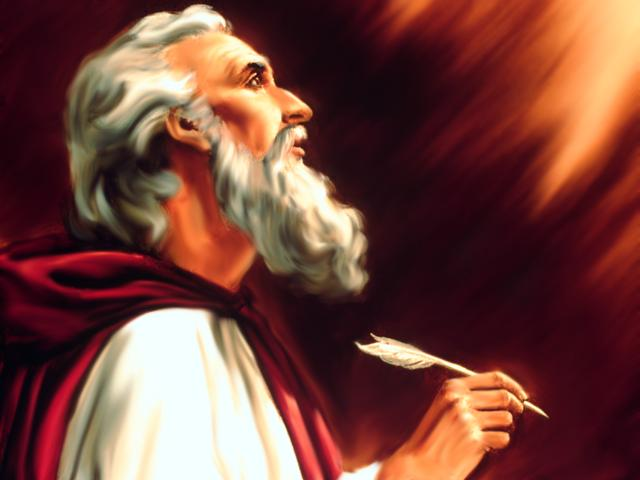
Knowing the historical context, allows a better understanding of the prophetic enigmas in the Book of Zechariah. Its introduction reveals that this prophet lived under the domination of the Medo-Persian power, during the reign of Darius:
“In the eighth month in the second year of Darius, the word of *Jehovah (YHWH) came to the prophet Zechariah son of Berechiah son of Idʹdo, saying: 2 “Jehovah grew greatly indignant at your fathers.
3 “Say to them, ‘This is what Jehovah of armies says: “‘Return to me,’ declares Jehovah of armies, ‘and I will return to you,’ says Jehovah of armies.”’
4 “‘Do not become like your fathers, to whom the former prophets proclaimed: “This is what Jehovah of armies says, ‘Turn away, please, from your evil ways and your evil deeds.’”’
“‘But they did not listen, and they paid no attention to me,’ declares Jehovah.
5 “‘Where are your fathers now? And did the prophets live forever? 6 However, my words and my decrees that I commanded my servants, the prophets, caught up with your fathers, did they not?’ So they returned to me and said: ‘Jehovah of armies has dealt with us according to our ways and our deeds, just as he had determined to do” (Zechariah 1:1-6).
* YHWH is the tetragrammaton, or four-letter for the Divine Name. In the New World Translation of the Bible, it appears with the vocalization commonly used for centuries as « Jehovah ». This vocalization is doubly inaccurate because it inserts the pronunciation J instead of I (i) or Y, and the V corresponding to W, which is pronounced « U » or « ou » (not V). The correct vocalization of the Tetragrammaton is YeHou(W)aH, Yehouah. The inaccurate vocalization « Jehovah » is retained in the Bible translation used, just as the inaccurate vocalization of « Jesus, » pronounced Yeshua or Yeshoua, because they are the most known to readers (click on the link to examine the study on the Divine Name in more detail: The Divine Name YHWH is pronounced as it is written).
Zechariah was a contemporary of Ezra and Nehemiah. Reading these two books, which bear their names, allows us to understand how the return of the Jews from exile, from Babylon to Jerusalem, was organized after 70 years of captivity in a foreign land.
Before this exile in Babylon, the people of Israel (the 10 tribes), as well as the tribe of Judah, associated with that of Benjamin, fell into serious spiritual deviation by worshipping other gods and goddesses and practicing religious rites that offended the Heavenly Father. The historical books of Kings, Chronicles, as well as the books of Isaiah, Jeremiah, and Ezekiel, provide the narrative of this infidelity of the ten tribes of Israel and the two tribes of Judah and Benjamin.
As a result of this situation, God allowed the ten tribes of Israel to be permanently sent into exile in Assyria in 758 BCE (2 Kings 15:29; 1 Chronicles 5:4-6, 26 (the tribes of Naphtali, Reuben, and Gad)), and then the inhabitants of Samaria in 740 BCE (2 Kings 17:5, 6, 24).
Regarding the tribe of Judah and the inhabitants of Jerusalem, there was a first exile to Babylon of some of the inhabitants of Jerusalem in 617 BCE, ending the reign of the king of Judah, Jehoiachin (2 Kings 24). The prophet Daniel and his three companions were among those taken to Babylon by the king of Babylon, Nebuchadnezzar (2 Kings 24:11-16). The prophet Ezekiel was also part of this first exile (Ezekiel 1:1-3).
Then came a second exile to Babylon, this time of the inhabitants of the tribe of Judah and Jerusalem, in 607 BCE (2 Kings chapter 25) (Historians place this event in 587 BCE). This exile included the destruction of the walls of Jerusalem and the destruction of the Temple built by Solomon. It lasted 70 years. It was the edict of Cyrus, the Persian king, that authorized the inhabitants of Jerusalem and the tribe of Judah to return from this exile, in 537 BC (Ezra chapter 1) (Cyrus’s edict has been issued in 537 BC (date recognized by all historians), going back in time 70 years (the period of the duration of the exile, according to the Bible), the beginning of this exile has been at the date of 607 BC (according this calculation based on the 70 years of exile). It is this latter date, the biblical option, that has been retained).
The historical context of Zechariah, is the return from this 70-year exile. There are words of encouragement particularly for Zerubbabel, a descendant of King David, the current governor, and Joshua, the high priest (Zechariah chapter 3 (Joshua) and 4 (Zerubbabel)).
This historical context, summarized very succinctly, is an illustration, or prophetic allegory, in the book of Zechariah for our time. Indeed, humanity as a whole is spiritually very distant from the Heavenly Father and His Son Jesus Christ. In this situation, humanity is represented by the symbolism of Judah, Israel, and Jerusalem, and those who fight against Jerusalem (Zechariah 1:18 and chapter 14). Still within the context of this prophecy, Judah, Israel, and Jerusalem seem to allude, allegorically, to the part of humanity that strives to do God’s will (Zechariah 1:12; 2:12). It will be the object of God’s and His Son’s favor; however, it will need to be refined in order to obtain everlasting life (Zechariah 13:9).
The segment of humanity that will definitively renounce doing God’s will is represented by those fighting against Jerusalem. Of course, it is important to understand that this is an allegory, a symbol. In this illustration, those in this situation will disappear (Zechariah 2:9). It even seems that those who will never do God’s will are referred to as Canaanites. The very last verse of this book mentions their disappearance: » In that day there will no longer be a Canaanite in the house of Jehovah of armies » (Zechariah 14:21).
According to the context of this prophecy, it is a behavioral (and not ethnic) designation; the « Canaanites » are the murderers, thieves, liars, and cowards, as they are designated in the book of Revelation: « But as for the cowards and those without faith and those who are disgusting in their filth and murderers and the sexually immoral and those practicing spiritism and idolaters and all the liars, their portion will be in the lake that burns with fire and sulfur. This means the second death » (Apocalypse 21:8).
Nevertheless, in the book of Zechariah, it is written that a part of humanity that fought against Jerusalem, by mistake, will be the object of God’s mercy, and will be able to obtain everlasting life: « Everyone who is left remaining out of all the nations that come against Jerusalem will go up from year to year to bow down to the King, Jehovah of armies, and to celebrate the Festival of Booths » (Zechariah 14:16).
This understanding is also confirmed by Ezekiel’s prophecy. In chapter 44, it is written that the non-priestly Levites, who seem to allude to a part of the great crowd that will survive the great tribulation, will not have the same privileges of service as the priests (Apocalypse 7:9-17): « But the Levites who strayed far from me when Israel strayed from me to follow their disgusting idols will bear the consequences of their error. 11 And they will become ministers in my sanctuary to oversee the gates of the temple and to minister at the temple. They will slaughter the whole burnt offering and the sacrifice for the people, and they will stand before the people to minister to them » (Ezekiel 44:10, 11). These non-priestly Levites appear to be part of the humanity that will survive, and which was, unintentionally, very far from God, practicing idolatry.
While the priests of the earthly paradise, the sons of Zadok, seem to allude to the part of humanity today that strives to serve God and his Son Jesus Christ: “As for the Levitical priests, the sons of Zadok, who took care of the responsibilities of my sanctuary when the Israelites strayed from me, they will approach me to minister to me, and they will stand before me to offer me the fat and the blood,’ declares the Sovereign Lord Jehovah. 16 ‘They are the ones who will enter my sanctuary, and they will approach my table to minister to me, and they will take care of their responsibilities to me” (Ezekiel 44:15, 16).
This introduction to the study of the enigmas of Zechariah’s prophecy demonstrates the importance of knowing biblical history in order to understand the allusions to these past events and thus grasp the meaning of this symbolism for our time and the future.
***
The Prophecy of the Book of Zechariah
The prophecy of Zechariah and its prophetic riddles, explanations to know the future…
The Prophecy of Gog of Magog (Ezekiel 38 and 39)
Gog of Magog is a coalition of nations that are currently persecuting God’s people…
The Synopsis of the Study of the Prophecy of Daniel
The study of the Prophecy of Daniel is the analysis of current prophetic events in the Middle East and in the World…
In the question of Matthew 24:3, there are three important words that allow us to understand its meaning and the answer of Christ…
The Greek word translated as « presence, » mentioned in Matthew (24:3), is “πάρειμι”, “parousia” (Strong’s Concordance (G3952))…
The biblical account shows that the investiture of a king at the head of a kingdom occurs in two stages…
The verse 29, describes the signs before the « coming, » not the « presence, » of the Son of Man…
***
Table of contents of the http://yomelyah.fr/ website
Reading the Bible daily, this table of contents contains informative Bible articles (Please click on the link above to view it)…
Table of languages of more than seventy languages, with six important biblical articles, written in each of these languages…
***