“Only flesh with its life—its blood—you must not eat”
(Genesis 9:4)
THE SACRED VALUE OF BLOOD

The context of the divine declaration forbidding the consumption of blood in Genesis 9:4 is that God now permitted humans to eat meat: “Every moving animal that is alive may serve as food for you. Just as I gave you the green vegetation, I give them all to you. 4 Only flesh with its life—its blood—you must not eat” (Genesis 9:3, 4).
In the continuation of the divine declaration, we understand that this prohibition against consuming blood has a sacred value: “Besides that, I will demand an accounting for your lifeblood. I will demand an accounting from every living creature; and from each man I will demand an accounting for the life of his brother. 6 Anyone shedding man’s blood, by man will his own blood be shed, for in God’s image He made man” (Genesis 3:5, 6). Whether it is animal or human blood, this precious fluid belongs exclusively to God because it symbolizes the gift of life that comes from the Creator, who is the source. A law from God is absolute.
The absolute nature of God’s law is illustrated by the prohibition of the forbidden fruit: « Jehovah God also gave this command to the man: “From every tree of the garden you may eat to satisfaction. 17 But as for the tree of the knowledge of good and bad, you must not eat from it, for in the day you eat from it you will certainly die » (Genesis 2:16, 17). This law concerned the prohibition against eating the fruit of a certain tree that belonged exclusively to God, and no human was to eat from it; it was an absolute law, just like the current law, written in the Bible, forbidding the consumption of blood.
This commandment has been repeated twice. After repeating this ban, Jehovah God explained the reason of this Act on the blood: “For the life of the flesh is in the blood, and I myself have given it on the altar for you to make atonement for yourselves, because it is the blood that makes atonement by means of the life in it. That is why I have said to the Israelites: “None of you should eat blood, and no foreigner who is residing in your midst should eat blood” (Leviticus 17:11,12).
The blood has an Atonement Value that could be used, in the biblical time, in the framework of sacrifices of animals as symbol of necessity of Atonement for the forgiveness of the sins; in this case, the blood was put at the foot of the sacrificial altar. This restitution of life of the animal, to God, was symbolized by the shedding of blood of the animal that would be eaten: “You and your households must eat there before Jehovah your God and rejoice in all your undertakings, because Jehovah your God has blessed you” (Deuteronomy 12:7).
The Christians Respect the Sacred Atonement
Value of the Blood
In early Christianity, the commandment against consuming blood has been repeated. The sacred value of the blood (especially the human blood), would be understood better by knowing how the atoning value of the blood of Christ saves us. And of course, this prohibition of the consumption of blood has been repeated at the beginning of Christianity in the time of the Apostles of Christ:
“Therefore, my decision is not to trouble those from the nations who are turning to God, but to write them to abstain from things polluted by idols, from sexual immorality, from what is strangled, and from blood (…) For the holy spirit and we ourselves have favored adding no further burden to you except these necessary things: to keep abstaining from things sacrificed to idols, from blood, from what is strangled, and from sexual immorality. If you carefully keep yourselves from these things, you will prosper. Good health to you!”” (Acts 15:19,20,28,29).
The Christian must eat only the meat of a properly bled animal. He must not eat the meat of a strangled animal which blood has remained its body. He should not eat black pudding, stew of meat with blood (civet), industrial foods that contain blood, like plasma.
As well, this Christian law about the blood, prohibits that a human being spills the blood of another human being by killing him. The human blood belongs to God and not to the any “Homeland” (or a nation), in the framework of any patriotic human cult. God forbids spilling human blood in the name of the “homeland” or in the name of God: “Then Jesus said to him: “Return your sword to its place, for all those who take up the sword will perish by the sword” (Matthew 26:52). “They said: “Caesar’s.” Then he said to them: “Pay back, therefore, Caesar’s things to Caesar, but God’s things to God” (Matthew 22:21). Jehovah God forbids the vengeance of the blood, because henceforth, this vengeance belongs to Him: « They shouted with a loud voice, saying: “Until when, Sovereign Lord, holy and true, are you refraining from judging and avenging our blood on those who dwell on the earth? » (Revelation 6:10). « Do not avenge yourselves, beloved, but yield place to the wrath; for it is written: “‘Vengeance is mine; I will repay,’ says Jehovah » » (Romans 12:19). God will avenge innocent blood, in the great tribulation, through the King Jesus Christ (Revelation 19:11-21).
Blood and Medicine
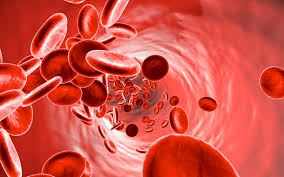
Modern medicine utilizes blood in the form of transfusions of blood and blood fractions, such as plasma and platelets. Minute blood fractions may also be used in medical treatments. Although the biblical commandment prohibiting the consumption of blood is clear enough, the medical use of blood complicates decision-making in the event of an accident—or, more broadly, in trauma cases where a patient’s life is at risk. It is therefore advisable to consider this matter before a medical emergency arises.
According to the Apostolic Decree, the prohibition of the consumption of blood was repeated (Acts 15:19,20,28,29). This decree applies directly to the prohibition of food with blood and also to the therapeutic use of blood: such as blood transfusion, or the transfusion of plasma, platelets, red or white blood cells. However, making a decision becomes much more difficult when a person’s life is at stake. For example, following an accident or a complicated childbirth, a doctor, anesthesiologist, or surgeon might suggest that if the patient does not agree to a blood transfusion, they will almost certainly die.
The following article analyzes the biblical principles at stake, particularly regarding life-threatening situations. Its aim is to enable every Christian—committed to upholding the sacred value of life and blood—to make a decision with a clear conscience before God and His Son, Jesus Christ. This examination will not be conducted in a religious way that dogmatically dictates what individuals must do (situations where decisions are often imposed by a hierarchy or by religious codes). Instead, the analysis will present different arguments and counter-arguments, leaving it to each person to form their own synthesis or opinion, guided by a conscience informed by biblical principles.
It is worth recalling that every disciple of Christ who makes a decision one way or the other, will have to give an account for himself before God and Jesus Christ: « So, then, each of us will render an account for himself to God » (Romans 14:12). If every human being must give an account to God for himself, it is evident that a religious organization can do nothing for him in this situation. That is why the religious concept will be set aside, giving way to biblical and Christian spirituality only based on the Bible (Sola Scriptura) (Acts 17:11). Relying exclusively on biblical principles, he will reflect for himself on what his own conscience dictates regarding this very delicate matter.
When making decisions, one should imitate the wisdom of Christ. Let us see how Jesus Christ made his decisions in ambiguous or complex situations. While Jesus Christ, is in the presence of a man who has a withered hand, he asks the following questions about the Sabbath: « After departing from that place, he went into their synagogue, and look! there was a man with a withered hand! So they asked him, “Is it lawful to cure on the Sabbath?” so that they might accuse him. He said to them: “If you have one sheep and that sheep falls into a pit on the Sabbath, is there a man among you who will not grab hold of it and lift it out? How much more valuable is a man than a sheep! So it is lawful to do a fine thing on the Sabbath.” Then he said to the man: “Stretch out your hand.” And he stretched it out, and it was restored sound like the other hand » (Matthew 12:9-13).
The Sabbath was the day when all work was absolutely forbidden. However, if an animal and a human were in distress, it made sense to rescue them, even on the Sabbath. In this case, it was the timeless principle of mercy that prevailed over this Sabbath commandment, as Jesus Christ reminded us in Matthew 23:23. Common sense helps to understand where the priorities are in the decisions to be made (2 Timothy 1:7).
Consider another example where these three eternal principles (justice and mercy and faithfulness) were enforced over the Sabbath law. This passage will fully summarize what was previously written: « At that time Jesus went through the grainfields on the Sabbath. His disciples got hungry and started to pluck heads of grain and to eat. At seeing this, the Pharisees said to him: “Look! Your disciples are doing what is not lawful to do on the Sabbath.” He said to them: “Have you not read what David did when he and the men with him were hungry? How he entered into the house of God and they ate the loaves of presentation, something that it was not lawful for him or those with him to eat, but for the priests only? Or have you not read in the Law that on the Sabbaths the priests in the temple violate the Sabbath and continue guiltless? But I tell you that something greater than the temple is here. However, if you had understood what this means, ‘I want mercy and not sacrifice,’ you would not have condemned the guiltless ones. For the Son of man is Lord of the Sabbath.” » (Matthew 12:1-8).
In the two examples cited, we see that two laws (the law regarding the Sabbath and the law regarding the presentation of the loaves) were put in parentheses in favor of the three general principles underpinning the entire Mosaic Law—justice and mercy and faithfulness: « Woe to you, scribes and Pharisees, hypocrites! because you give the tenth of the mint and the dill and the cumin, but you have disregarded the weightier matters of the Law, namely, justice and mercy and faithfulness. These things it was necessary to do, yet not to disregard the other things » (Matthew 23:23).
Can this pattern of decision-making by Christ be applied to emergency situations—specifically, cases where a person’s life is at stake—to suggest that the law regarding blood could be set aside, thereby allowing for the acceptance of a blood transfusion?
Some Christians who observe the law regarding blood might answer in the affirmative. For instance, Leviticus chapter 17 reiterates the law concerning the prohibition against consuming blood: « If one of the Israelites or some foreigner who is residing in your midst is hunting and catches a wild animal or a bird that may be eaten, he must pour its blood out and cover it with dust. For the life of every sort of flesh is its blood, because the life is in it. Consequently, I said to the Israelites: “You must not eat the blood of any sort of flesh because the life of every sort of flesh is its blood. Anyone eating it will be cut off » (Leviticus 17:13, 14).
The context for the restatement of this law is hunting. All game had to be properly bled. Nevertheless, the passage continues in verse 15: « If anyone, whether a native or a foreigner, eats an animal found dead or one torn by a wild animal, he must then wash his garments and bathe in water and be unclean until the evening; then he will be clean » (Leviticus 17:15). This law made provision for a hunter who—perhaps lacking game or even in a state of distress and needing food to regain his strength—might eat an animal that was already dead or had been torn by a wild beast.
An animal that is already dead or torn by a predator is not necessarily bled properly, even though the Israelite had to exercise care when consuming it. It is evident that the law made provision for emergency situations in which the blood was not completely drained onto the ground. Is it appropriate to apply this aspect of the Mosaic Law to argue that one should accept a blood transfusion when life is at stake? It is up to each Christian to answer this question prayerfully, bearing in mind that whatever decision we make—one way or the other—we will have to give an account for ourselves to God and Jesus Christ (Romans 14:12).
Now, let us examine this matter from another angle, considering a perspective that stands in contrast to the points raised above. First, regarding the two instances involving Jesus Christ—specifically those concerning the Sabbath law and the law on the presentation of the loaves—it is worth noting that every law given by God had its own specific nature.
For example, regarding the laws on meat consumption, God forbade the eating of an animal’s blood and fat. However, these two prohibitions had distinct characteristics: not only was the blood not to be consumed, but it was also rendered unfit for other uses by being poured directly onto the ground (Leviticus 17:13, 14). In contrast, while the animal’s fat was not to be eaten, it could be put to other uses: « Jehovah continued to speak to Moses, saying: “Tell the Israelites, ‘You must not eat any fat of a bull or a young ram or a goat. The fat of an animal found dead and the fat of an animal killed by another animal may be used for any other purpose, but you must never eat it » » (Leviticus 7:22-24).
Consequently, the law regarding the sacred value of life and blood should not be confused—or even compared—with the laws concerning the Sabbath and the presentation of the loaves of the Presence; notably, the latter were not reiterated during the Council of Jerusalem with the apostles (only the law regarding blood was reaffirmed) (Acts 15:19, 20, 28, 29). Thus, principles such as justice, mercy, and faithfulness can be put into practice without necessarily openly violating the law requiring abstinence from blood. What must be considered is whether the medical objective respects the sacred nature of blood.
Let us look at a few simple medical examples. Regarding blood draws, there is the type performed to supply blood banks and the type performed for blood analysis. The former fails to respect the sacred value of blood and is biblically unacceptable because it is done for the purpose of blood transfusion. The latter respects the sacred value of blood because the blood draw is not performed for transfusion purposes, but rather for medical diagnosis.
Regarding autologous transfusion, can a Christian who wishes to respect the sacred value of blood store their own blood for later use? According to the law concerning blood, once blood leaves the body to be « stored »—without, during that interval, serving to sustain life—it no longer belongs to us; it is, so to speak, returned or surrendered to God, just as if it had been spilled on the ground (Leviticus 17:13, 14).
The general principle found in Leviticus 17 (cited above) indicates that blood, upon leaving the body, cannot be used for another function—such as « storage. » Naturally, this does not apply to dialysis machines (or other closed-loop blood circuits) that draw blood out of the body, purify it within a closed system, and return it (the blood is not stored ; the patient’s blood continues to perform its primary function of sustaining life via a machine located outside the body).
The spirit of the law written in Leviticus (17:15)—which allows a hunter to eat the meat of an animal that has already died or been torn—could just as well apply to the administration of antivenom serums. These serums are produced from antibodies extracted from animal blood (specifically, from horses). In this instance, the animal blood is processed not for transfusion purposes (which would be impossible), but to extract antibodies that save the lives of victims of snakebites or other lethal poisonings. These four examples—blood sampling, autologous transfusions, dialysis, and serums—illustrate whether or not a given medical procedure respects the holiness of life and blood within the broader biblical context.
Let us now consider the necessity of blood transfusion in life-threatening situations. From the perspective of those who are not particularly religious, if an anesthesiologist or surgeon prescribes a transfusion to save a patient’s life, it is logical to accept that option. In contrast, a disciple of Christ who wishes to respect the holiness of blood will ask the anesthesiologist whether there are medical alternatives to transfusion.
Underlying the two positions mentioned above are two different perspectives: that of the non-believer—who views life as a singular existence devoid of hope—and that of the believer—who, while regarding life as sacred, sees it as having only temporary and provisional value, sustained by faith in the hope of resurrection. Whatever decision individuals may make, Jesus Christ explicitly instructed us not to judge one another—sometimes even warning against the kind of judgment that could be insulting (Matthew 7:1–5).
From Jesus Christ’s perspective, human life has only relative value within its temporal existence. For instance, in the illustration of the rich man, he showed that life can end without warning (Luke 12:20). Furthermore, he even indicated that being his disciple could lead to death as a result of persecution: « Then people will hand you over to tribulation and will kill you, and you will be hated by all the nations on account of my name » (Matthew 24:9). Did Jesus Christ tell his listeners not to follow him—so as to avoid trouble and extend their life expectancy in this system of things? No at all, he invited them to follow him and to show courage:
« Then Jesus said to his disciples: “If anyone wants to come after me, let him disown himself and pick up his torture stake and keep following me. For whoever wants to save his life will lose it, but whoever loses his life for my sake will find it » » (Matthew 16:24, 25). What did Jesus Christ mean when he said that whoever wants to save his life will lose it? The immediate context shows that being a disciple of Christ requires us to disown ourselves—that is, to put our own preferences, and especially our ego, in the background. In doing so, anyone who violated an important Bible principle to save his soul—or his life—would lose it; that is, he would lose any prospect of everlasting life.
Returning to the example of persons facing the choice of whether or not to accept a blood transfusion in a life-threatening situation, they would have to choose between two biblical principles:
1 – The principle stated in Leviticus 17:15, which allows eating the meat of an animal that has already died or been torn (and thus not drained of blood) in order to avoid starving to death (depending on the context).
2 – The principle stated by Jesus Christ in Matthew 16:25: whoever seeks to save their life by disregarding important biblical principles—such as abstaining from blood—risks losing all hope.
It is up to each Christian to make their own decision with a clear conscience before God and King Jesus Christ: « Happy is the man who does not judge himself by what he approves. 23 But if he has doubts, he is already condemned if he eats, because he does not eat based on faith. Indeed, everything that is not based on faith is sin » (Romans 14:22, 23).
Are there medical alternatives to transfusion? Yes, there are. Nevertheless, these products must be available in the part of the world you live. For this, you must talk to your doctor, your surgeon or anesthetist, who may help you in this way. You can get help from a mature Christian in the congregation, who can give the list of blood transfusion substitutes available where you live. He may be able to help you to prepare for your interview with the anesthetist who should be involved in the surgery. If the anesthetist or surgeon refuses to operate without a blood transfusion, the mature Christian may be able to give you the name of a surgeon, anesthetist, or a hospital who would accept to operate without transfusion of blood.
There are other medical therapies, which are personal decision-making based on discernment, wisdom and soundness of mind. It is important to talk to your doctor, the surgeon or the anesthetist (in the case of an operation). If you need spiritual help in connection with medical treatment, do not hesitate to consult a mature Christian who will try to bring out the biblical principles. Pathologies and corresponding therapeutic possibilities, are so numerous that they can not be presented in detail in this article. Searching the Internet can be a great help. Information, communication and consultation, all with the help of God, asking for with prayers, are the main points that will enable you to take the best decision to respect the biblical principles regarding your medical treatment: « But solid food belongs to mature people, to those who through use have their powers of discernment trained to distinguish both right and wrong » (Hebrews 5:14). « When there is no skillful direction, the people fall, But there is success through many advisers » (Proverbs 11:14). « So if any one of you is lacking in wisdom, let him keep asking God, for he gives generously to all and without reproaching, and it will be given him. But let him keep asking in faith, not doubting at all » (James 1:5,6) (The Spiritual Maturity).
Blood We Can Use
This blood is symbolic; it is the blood of Jesus Christ. Here is what he said on one occasion:
« I am the bread of life. 49 Your forefathers ate the manna in the wilderness and yet they died. 50 This is the bread that comes down from heaven, so that anyone may eat of it and not die. 51 I am the living bread that came down from heaven. If anyone eats of this bread he will live forever; and for a fact, the bread that I will give is my flesh in behalf of the life of the world.”
52 Then the Jews began to argue with one another, saying: “How can this man give us his flesh to eat?” 53 So Jesus said to them: “Most truly I say to you, unless you eat the flesh of the Son of man and drink his blood, you have no life in yourselves. 54 Whoever feeds on my flesh and drinks my blood has everlasting life, and I will resurrect him on the last day; 55 for my flesh is true food and my blood is true drink. 56 Whoever feeds on my flesh and drinks my blood remains in union with me, and I in union with him. 57 Just as the living Father sent me and I live because of the Father, so also the one who feeds on me will live because of me. 58 This is the bread that came down from heaven. It is not as when your forefathers ate and yet died. Whoever feeds on this bread will live forever » (John 6:48-58).
Whenever we ask God for forgiveness for our sins, we do so based on the atonement value of Christ’s blood, which enables us to live in a state of approval before Him. Furthermore, Christ’s body and blood—acting as a ransom—will make resurrection to everlasting life possible: « Just as the Son of man came, not to be ministered to, but to minister and to give his life as a ransom in exchange for many » (Matthew 20:28; see also Revelation 7:9-17 regarding the great crowd that will come out of the Great Tribulation thanks to Christ’s blood). Thus, we gain a deeper understanding of the sacred value of blood in the eyes of God and His Son, Jesus Christ, and we will take this into account when making decisions regarding medical treatments.
***
The Commemoration of the Death of Jesus Christ (Luke 22:19)
Keep doing this in remembrance of me (Luke 22:19). How to celebrate the memorial of the death of Jesus Christ…
This New Covenant concerns all the faithful Christians, whatever their hope (heavenly or earthly)…
The Covenant for a Kingdom concluded between God and Jesus Christ and between Jesus Christ and the 144,000…
The shepherds who feed themselves. Is it not the flock that shepherds should feed?
The narratives of the miracles of Jesus Christ to strengthen faith in the hope of everlasting life…
The Significance of the Resurrections Performed by Jesus Christ (John 11:30-44)
The narrative of the resurrections performed by Jesus Christ to comfort those who have faith in this hope…
Sin is a generic biblical expression of that which no longer fulfills impersonally (without feeling) the criteria of God’s Holiness…
The sin against the holy spirit is a stubborn attitude against the active force of God, and more generally against his purpose. Whoever sins against the holy spirit, practices sin stubbornly…
Many men and women believe it is impossible for God to forgive them. God’s mercy is much more generous than that of humans….
These prophetic statements appear to allude to the day of God, mentioned in chapter 14 of Zechariah’s prophecy…
***
Reading the Bible daily, this table of contents contains informative Bible articles (Please click on the link above to view it)…
Table of languages of more than seventy languages, with six important biblical articles, written in each of these languages…
***