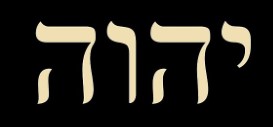
It is important to remember this simple yet significant idea: the Divine Name, YHWH (Yehouah), belongs to God alone, and therefore, He gives it to whomever He wills. Of course, many people around the world have theophoric names that partially, and generally do, contain a diminutive of the Divine Name at birth. However, the spiritual purpose of this biblical meditation’s title does not concern these common situations, but rather a deeper understanding of the spiritual significance of the Divine Name YHWH (Yehouah) belonging to the Heavenly Father.
The Divine Name YHWH (Yehouah) represents the glory of God. It represents God’s reputation through the extraordinary actions He undertakes, so that the meaning of His name is determined by the action He performs: « I Will Become What I Choose to Become » (Exodus 3:14). His plan revolves around the Divine Name YHWH (Yehouah), as is evident in the prayer of Jesus Christ, in John 17: “I am no longer in the world, but they are in the world, and I am coming to you. Holy Father, watch over them on account of your own name, which you have given me, so that they may be one just as we are one. When I was with them, I used to watch over them on account of your own name, which you have given me; and I have protected them, and not one of them is destroyed except the son of destruction, so that the scripture might be fulfilled” (John 17:11,12). Jesus Christ acted “on account of your own name (God’s name)”. “Simeon has related thoroughly how God for the first time turned his attention to the nations to take out of them a people for his name” (Acts 15:14). This text expresses a similar idea, showing that God has a people “for his name,” thus the meaning of his Name revolves around his will. Incidentally, and this idea will be examined later, God has a people « for » his name, not a people that « bears » his name. The name Israel, representing God’s people in biblical times, did not contain the Tetragrammaton, so it did not « bear » the Divine Name, YHWH (Yehouah).
In the same prayer, Jesus Christ showed that knowing the Divine Name, YHWH (Yehouah), means associating it with the love God shows toward his heavenly and earthly creatures: “I have made your name known to them and will make it known, so that the love with which you loved me may be in them and I in union with them” (John 17:26). “Whoever does not love has not come to know God, because God is love” (1 John 4:8). To know God is both to know his Name and to understand the record of his actions, which allow us to know that God is love.
While the Divine Name YHWH (Yehouah) is known as to be renowned with the record of his many actions, it also symbolizes his authority. In Exodus, we read that God informed them that he would send an angel ahead of his people, the nation of Israel: “I am sending an angel ahead of you to guard you on the way and to bring you into the place that I have prepared. Pay attention to him, and obey his voice. Do not rebel against him, for he will not pardon your transgressions, because my name is in him” (Exodus 23:20,21). God did not directly mention the angel’s name, but rather that his name contained the Divine Name, representing the authority of God conferred upon that angel.
Later, Jesus Christ (Yeshua), who literally bore the Divine Name in his name given by God at his birth, would inherit God’s authority: « She will give birth to a son, and you are to name him Jesus (Yeshua) » (Matthew 1:21). Before ascending to heaven, Jesus Christ said: « Jesus approached and spoke to them, saying: “All authority has been given me in heaven and on the earth” » (Matthew 28:18). This means that when God gives his Name, it is to him that he gives the right to exercise his authority (or a part of it). Therefore, remembering that the Divine Name, YHWH (Yehouah), belongs to God, means that he gives it to the one he chooses to exercise his authority (in this example, it was Jesus Christ, his Son). This means that no religious group can appropriate the Divine Name, YHWH (Yehouah), without God’s permission, for the purpose of exercising any authority over the people of God (Acts 15:14).
The friends and the enemies of the Divine Name, YHWH
« You must not take up the name of Jehovah your God in a worthless way, for Jehovah will not leave unpunished the one who takes up His name in a worthless way »
(Exodus 20:7)
How, throughout human history, have some, individually or in groups, behaved or are behaving as friends of the Divine Name, YHWH (Yehouah), while others are behaving as enemies? This examination will be based primarily on biblical and historical facts, presented in a very simplified manner (readers interested in the subject may wish to conduct more in-depth personal research).
The topic can be introduced by a statement of Christ, made during his last prayer to his Heavenly Father (at the end of the Passover with his apostles): “I have made your name manifest to the men whom you gave me out of the world. (…) I have made your name known to them and will make it known, so that the love with which you loved me may be in them and I in union with them” (John 17:6, 26). Thus, the friends of the Divine Name YHWH (Yehouah), like Jesus Christ, make God’s Name known to those they teach or with whom they share the Good News (Matthew 24:14; 28:19-20). Furthermore, Jesus Christ showed that the name of his Heavenly Father is sacred, holy, and set apart, and this is the meaning of the request expressed in the Model Prayer: « let your name be sanctified », that is, to be considered by each of us as holy, sacred, and set apart, and to use it in a way that reveres and reveals it to our neighbor.
On the other hand, the enemies of the Divine Name are more concerned with obscuring or concealing it. For example, they claim that its pronunciation has been lost over the centuries (which is false), and therefore, in case of doubt, it is not appropriate to pronounce it in its most familiar form (Jehovah). Others believe that the Name is so holy that it should not be pronounced, but rather replaced by titles such as God, the Eternal, Lord, or Adonai (in Hebrew). Some translators of the Bible have deliberately removed the Divine Name YHWH (Yehouah), replacing it with titles such as the Eternal, the Lord, which nevertheless appears approximately seven thousand times in the Bible. Still others have a more esoteric relationship with the Divine Name, surrounding it with mysteries that only initiates people are able to understand. All these approaches are contrary to what Jesus Christ did, in revealing the Divine Name. The pagan teaching of the Trinity largely contributed to the obscuring of the Divine Name by confusing the Heavenly Father with his Son. Within the context of Christian religious services, some who believe in the Trinity pray using the title of Lord, without it being clear whether they are praying to God, the Heavenly Father, or his Son.
Some will say that Jesus Christ did not use God’s Name, YHWH, in his teachings, nor even in his prayers, in the four Gospels. This does not mean that he did not pronounce the Divine Name. For example, when he went to the synagogue in Nazareth to announce that he had been anointed by his Father to carry out his earthly ministry, it is written in Luke (4:16-21), which Jesus Christ read, from Isaiah 61:1, containing the Divine Name, YHWH (vocalized in this Bible translation as « Jehovah »). This means that he did not hesitate to use the Divine Name, YHWH, in a public Bible reading.
Furthermore, the fact that the Gospels contain no biblical passages showing Jesus Christ directly using the Divine Name (YHWH) (except in the context of his public reading in Nazareth) could be explained by his direct filial relationship with his Heavenly Father. Indeed, in a father-son relationship, a child will call their father or mother « Dad » or « Mom, » or simply « Father. » They will not call their father by his name, but by his title of « Father »: « And he said: “Abba, Father, all things are possible for you; remove this cup from me. Yet, not what I want, but what you want » » (Mark 14:36). The expression « Abba » has an Aramaic origin; it means « Father » in a very affectionate term. Within the context of this special relationship with his Heavenly Father, it is understandable that he will not systematically call Him by His Name, but rather with an expression that is both respectful and affectionate. The apostle Paul explained this close relationship between the Son of God (on earth) and the Heavenly Father, calling Him Abba, Father, and not directly or systematically by the Divine Name, YHWH (Yehouah or Jehovah) (Romans 8:15; Galatians 4:6).
The Divine Name, YHWH, and Jehovah’s Witnesses
This Christian community, for those unfamiliar with it, currently comprises 9 million people worldwide, organized into approximately 100,000 congregations. However, these congregations are not autonomous in terms of spiritual authority, biblical teaching, or even financially. This authority over them is exercised globally, from the United States, by a group of people called the Governing Body. This group of men is supported by an organization (which they consider to be God’s), to use their own term, which is nothing less than a multinational corporation called the Watch Tower Society, also known as J.W.ORG (JW = Jehovah’s Witnesses), a logo emblazoned on the facade of each of their meeting halls (Kingdom Halls) and Assembly Halls. The Governing Body’s control over the 100,000 congregations is achieved through the decentralization of approximately 170 worldwide branch offices. The national authority of these branches is relayed by « District Overseers » who supervise the work of « Circuit Overseers », who in turn watch the work of the elders (or administrators) of the congregations (the overseer who is directly in connection between the different worldwide branch offices, is called the « Zone Servant ». This overseer supervises the financial management of the national branch offices).
In summary, you can see from this simple explanation that the Christians in the 100,000 congregations, which could be entirely autonomous spiritually, in biblical teaching, and financially on a local level, are under the direct authority of the Governing Body, which is in fact dependent on the organizational structure of the Watch Tower Society, also known as J.W.ORG. The Christians of this religious organization, scattered throughout the world, do not submit directly to the authority of Christ, but to the authority of the Governing Body and the Watch Tower Society, also known as J.W.ORG, which clearly influences their decisions and stands between them and God. This is not in accordance with what is written in the Bible: “For there is one God, and one mediator between God and men, a man, Christ Jesus” (1 Timothy 2:5).
By reading Apocalypse (Revelation) chapters 2 and 3 regarding Christ’s messages to the seven congregations, glorified Jesus Christ is addressing to the local administrators (the angels or messengers), the congregations, and not a globalized human organization. In the explanations that follow, it is important to distinguish between the actions of the local Christians in these (100,000) congregations, who can, for the most part, prove to be sincere and faithful to God, his Son, and the Word of God, the Bible, on the one hand, and the actions of those who hold this globalized authority, located primarily not in heaven, where Christ is, but in the United States and its numerous national branch offices. Let us return to the main theme, namely, their connection to the Divine Name, YHWH, vocalized as Jehovah.
This global Christian community has been called Jehovah’s Witnesses since the 1930s. Before that, they were known as Bible Students. This religious group has made the Divine Name known worldwide, which in itself, is a very good thing. As it is written in the Bible, God the Heavenly Father wants that his name be known worldwide: “May people know that you, whose name is Jehovah, You alone are the Most High over all the earth” (Psalm 83:18).
These Christians have made the Divine Name, Jehovah, known primarily in two ways: through worldwide preaching and their translation of the Bible, the New World Translation. Their preaching now takes place in almost every country, with approximately one hundred thousand Christian congregations scattered throughout the world, comprising about nine million Christians. The main strength of the New World Translation is that it has restored the Divine Name YHWH in its most familiar form, Jehovah. Furthermore, this translation is a fine work of scholarship, pleasant to read because, in addition to restoring the Divine Name, it is written in modern, contemporary languages—that is, languages free of archaisms or old words that are not always easy to understand for a modern Bible reader. In the reference Bible (Rbi8), there are numerous annotations linked to the Divine Name.
Mainly through these two aspects—preaching the Good News with a Bible translation that restored the Divine Name to its proper place—the thousands of local Christian congregations of Jehovah’s Witnesses have acted with great sincerity as true friends of the Divine Name, Jehovah. Furthermore, these Christians have courageously endured persecution in many countries, some even unto death, during World War II and the Cold War behind the Iron Curtain and in many other countries. Their integrity has brought glory to God and his Name. God will grant them, through Christ, the resurrection promised in the Scriptures (John 5:28, 29). Therefore, the following observations do not directly concern these Christians, most of whom are sincere and faithful to God and Christ and devoted to the Word of God, but rather to the Governing Body and this globalized American organization that rules them with an iron fist. Doctrinal decisions are made in the United States. Consequently, their use of the Divine Name is linked to their way of teaching the Bible.
Regarding the religious name of this Christian community, « Jehovah’s Witness », which is based on the Bible, the problem is that it is not actually in accordance with the Bible. The religious name is based on a bible quote in the book of Isaiah: « You are my witnesses,” declares Jehovah, “Yes, my servant whom I have chosen’ » (Isaiah 43:10). In its immediate context, this was a circumstantial statement that did not require the Israelites of that time to be designated as such. For example, in Apocalypse (Revelation) 2:13, Jesus Christ designated Antipas, a disciple who died as martyr, as « faithful witness ». This was a circumstantial designation that did not imply that all of Christ’s disciples should be called « Jesus’s Witnesses » or « Jesus’s Faithful Witnesses »…
Furthermore, this designation is not in accordance with what is written in Acts: “It was first in Antioch that the disciples were by divine providence called Christians” (Acts 11:26). Jehovah’s Witnesses should refer to themselves as Christians, without this designation, which is not in accordance with the divine providence mentioned in Acts (11:26). Hence the title of this Bible study: the Divine Name belongs to God, and therefore, it is not for a religious group to appropriate it and then claim that a people bear His Name. In Acts 15:14, it is written that God has a people “for” His name, not a people bearing His name.
With the expansion of the internet and the sudden increase in the number of Christians (Jehovah’s Witnesses), from one to two million worldwide in the 1960s and 1970s, to seven, eight, and currently nine million between the 1980s and 2000s, the atmosphere in local congregations has truly changed. An older generation has been replaced by a younger one, more readily using internet tools. The advent of the internet, among other things, has accentuated the autocracy of the globalized American administration of over one hundred thousand congregations scattered around the world, by the Watch Tower Society, also known as J.W.ORG. What does this have to do with the Divine Name?
Let’s take a very simplified look at the history. In the years before the advent of the internet, the Governing Body, which oversaw all one hundred thousand congregations of this religious group worldwide, was very discreet. Members of local congregations barely knew them, so it can be said that the administration of the congregations was largely local. The concept of a global organization, although it existed, was rarely discussed because, in fact, it had very little impact on the local administration of the congregation.
The emergence and rise of the internet completely transformed the administration of local Christian congregations, centralizing it globally through the creation of not only a website (J.W.ORG) but also an online television channel (JW. Broadcasting). Members of the world committee, and the members of the Governing Body, who were previously little known, began appearing regularly on television in local congregations. Subsequently, the concept of a (globalized) organization has been emphasized.
This organization, which operates like a multinational corporation with approximately 170 branches, has come to call itself « God’s organization, » including local congregations (instead of « the people of God »). The religious title « Jehovah’s Witness » (JW) has become the brand name for both the website and their online television channel. Furthermore, the Watch Tower Society arbitrarily seized thousands of meeting rooms worldwide, paid for and self-financed by millions of local Christians.
Thus, the Watch Tower Society automatically incorporated all these meeting rooms, which they themselves had fully paid for, into its fixed assets without the knowledge of the local Christians. The very fact that the JW.ORG (Jehovah’s Witnesses) logo appears on these meeting rooms testifies to this. Now, the multinational corporation has centralized these fixed assets, allowing it to resell them at will and collect the entire sum at its main branch office of the religious company in the United States. What do God and His Son Jesus Christ think when they see the Divine Name associated with such a practice?
The observation is that the religious title of Jehovah’s Witness (JW) has become the brand of their website, their online television channel, and a veritable global real *estate and **financial enterprise.
* Among the two most recent members appointed to the Governing Body is Jody Jedele. This man worked for the Watch Tower Society in a real estate asset management branch (owned by the Watch Tower Society) called Touchstone International Properties. His appointment to head this religious organization appears to be a sign of the major strategic directions of the American religious multinational…
** The Watch Tower Society has created real estate and financial asset management branches in Ireland, such as Mina Asset Management (established in 2023), whose function is the acquisition and disposal of assets of all kinds. Mina Treasury Services (established in 2023) provides financial and treasury management services. Lepta Payment Solutions (established in 2024) processes electronic payments and donations. Are local Christians aware of how the donations they make to God, Jesus Christ, and the Kingdom of God are managed? (Below, in Appendix 1, at the end of this article, there is a section dedicated to the sale of Kingdom Halls and what has become of them).
The question is this: What does God think when he sees this religious organization using his Name YHWH, Jehovah, to promote not only Kingdom interests but also financial and real estate interests that currently amount to billions of dollars in assets, whereas when he sent his own Son to earth, he had nothing? “But Jesus said to him: “Foxes have dens and birds of heaven have nests, but the Son of man has nowhere to lay down his head’” (Luke 9:58).
This is where the verse from Exodus 20:7 (mentioned above) becomes particularly relevant: “You must not take up the name of Jehovah your God in a worthless way, for Jehovah will not leave unpunished the one who takes up His name in a worthless way” (Exodus 20:7). Clearly, there is a radical shift in the way this global organization is using the Divine Name. We will now look at a specific example which will constitute the conclusion of this biblical exposition on the Divine Name.
As explained above, this religious organization has truly appropriated the Divine Name, not only through its name as a group in the 1930s, but also, more recently, by stamping the J.W.ORG (Jehovah Witnesses = JW) logo on most of the meeting halls of its 100,000 local congregations. The logo of the American multinational, J.W.ORG, has, so to speak, replaced the former Watch Tower name for the general public. The point is that for every decision made by the global committee, the Governing Body and this worldwide organization, they use the Divine Name, implying that God is in charge and that He is responsible for the decisions they make, good and bad, and that is serious… Here is a concrete example illustrating the gravity of this situation in relation to the inappropriate use of the Divine Name.
In 2023, a member of the Governing Body named Jeffrey Winder made a Bible talk, in the Annual Meeting, October 2023? on JW Broadcasting entitled “How Does the Light Grow Brighter?”, based on Proverbs 4:18. In the excerpt quoted below, he said something quite shocking, pronouncing the Divine Name, Jehovah, three times:
Annual meeting, October 2023. Jeffrey Winder. “How the light gets brighter” (Proverbs 4:18)
“So, this is what we know from the Scriptures, and from our own experience as well about how the light gets brighter in modern times. It comes about by means of the holy spirit, through his channel of the faithful and discreet slave, he reveals it gradually and at a time that it is needed.
“Well, knowing this then, we are not embarrassed about adjustments that are made. Nor is an apology needed for not getting it exactly right previously. We understand this is how Jehovah operates. He reveals matters gradually when is needed. And also, the governing body is neither inspired nor infallible. And so, it can err in doctrinal matters or in organizational direction. The brothers do the best they can with what they have and what they understand at the time. But are happy if Jehovah sees fit to clarify matters. And then that can be shared with the brotherhood. And when that happens, we understand that it is because it is Jehovah’s time for that to happens. And we eagerly accept that” (End of Quote).
He said: « Nor is an apology needed for not getting it exactly right previously ». Why? He indirectly implies, in the second part of the excerpt, that Jehovah is responsible for their erroneous decisions. Since they are not responsible for these bad decisions because it is Jehovah who decides to correct them in a timely manner. So, they are not obligated to apologize for the serious consequences this had among the Christian brothers and sisters. These statements are all the more shocking given that they were made shortly after the global Covid-19 pandemic, during which the Governing Body clearly coerced all one hundred thousand congregations into being injected with the experimental products marketed by P.f.i.z.e.r, M.o.d.e.r.n.a, and A.s.t.r.a.Z.e.n.e.c.a. These decisions caused side effects in the form of serious chronic illnesses and numerous deaths within the congregations (For more information, see VAERS (Vaccine Adverse Event Reporting System (www.vaers.hhs.gov))). In conclusion, here is what God’s response to the above statements might be:
« The Rock, perfect is his activity,
For all his ways are justice.
A God of faithfulness who is never unjust;
Righteous and upright is he.
5 They are the ones who have acted corruptly.
They are not his children, the defect is their own.
They are a crooked and twisted generation!
6 Is this the way that you should treat Jehovah,
O foolish and unwise people?
Is he not your Father who caused your existence,
The One who made you and firmly established you?
7 Remember the days of old;
Consider the years of past generations.
Ask your father, and he can tell you;
Your elders, and they will inform you »
(Deuteronomy 32:4-7).
***
Appendix 1
Kingdom Hall Sales, Dedicated to God

Former Kingdom Hall of Hughenden — Queensland — Australia, sold in July 2024
Upon completion of the construction of a Kingdom Hall, Assembly Hall, or building complex belonging to a national branch of the Watch Tower Society (aka JW.ORG), there is a religious ceremony to dedicate the building(s). Dedication, in the biblical sense, is a ceremony of consecration, where, in the case of a Kingdom Hall, it is dedicated exclusively to the worship of Jehovah God. Consequently, this place becomes « holy, » that is, set apart for God. To summarize the idea, here is what can be read under the subtitle « Inauguration and Dedication », in the page 3, of the Watch Tower of December 15, 1983:
“The completion of the new branch facilities brought great joy to the brothers. How clearly this was demonstrated on a special occasion—the inauguration and dedication of the new buildings to Jehovah! This took place on April 24, 1982. But how could a greater number of Jehovah’s Witnesses share in the joy of this encouraging event? To make this possible, the special program in the Kingdom Hall at the new building was linked by wire with meeting places in Rome, Novara, Ascoli Piceno, Naples, Syracuse and Cagliari” (End of quote). In this Watch Tower Review, you can clearly read that the inauguration of the Kingdom Hall is the “dedication of the new building to Jehovah”…
What is written in the Bible concerning people or property (movable or immovable) dedicated to God?
“Only no sort of devoted thing that a man might devote to Jehovah for destruction out of all that is his, whether from mankind or beasts or from the field of his possession, may be sold, and no sort of devoted thing may be bought back. It is something most holy to Jehovah” (Leviticus 27:28).
When a person or a property belongs to God, it becomes “holy” or “most holy”, that is set apart. A Kingdom Hall, once dedicated to Jehovah God, becomes his property; it now belongs to God, being consecrated for true worship (to use the expression of the Kingdom ministry). Even though we are no longer under the Mosaic Law, this law is timeless and unchangeable (Romans 10:4 “Christ is the end of the Law”; Malachi 3:6 “I am Jehovah; I have not changed”).
The text of Leviticus 27:28 shows that this property cannot be bought or sold to a third party because it now belongs to God. Otherwise, if the property were to be sold, it would be an act of desecration of what is holy, that is, taking away from God what belongs to Him. The story of Achan, a man who stole what belonged to God, shows that this was a serious sin that could have repercussions for the entire congregation (in this case, the whole nation of Israel) that desecrated God’s property. The narrative in Joshua chapter 7 shows that this was a sin with collective repercussions, until atonement or reparation is made by the person or persons responsible for this desecration of God’s property.
Regarding the sale of Kingdom Halls by the Watch Tower Society (also known as JW.ORG), we are witnessing blatant acts of desecration of what is holy, belonging exclusively to the worship of the one true God. Below, you will see several Kingdom Halls sold to churches that the Watch Tower considers part of the false religion, Babylon the Great (which is an act of hypocrisy on their part). You will even see that some Kingdom Halls have been transformed into mosques, and one into an establishment selling medicinal cannabis and related products. You will have clear proof that those who run the Watch Tower Society do not respect the Bible, nor do they respect the Christian faith of all the Christian men and women who trust them.
Here are the photos, before, as former Kingdom Halls, and after, what they have become:

Former Kingdom Hall in Stratford (above), Connecticut (USA), sold to the French-speaking Baptist Church in September 2019 (below):


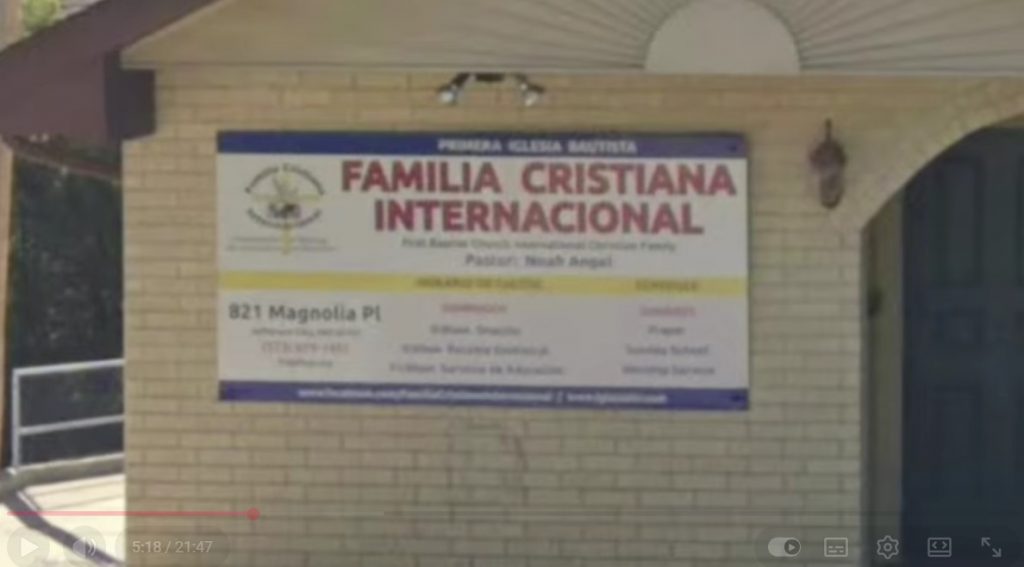
Former Kingdom Hall in Jefferson City, Missouri (USA) (above), sold to Familia Cristiana Internacional, in June 2018 (below):

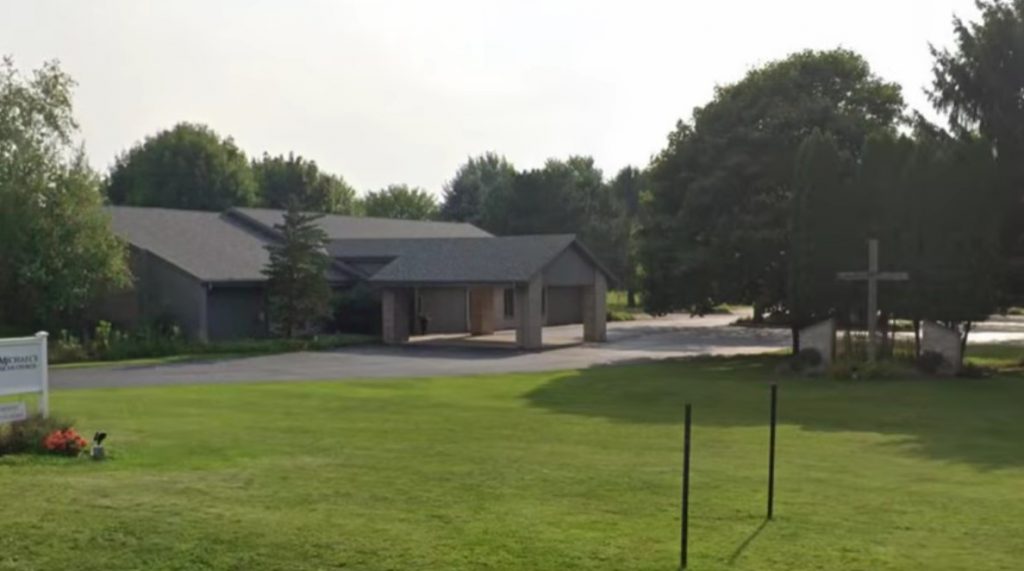
Former Kingdom Hall in Delafield, Wisconsin (USA) (above), sold to St. Mishael’s Anglican Church (below):
Below is the address of a former Kingdom Hall sold in December 2014 in Kentucky, USA:


Below is a photo of the former Kingdom Hall, at the same address, belonging to the “God’s Community Church”:

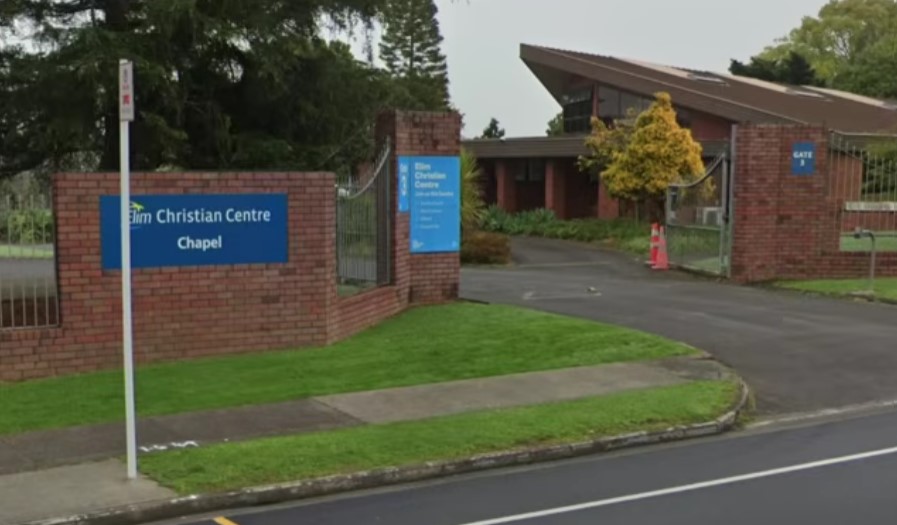
Below are photos of the building complex, including the former Kingdom Hall, of the former New Zealand Bethel (Auckland):

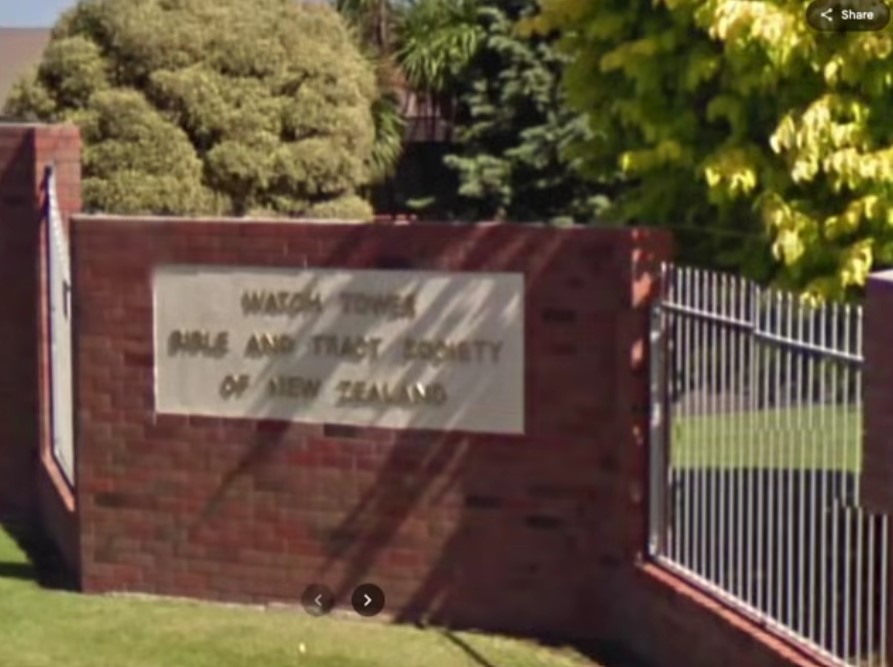
Former Bethel of New Zealand (Auckland), sold to the Elim Christian Center, in September 2013 (below):
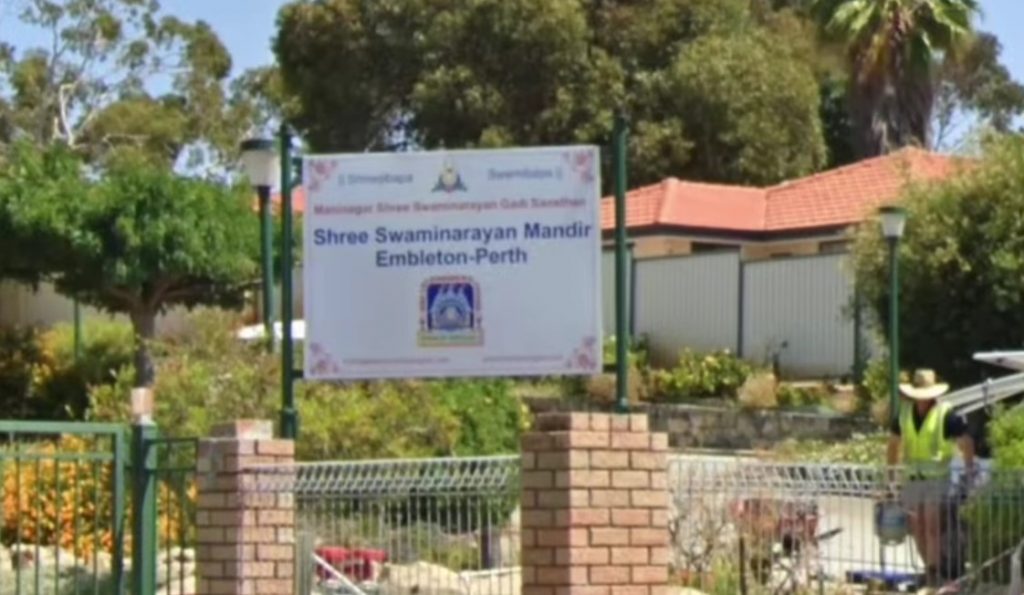
Below is a photo of the former Kingdom Hall in Perth, Australia:

Kingdom Hall sold in 2018 to a Hindu religious group:
Below, the former Kingdom Hall in Sedona, Arizona, USA:
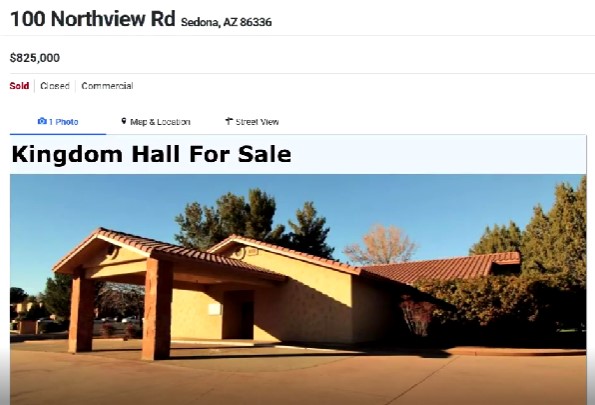
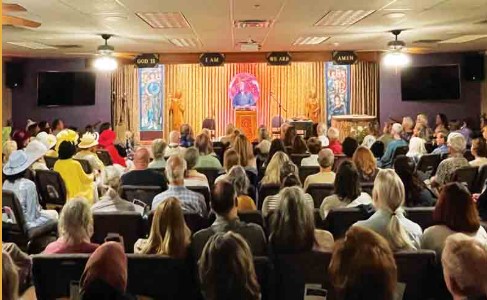
Its former address is shown, and below is a photo of the interior of the former Kingdom Hall:

Below is the new exterior appearance of the former Kingdom Hall sold to The Global Center for Christ Consciousness (at the same address mentioned above, regarding the former Kingdom Hall):

Below is a photo of the interior of the new religious center:
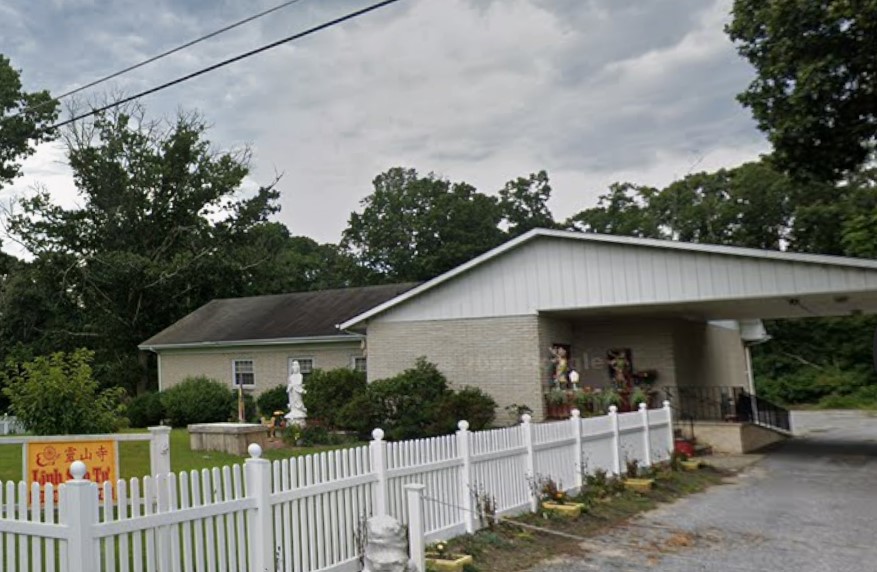
Below, the former Kingdom Hall of Mantua Township, New Jersey, USA, now a Chua Linh Son Buddhist temple:
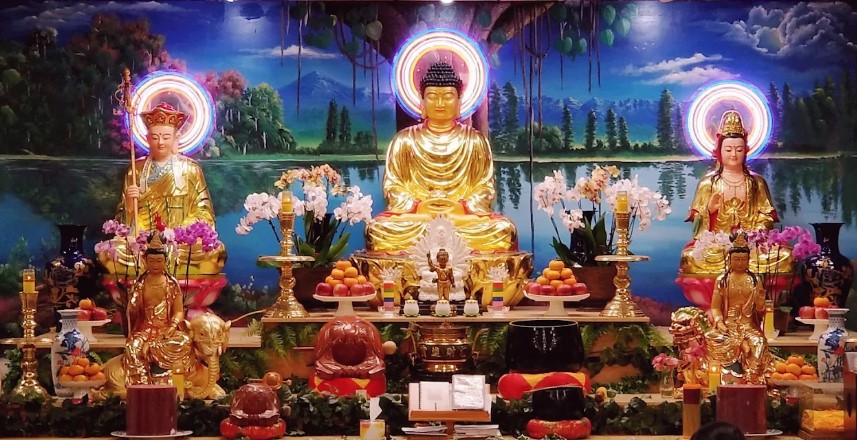
The current interior of this former Kingdom Hall, now a Buddhist temple:
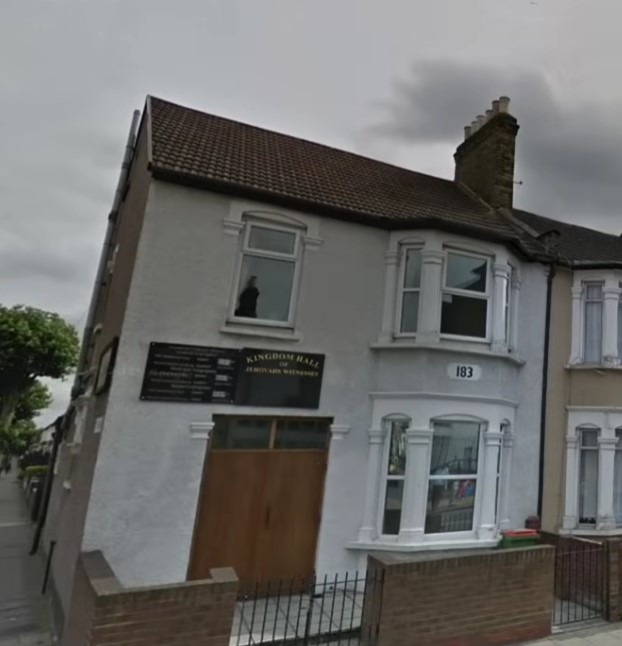
Below, the former Kingdom Hall in London, 183 Green Street (Great Britain):
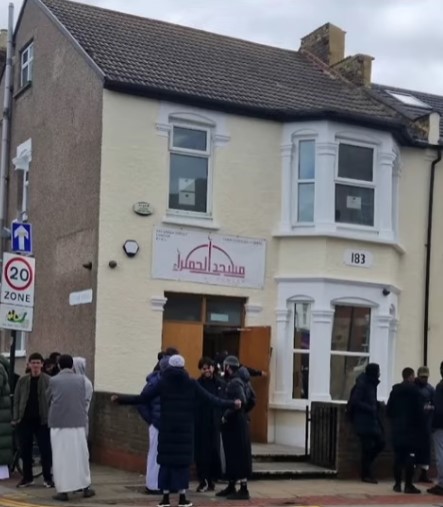
Former Kingdom Hall of London, transformed into a mosque called Masjid — Al Humera:
Below are two photos of the interior of the former Kingdom Hall, which has been converted into a mosque:

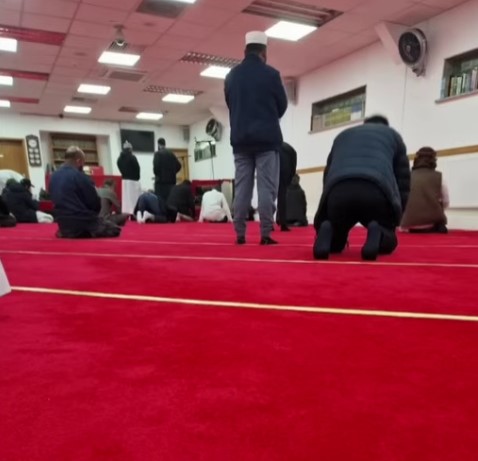
Below is a photo of the former Kingdom Hall, 7 Moor End, Northenden, Wythenshawe, Manchester M22 (Great Britain):
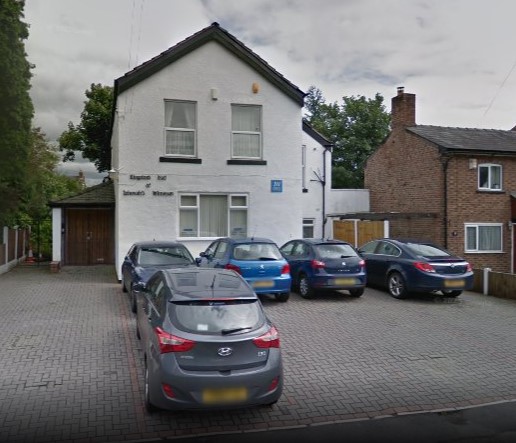
Below is a photo of the former Kingdom Hall, now a Mosque, Wythenshawe Masjid:

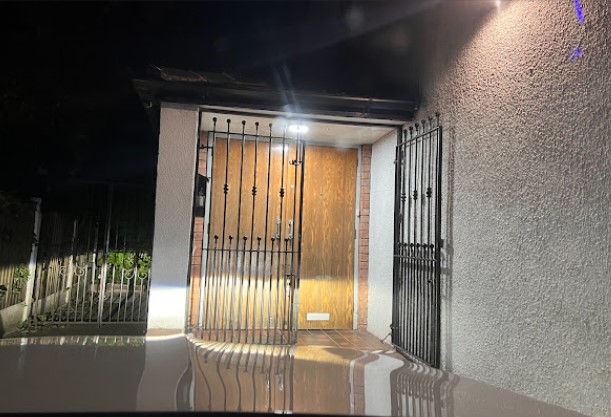
The new entrance to the Mosque:
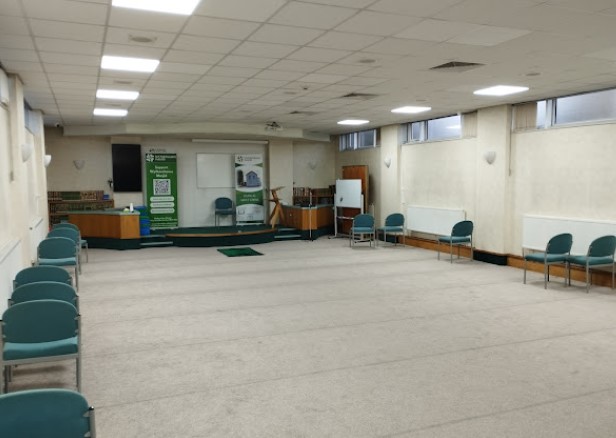
Two photos of the general appearance of the interior of the Mosque, which structure is that of the former Kingdom Hall:

Below is a photo of the former Kingdom Hall in Winnipeg — St James — Manitoba (Canada):

Below, a close-up view showing the inscription (to the left of the small fir tree):
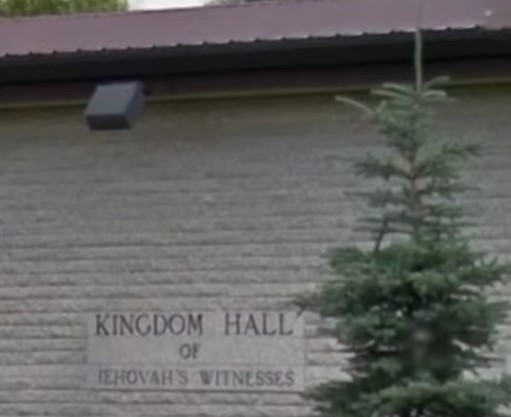
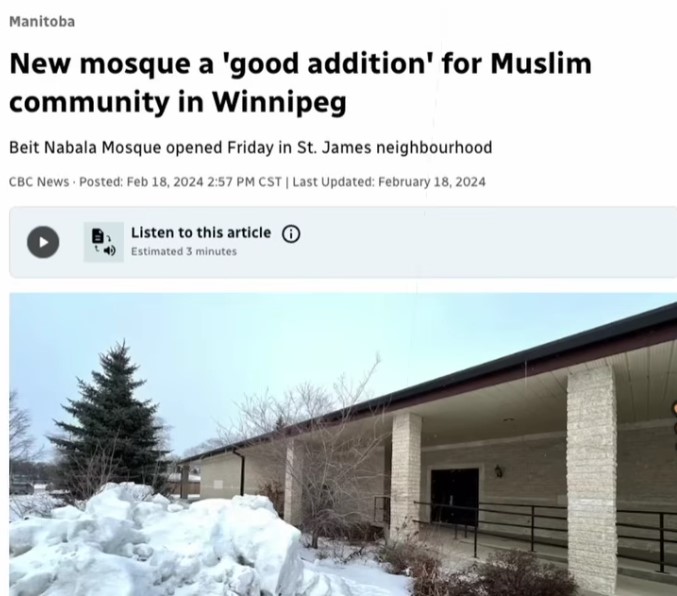
Years later, this former Kingdom Hall was sold and transformed into a mosque called Masjid Beit Naballa, and into the office of a Palestinian association in Canada:
The photos below show the interior of the Mosque, with some remnants of the furnishings from the former Kingdom Hall:

Entrance hall, with, on the left, the door to the old hall of the elders.

The old information board and seats.

View from the new podium where the Imam preaches; on the left, one can see the old counter for publications and magazines that the publishers used to collect.
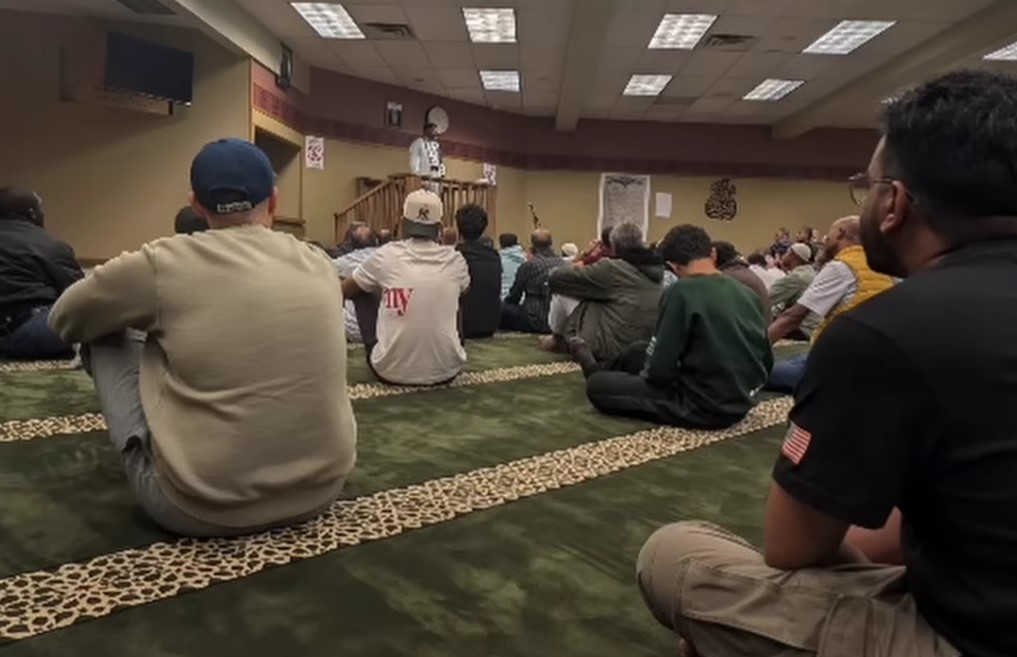
View of the interior of the former Kingdom Hall, now a mosque, in Winnipeg, Canada…
Below, the former Kingdom Hall, Niagara Falls, Caledonia Street — Ontario — Canada:

Below, a photo (Facebook) of the former Kingdom Hall, transformed into a mosque called Masjid Asalam — The Peace.

Below, a photo (Facebook) of the interior of the Mosque, in August 2017, before its renovation in December 2017 (the podium of the former Kingdom Hall is easily recognizable):
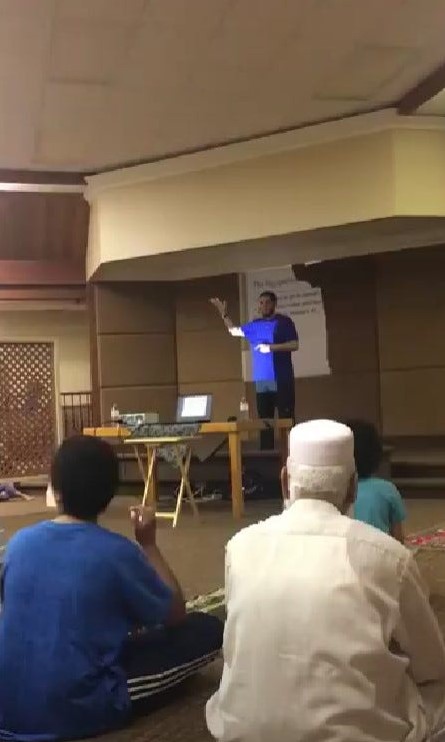
Below are two photos of the layout of this new Mosque and its final appearance inside:
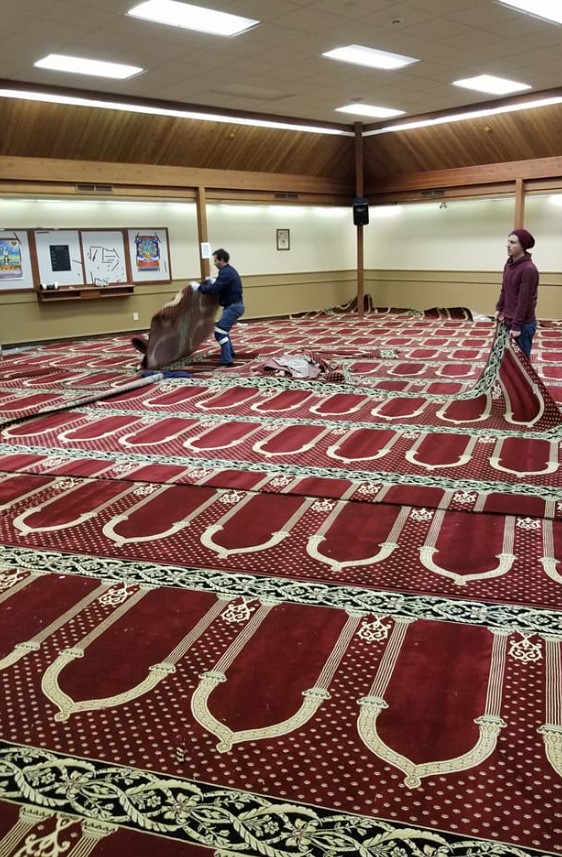
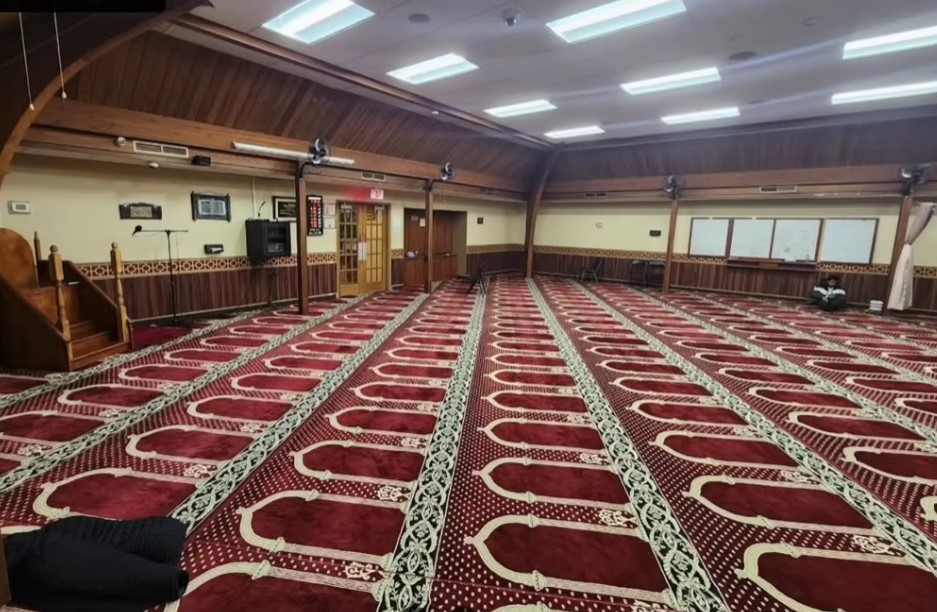
Below are two photos of the former Kingdom Hall in Talihina, Oklahoma (USA) (the second photo is from a different angle where you can see the sign indicating the former Kingdom Hall):


Below are photos showing that this former Kingdom Hall has been sold to a company that sells medicinal cannabis:

The sign on the right with the company logo.

The « customers » of the « medicinal » cannabis sales company…
Below is a photo of a former Indianapolis Assembly Hall — Indiana (USA) — 456 Palatine Rd. The historic neoclassical revival with Tuscan Pillars was designed by Chicago architect Spencer Solon Beman for the Second Church of Christ Scientists. It sold the building to the Baptist Church in 1968, which then, sold it to Jehovah’s Witnesses in 1978.
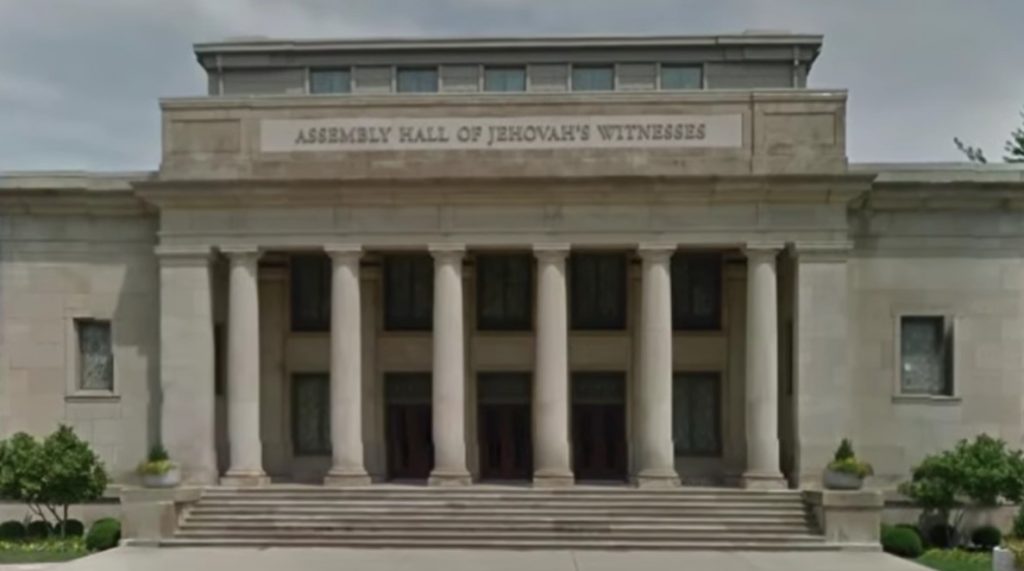
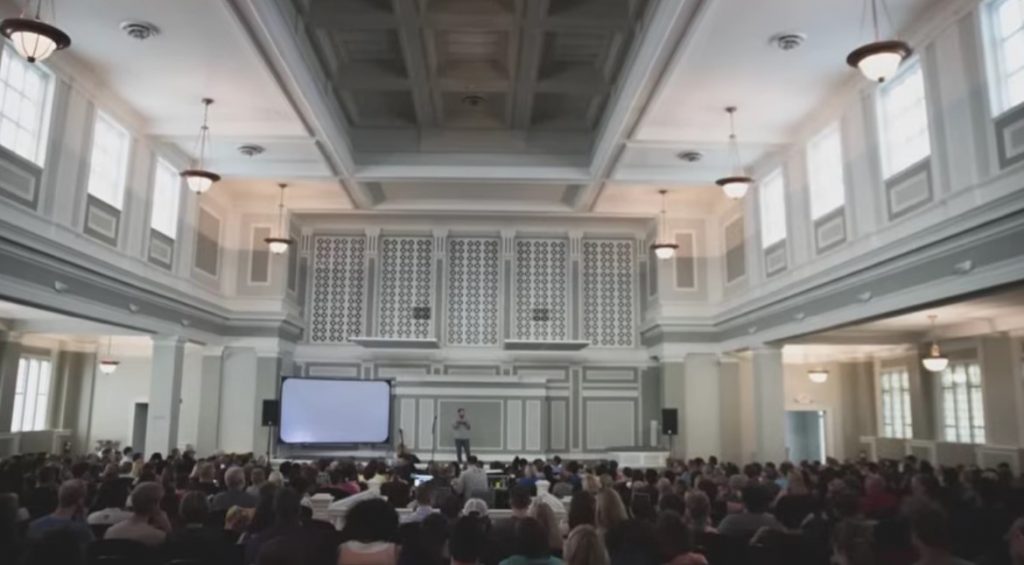
Photo of the interior of the former Assembly Hall:
This former Assembly Hall has been sold to a Mega Church, called Traders Point Christian Church:

The photos below depict the interior of the Mega Church:
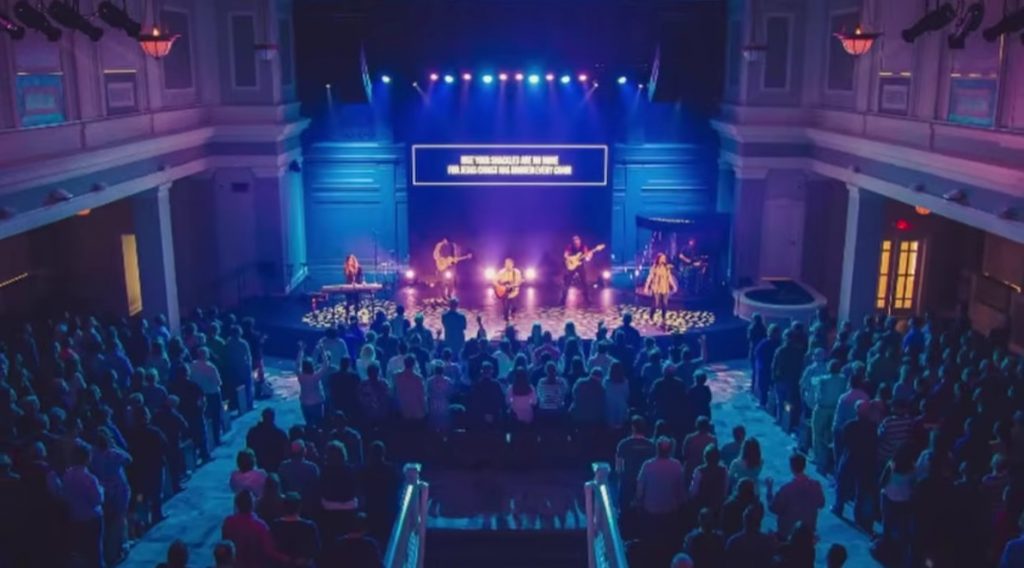
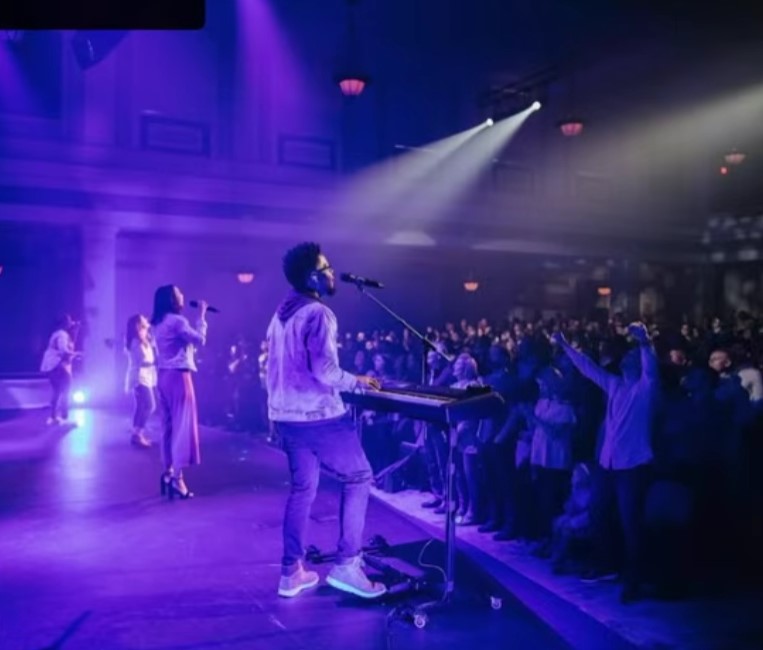
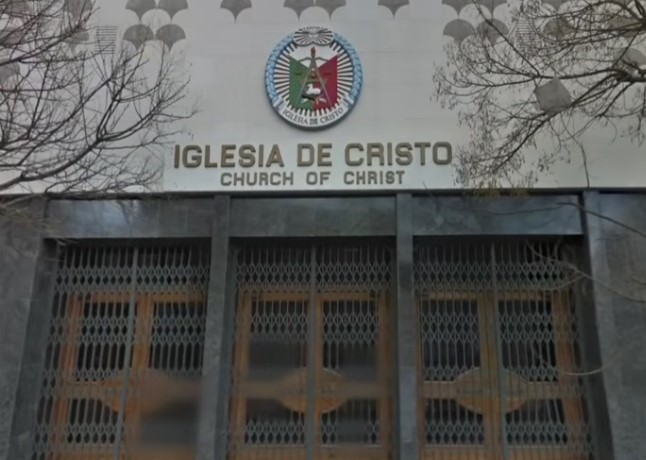
Below is a photo of the former Assembly Hall in Barcelona — Catalonia (Spain):
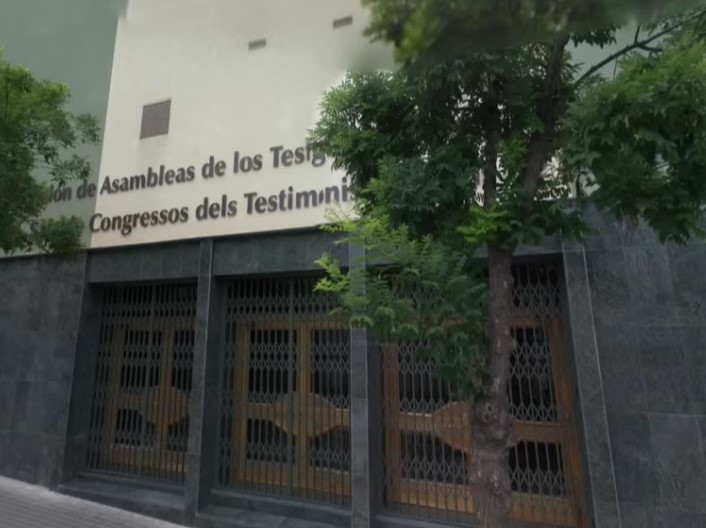
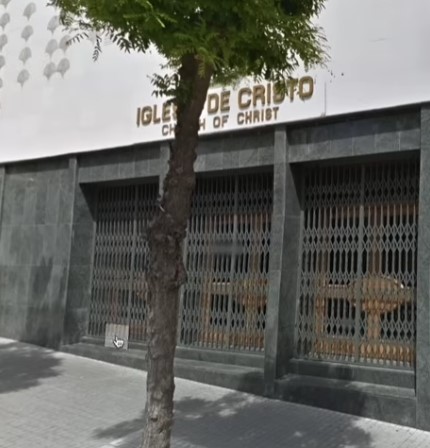
This former Assembly Hall was sold to the Iglesia de Cristo or Church of Christ:
***
Table of contents of the http://yomelyah.fr/ website
Reading the Bible daily, this table of contents contains informative Bible articles (Please click on the link above to view it)…
Table of languages of more than seventy languages, with six important biblical articles, written in each of these languages…
***